Tariff Whiplash Hits LA: Strong 2025 Finish, Softer 2026 Forecast
ShipUniverse quick contact

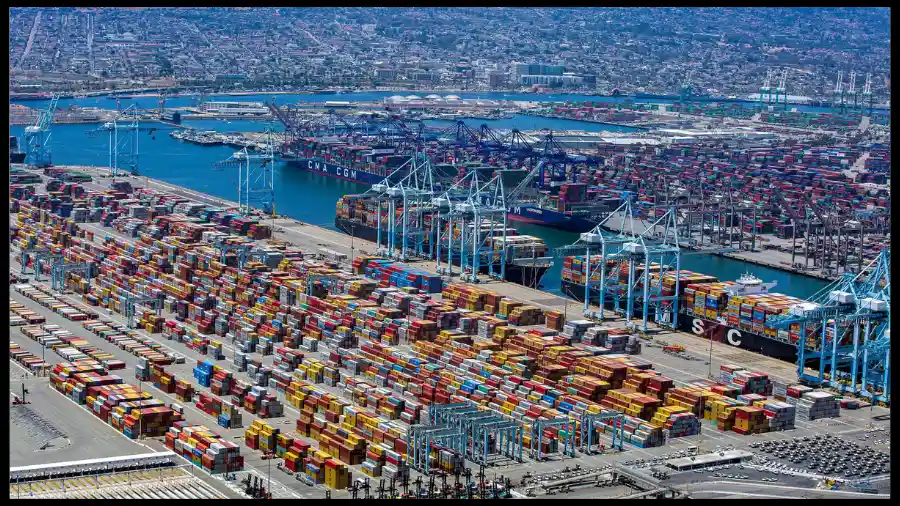
Trade at the Port of Los Angeles is still on pace for one of its biggest years, but the month-to-month pattern has turned choppy. Importers pulled cargo forward to get ahead of shifting tariff timing, then backed off as inventories stayed high. The result is a solid 2025 total, paired with a more cautious outlook for 2026. (Photo courtesy of Port of Los Angeles)

Click here for 30 second summary

Port of LA: tariff timing is driving choppy volumes into 2026

The Port of Los Angeles reported November 2025 volume of 782,249 TEUs, down 12% year over year, after earlier cargo pull-forward tied to tariff uncertainty. Loaded imports were 406,421 TEUs and loaded exports were 113,706 TEUs. The port said 2025 should finish north of 10 million TEUs and rank among its top three years.

  • Why the month swung
    Some importers accelerated orders during tariff windows, then slowed once inventories were built, creating a surge then a digestion phase across terminals and inland transport.
  • How 2026 is being framed
    Port leadership projected single-digit declines in imports in 2026 rather than a sharp drop, with inventory levels and trade-policy uncertainty as the big variables.
  • The friction point
    Uneven volume is harder to plan around than steady volume. It can briefly lift throughput, then pressure scheduling, labor utilization, and unit economics when demand cools. Exports remain a weak spot, with Reuters noting export volumes have fallen for 11 straight months.
Bottom line
Port of LA is finishing 2025 with strong annual scale, but the pattern is uneven. Tariff-driven timing shifts can lift near-term activity, then leave softer demand pockets heading into 2026.
Port of Los Angeles: tariff-driven volatility and a softer 2026 outlook
Item Summary Business mechanics Bottom-line effect
November 2025 snapshot The Port processed 782,249 TEUs in November, down 12% year over year. Loaded imports were 406,421 TEUs (about 11% lower) and loaded exports were 113,706 TEUs (about 8% lower). Empty units were 262,122 (about 13% lower). A year earlier, shippers were moving unusually heavy volumes, so 2025 comparisons are distorted. The Port framed November as easing from elevated 2024 levels, with demand pacing and tariff timing playing a major role. 📉 Near-term volume softness reduces peak-season urgency for carriers, terminals, trucking, and rail. 📈 Less surge pressure can support steadier operations and fewer congestion-related costs when the cargo is less “spiky.”
Tariff-driven volatility Port leadership described 2025 as uneven, with importers accelerating cargo during tariff “windows,” then slowing once inventory positions improved. Reuters tied the November import drop to earlier inventory builds aimed at avoiding tariffs on categories such as toys and auto parts. When shippers front-load, the supply chain gets a short burst of work (more vessel calls, more yard moves), followed by a digestion phase where orders pause while warehouses clear. That creates “roller coaster” utilization across terminals and inland transport. 📉 More volatility makes labor planning, equipment use, and vessel schedule integrity harder, and can raise per-box handling costs. 📈 When importers pull forward, ports and carriers can briefly benefit from higher throughput and better near-term utilization.
Exports stay weak Exports declined again in November, and Reuters reported export volume has fallen for the 11th straight month. Port commentary also pointed to limited upside from trade frameworks for agricultural and manufactured exports. Tariffs and retaliation tend to hit outbound flows differently than inbound consumer goods. Persistent export weakness often increases empty repositioning needs and can worsen equipment imbalances for carriers. 📉 Weak exports can pressure backhaul economics and increase empty moves, hurting network efficiency. 📉 Exporters face less predictable pricing and fewer service options if carriers adjust rotations around stronger import lanes.
2025 still trending “top 3” With one month left, the Port reported 9,447,731 TEUs handled year-to-date, about 1% higher than 2024. Leadership said 2025 should finish north of 10 million TEUs, placing it in the Port’s top three years. A high full-year total alongside down months is a hallmark of front-loading: early strength lifts the annual number even if late-year flows cool. It also means some demand has been pulled forward from the next period. 📈 Annual scale supports revenue visibility for terminals and port-related service providers. 📉 The “pulled-forward” effect can leave a softer demand pocket heading into 2026.
2026 outlook Gene Seroka said he does not expect volumes to fall sharply in 2026 and projected single-digit declines in imports, citing elevated inventory levels and continued uncertainty around trade policy. If inventories remain high, import order cycles typically slow until sales draw stocks down. Policy uncertainty can also push shippers to “wait and see,” delaying purchase orders and smoothing demand at a lower level. 📉 Softer imports can reduce peak pricing power and tighten budgets across drayage, rail, warehousing, and terminal labor. 📈 A mild decline (rather than a cliff) supports more stable planning and reduces the risk of sudden capacity shocks.
Operations and reliability The Port emphasized that 2025 cargo moved without congestion and that no ships backed up, even with policy-driven swings. Reliability matters when shippers are already dealing with tariff timing and cost uncertainty. Faster turns and fewer bottlenecks can reduce total landed cost and help protect service commitments. 📈 Strong fluidity improves competitiveness versus alternative gateways. 📈 For carriers and BCOs, fewer delays reduce detention, demurrage risk, and schedule recovery costs.
Notes: Figures and quotes reflect Port of Los Angeles November 2025 reporting. Actual 2026 outcomes will depend on trade policy, inventory drawdowns, consumer demand, and carrier network decisions.
📦

November 2025 cargo pulse in four numbers

November cooled off after earlier front-loading. The port still expects 2025 to finish north of 10 million TEUs.

Total volume
782,249 TEUs
Down 12% year over year versus elevated 2024 levels.
Down
Loaded imports
406,421 TEUs
Down 11% year over year, linked to earlier inventory builds ahead of tariffs.
Down
Loaded exports
113,706 TEUs
Down about 8% year over year. Reuters noted exports have fallen for 11 straight months.
Down
Empty containers
262,122 units
Down 13% year over year, reflecting softer two-way flow and equipment repositioning patterns.
Down
“All that cargo moved without congestion and not a single ship backed up.”
Port of Los Angeles executive director Gene Seroka, November 2025 briefing
🔁

How tariff timing turns into choppy volumes

The Los Angeles story this year is less about a single weak month and more about a repeating pattern tied to tariff windows.

1
Tariff signal hits the market
Importers react quickly when duty timing looks uncertain for consumer and industrial categories.
2
Cargo gets pulled forward
More boxes move earlier than normal, lifting throughput in a short burst.
3
Inventory digestion follows
Once warehouses are full, orders pause. That shows up later as a softer month, even if consumer demand is not collapsing.
4
Networks rebalance
Carriers and inland providers adjust to uneven demand, and exporters feel the knock-on effects when trade friction persists.
🧭

Who feels the swing first, and what it looks like

Volatility is rarely neutral. It helps some segments in short bursts and pressures others when the cycle flips.

Carriers
Upside: a pull-forward phase can lift near-term utilization.
Pressure: the digestion phase can soften demand, complicating capacity planning and schedule reliability.
Terminals and labor
Upside: bursty months raise moves and gate activity.
Pressure: uneven peaks make staffing, equipment use, and yard planning harder, pushing up per-box friction.
Trucking and rail
Upside: front-loaded flows raise drayage and intermodal volumes for a period.
Pressure: swings can leave assets underutilized later, with more idle time and less predictable weekly volume.
Importers
Upside: earlier ordering reduces exposure to sudden duty changes.
Pressure: the payoff is usually higher inventory carrying and a slower reorder cycle afterward.
Exporters
Upside: limited in this cycle, as tariff retaliation and trade exclusions weigh on outbound flows.
Pressure: Reuters noted export volumes have fallen for 11 straight months, keeping backhaul economics challenged.
2026 framing in one line: Port leadership expects imports to decline in the single digits, with uncertainty around tariffs and high inventories still shaping the order cycle.

The Port of Los Angeles is finishing 2025 with large annual volume even as individual months swing sharply, a pattern the port and outside reporting linked to tariff timing and inventory behavior. November’s drop in imports and continued export weakness underline how quickly demand can shift when shippers pull cargo forward and then pause ordering. Looking ahead, the port’s expectation of only a modest import decline in 2026 frames the next year as a slower, more uncertain period rather than a sudden collapse, with reliability and fluid operations remaining a key part of the port’s message.

We welcome your feedback, suggestions, corrections, and ideas for enhancements. Please click here to get in touch.
By the ShipUniverse Editorial Team — About Us | Contact