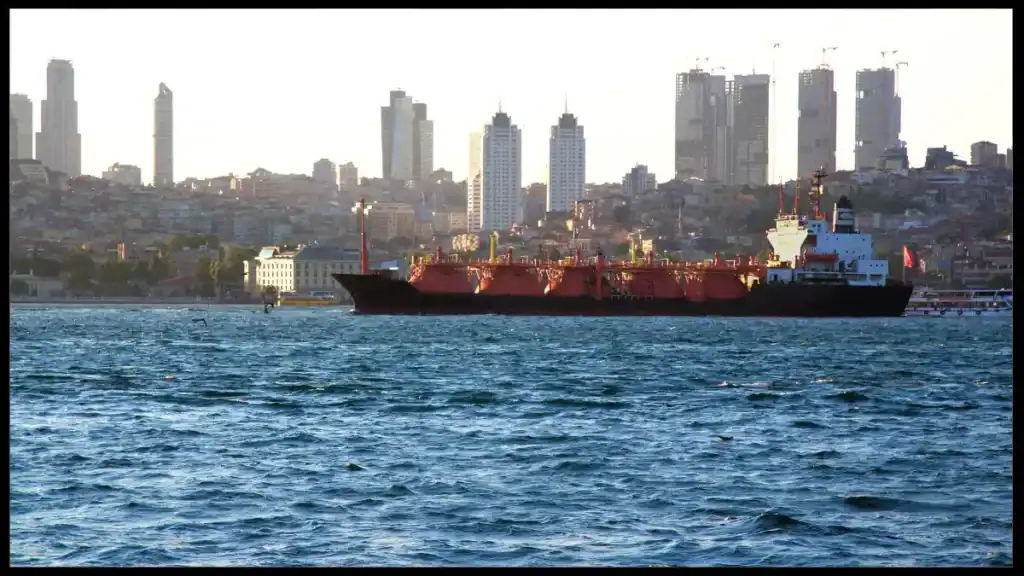
A sharp jump in Middle East exports and a thinner VLCC list have pushed benchmark crude routes to their strongest levels since late-2022. The MEG–China VLCC lane (TD3C) printed around W108, implying freight of ~$6.6m per voyage and a ~150% rise year-to-date, with tight supply amplified by longer Atlantic-to-Asia pulls and Baltic disruptions. Market chatter points to elevated day rates cascading into Suezmax and Aframax segments as September Middle East loadings top ~18 mb/d, the highest since April 2023. Operators with prompt, scrubber-equipped or fuel-efficient tonnage are capturing outsized TCEs; charterers face wider budget variance and demurrage risk.
Top Developments Impacting Maritime P&L — Tanker Rates Spike
Item
What Happened & Who’s Affected
Business Mechanics
Bottom-Line Effect
VLCC benchmark surges
MEG→China (TD3C) near W108 with voyage bills ≈$6.6m; strongest since late-2022. Owners with prompt eco/scrubber VLCCs benefit first.
Tighter prompt list, longer hauls, spillover to Suezmax/Aframax; higher demurrage on congestion/weather.
📈 Immediate TCE uplift for crude owners; 📉 higher freight for charterers and refiners.
Middle East loadings hit multi-month high
September ME exports tracking >18 mb/d, highest since Apr-2023; OPEC+ supply adds barrels to market.
More liftings tighten tonnage; export cadence supports sustained fixtures into Q4.
📈 Utilization and days-on-hire rise; 📉 bunker and voyage costs pass-through tested.
Tighter vessel availability
More ships tied up on long-haul Atlantic-to-Asia moves and extended port times; some units sidelined by retrofits or class windows.
Reduced effective supply pushes up Worldscale; charterers compete for earlier laycans.
📈 Rate support across sizes; 📉 schedule flexibility for charterers declines.
Atlantic barrels pulled East
Asia buyers tap U.S. Gulf, Brazil, West Africa; arbitrage opens on Dubai/Brent dynamics.
Longer tonne-miles and triangulation opportunities increase average voyage revenue.
📈 Earnings leverage for owners on long legs; 📉 refinery crude-logistics costs rise.
Russian flows reshuffled
Primorsk disruptions push more crude via Ust-Luga and Novorossiisk; some tankers delayed near the Baltic hub.
Routing changes and sanctions compliance reduce usable capacity and add voyage days.
Refiners/traders face higher freight and tighter laycans amid rate volatility.
GRIs/surcharges and revised voyage economics; optionality priced into fixtures.
📉 Margin compression if freight not hedged or passed through.
Owner positioning matters
Modern eco and scrubber-fitted tonnage secures premium employment; older units benefit but at lower delta.
Fuel spread capture and speed-for-positioning strategies amplify TCEs.
📈 Outperformance for efficient fleets; ↔ lag for high-consumption ships.
Near-term skew remains tight
Analysts flag elevated prints into early 2026 if export cadence and tonne-miles persist.
Limited orderbook deliveries near-term; utilization remains sensitive to Mideast liftings.
📈 Earnings visibility improving for crude owners; 📉 budget variance for charterers persists.
Note: Summary reflects multi-outlet reporting and market data on VLCC benchmarks, Middle East export volumes, and route reshuffles.
📈 Winners
📉 Losers
Spot VLCC owners: higher TD3C prints lift TCEs quickly and widen earnings versus time charter cover.
Suezmax and Aframax owners: spillover from VLCC tightness raises fixtures and demurrage opportunities.
Scrubber-equipped fleets: wider fuel spread improves netbacks on long Middle East and Atlantic legs.
Owners with modern eco tonnage: lower consumption translates to stronger voyage economics at the same Worldscale.
Brokerages active in crude: more spot activity and rate volatility expand commission pools.
Ports and agents on busy routes: additional calls and longer port stays drive fee and service revenue.
Refiners and traders on the buy side: higher freight raises crude landed cost and narrows processing margins.
Charterers with tight laycans: thinner prompt lists reduce flexibility and increase substitution risk.
Older high-consumption ships: weaker competitiveness against eco units limits premium employment.
Cargo programs tied to disrupted hubs: routing changes add days and elevate war-risk and insurance costs.
Short-haul arbitrage plays: longer-haul pulls to Asia dampen availability for regional moves.
Fixed-rate time charter exposure: upside capped for owners locked into below-market hires.
Snapshot reflects current crude export cadence from the Middle East, tighter VLCC availability, and knock-on effects across adjacent sizes.
Tanker strength is being driven by simple math: more Middle East barrels meeting a thinner prompt VLCC list and longer average hauls. Earnings are flowing most visibly to modern, fuel-efficient fleets and to owners exposed to spot, with spillover lifting Suezmax and Aframax prints. On the other side of the ledger, refiners and traders are absorbing higher freight and tighter laycans, and programs tied to disrupted routes face extra days and insurance friction.
How durable this window is will hinge on export cadence out of the Gulf, the persistence of Atlantic-to-Asia pulls, and any additional route disruptions that keep effective supply tight. Orderbook timing offers only muted relief near term, so volatility favors owners for now while charterers manage wider budget variance.