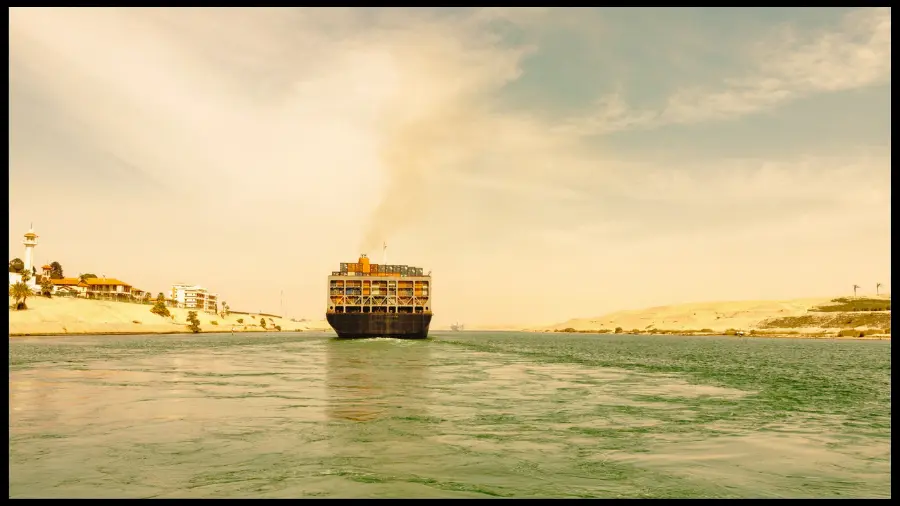
Two CMA CGM container ships have now transited the Suez Canal, a visible sign that major liners are starting to re-test Red Sea routings after the long diversion period triggered by Houthi attacks that began in late 2023. The Suez Canal Authority said the CMA CGM Jacques Saade crossed from the north on a voyage from Morocco to Malaysia, and the CMA CGM Adonis crossed from the south. CMA CGM’s published schedule also indicates it plans to route its India to U.S. INDAMEX service via the canal starting in January.
Click here for 30 second summary
CMA CGM puts big ships back through Suez, a real signal to the market
Two CMA CGM container ships have transited the Suez Canal, a visible sign that some carriers are reassessing Red Sea routings after a long diversion period. The Suez Canal Authority said CMA CGM Jacques Saade crossed southbound on a voyage from Morocco to Malaysia, while CMA CGM Adonis crossed northbound. Reuters also reported that no Houthi attacks have been reported since a ceasefire took effect on October 10, and that CMA CGM plans to route its India to U.S. INDAMEX service via Suez starting in January 2026.
Why one transit matters
It is a live test for risk teams, insurers, and planners. If repeated, it can shift internal approvals from “exception” to “repeatable routing.”
Immediate shipping math
A broader Suez return shortens voyage time versus Cape diversions, which raises effective capacity without adding ships and can cool spot and charter tightness.
Near-term friction
Networks can get choppy during the switch as rotations compress and arrivals bunch, even if the long-run outcome is better schedule efficiency.
Bottom line
If more liners follow CMA CGM through Suez on published strings, the container market can feel it quickly through capacity, rates, and charter demand. If security conditions reverse, the routing decision can snap back just as fast.
CMA CGM sends major boxships back through Suez with broader Red Sea return planning in motion
Item
Summary
Business mechanics
Bottom-line effect
Event snapshot
Two CMA CGM vessels transited the Suez Canal, signaling a cautious shift back toward Red Sea routings by a top-tier liner.
When a major liner sends high-profile tonnage through the corridor, it becomes a real-world “proof run” for security, insurers, and internal risk committees.
📌 A successful transit reduces uncertainty costs. If repeated, it can accelerate broader network normalization across container shipping.
Which ships
The Suez Canal Authority said CMA CGM Jacques Saade crossed from the north on a voyage from Morocco to Malaysia, and CMA CGM Adonis crossed from the south.
The specific hulls matter because they show the return is not limited to a small niche ship class. It is a network decision, not a one-off feeder exception.
📈 Improves confidence in planning. 📉 Any renewed incident risk would hit credibility fast and could reverse routing decisions.
Security backdrop
Reuters reported that since a fragile Gaza ceasefire took effect on Oct 10, no Houthi attacks on ships have been reported, prompting reassessment of the corridor.
Risk committees typically need a “quiet period” before reopening. A sustained lull can change insurer posture and internal approval thresholds.
📉 Less route risk can reduce indirect voyage costs tied to security measures and disruption buffers.
Next scheduled move
CMA CGM’s website schedule shows the company will use the passage for its India to U.S. INDAMEX service from January.
Moving from “case-by-case” to a published service routing is the difference between experimentation and systematic network reversion.
📈 Service stability can improve customer planning and reduce exceptions handling. 📉 A rapid switch can create schedule resets and short-term port bunching.
Capacity math
The primary operational change is voyage length. Shorter routings typically reduce sailing time versus longer diversions and can lower the number of ships needed to run a fixed weekly network.
When voyages shorten, “effective capacity” rises without adding newbuilds. That can quickly show up as less tightness in vessels, equipment, and schedules.
📉 Potential rate pressure if many carriers follow quickly. 📈 Cost savings per box for operators if reliability and utilization hold.
Freight and contracts
A broader return tends to weaken the “scarcity premium” created by longer routings, especially on Asia to Europe where the Suez link is strategically central.
Shippers renegotiate when they see route risk fading. Carriers defend revenue through contract structure, service differentiation, and capacity discipline.
📉 Lower spot upside if effective capacity returns. 📈 Better schedule integrity can support contract retention even in softer rate environments.
Charter market signal
If networks need fewer ships to deliver the same weekly strings, time-charter demand can soften, most visibly in the workhorse sizes used for mainline and relay services.
The first effect is often “less panic fixing” as buffers shrink. The second effect can be more prompt redeliveries or shorter duration cover.
📉 Downward pressure on charter rates if the return becomes widespread. 📈 Owners with high-spec, fuel-efficient tonnage still tend to hold relative value.
Transition risks
Reuters noted carriers remain cautious. A multi-line return can cause short-term port congestion as schedules compress and rotations re-sync.
Shorter voyages can create arrival bunching. Terminals and inland networks may see temporary peaks even as the long-run system becomes more efficient.
📉 Short-term disruption costs can rise during the switch. 📈 Long-run network costs can improve if stability persists.
Why Egypt cares
Reuters described the Suez Canal as a major foreign-currency source for Egypt, which is why the Authority highlights high-profile returns.
Canal authorities have a strong incentive to demonstrate safe, reliable transit conditions and encourage more published schedules to return.
📌 A sustained return can stabilize canal volumes and service expectations, influencing toll-revenue visibility and broader trade confidence.
Notes: Based on Reuters reporting and the Suez Canal Authority’s statements, plus CMA CGM published schedule indications for INDAMEX routing via Suez from January. Commercial impacts depend on sustained security conditions and the pace at which other carriers follow.
What a “test transit” changes, even before the whole network flips back
Route decision dashboard
A single transit is not a full reopening. It is a credibility check that sits at the intersection of security conditions, insurance posture, and schedule reliability.
Security signal
Incident lull and escort posture
When the corridor stays quiet, internal approvals typically move from “exception” toward “repeatable.”
Higher riskLower risk
Insurance signal
War risk pricing and endorsements
Insurer comfort is often the bottleneck. If terms tighten, the route can still be operationally feasible but commercially unattractive.
CostlierEasier
Network signal
Schedule compression and port bunching
Shorter voyages can improve reliability long-run, but the switch period can create arrival peaks as loops re-sync.
MessierSmoother
The capacity ripple in plain language
1
Shorter route time
A return to Suez reduces sailing distance versus Cape diversions for many trades.
2
Fewer ships needed per loop
When voyages shorten, the same weekly service can be maintained with less ship time tied up.
3
Effective capacity rises
More available ship days can appear in the market without any new deliveries.
4
Rates and charters react
Spot freight and time charter demand are often the first pricing areas to reflect the change.
Two forces pull in opposite directions
Supports Cost and reliability improvements
Less fuel and fewer days per round-trip for many loops.
Reduced need for schedule buffers and contingency sailings.
Faster equipment circulation when rotations stabilize.
Pressures Pricing and utilization
Higher effective capacity can soften tightness in vessels and boxes.
Spot freight can lose the scarcity premium built into long diversions.
Charter demand can cool if fewer ships are required to run the same strings.
Who feels it first
Liners Cost lever
A safe corridor can convert directly into lower voyage time and better schedule stability, but it can also bring rate pressure if too much capacity returns too quickly.
Shipowners in the charter market Demand sensitivity
If service loops need fewer ships, the reduction in cover demand can show up as softer time charter pricing and more competition for employment.
Ports and inland networks Transition bumps
The switch back can compress arrival windows and temporarily create bunching even if the long-run system becomes less stretched.
Canal ecosystem Volume signal
High-profile returns are a confidence marker that can encourage more scheduled routings to re-enter the canal, supporting volume visibility.
The key point is that a “test transit” has a market impact before it becomes a full network change, because it influences how quickly risk committees, insurers, and planners shift from caution to repeatable routing.
CMA CGM’s Suez transits are an early signal that big liners are starting to re-check Red Sea routings under current conditions, even if most networks still remain cautious. The business impact is less about one ship and more about confidence: if the corridor stays stable, voyage times shorten, effective capacity rises, and container freight pricing can respond quickly. At the same time, the changeover phase can create near-term schedule reshuffling as loops re-sync, with the clearest bottom-line effects showing up first in spot freight, charter cover demand, and the cost of operating buffers built into extended diversions.