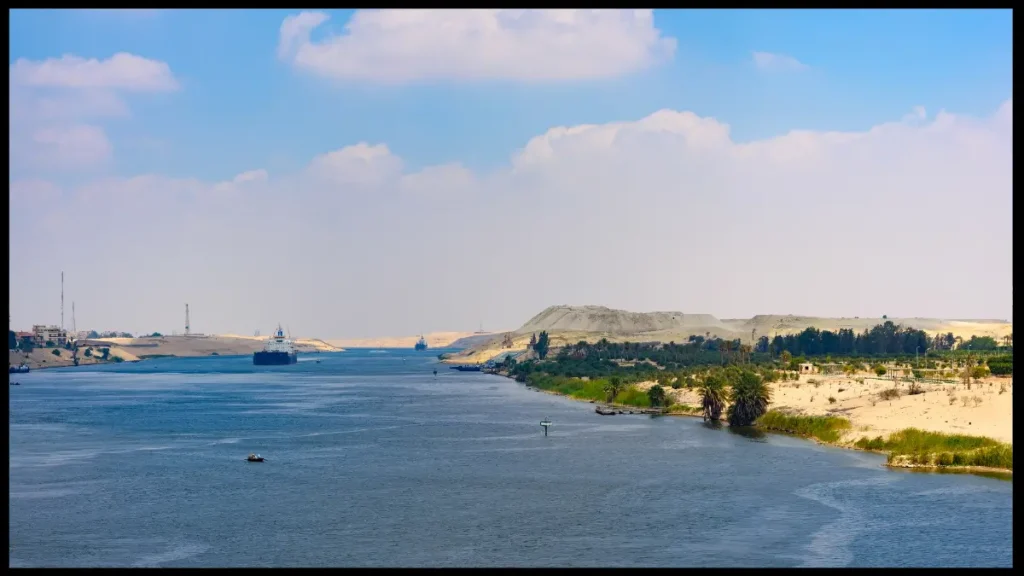
After months of Cape detours, traffic through the Red Sea and Suez is ticking up. Egypt’s canal authority says 229 ships resumed Suez transits in October and reported canal revenues up 14.2% year over year for July through October. The authority is also running targeted toll rebates to keep flows competitive. Insurers still classify the area as a war-risk zone, so returns are selective by trade, vessel, and cover terms. Net effect for owners: shorter voyages and lower fuel on lanes that return to Suez, tempered by added paperwork and war-risk costs where required.
Simple Summary in 30 Seconds
More ships are easing back into the Suez route. If conditions stay calm, trips are shorter, fuel use drops, and schedules stabilize. If risk ticks up, operators swing back around the Cape, which adds days and cost. This routing choice directly changes earnings.
What changed
Selective returns to Suez on key trades, with tighter security steps in place.
Cost and time impact
Suez saves days and bunkers versus the Cape. You still carry canal dues and war-risk cover.
What to track
Insurer approvals, canal advisories, incident reports, bunker prices, and any convoy or lane limits.
Bottom line: A durable Suez reopening lowers voyage cost and adds effective capacity. A setback pushes ships to the Cape, lifting time on the water and operating cost but supporting spot rates. Price both paths and keep security terms clear.
Suez/Red Sea: Traffic Recovery and Earnings Math
Issue
Summary
Business Mechanics
Bottom-Line Effect
Traffic snapshot
Operators are sending more ships back through Suez. Officials reported 229 resuming ships in October and a revenue lift for July to October.
Selective lane returns led by box and tanker corridors where risk is manageable and cover is available.
📈 Higher fleet productivity as detour days fall on returning routes.
Voyage economics
Suez is shorter than the Cape on Asia–Europe and MEG–Europe, which trims days at sea and fuel burn when security allows.
Distance and time savings vs. Cape; lower bunkers and less off-hire exposure; more frequent voyage turns.
📈 Better TCE potential from shorter cycles; 📉 less tonne-mile support if many ships shift off the Cape.
Insurance and security
The corridor remains a Joint War Committee listed area. War-risk premiums and endorsements still apply and rates move with events.
War-risk add-ons, routing advisories, BMP5 practices, documentation for AIS integrity and call approvals.
📉 Added opex for cover and guards; 📈 compliant fleets may command preference and steadier fixtures.
SCA incentives and dues
Targeted toll rebates exist for certain cargoes and strings, used tactically to defend share against Cape routing.
Eligibility by vessel type, route, and dates; owners coordinate with operators to capture rebates.
📈 Small direct cost relief on qualifying voyages; helps tilt the choice toward Suez.
Container network effects
More Suez use improves schedule stability compared with Cape diversions and reduces equipment imbalance.
📈 Lower disruption costs and fewer penalties; yields normalize as volatility eases.
Tanker flows and tonne miles
If crude and products return to Suez on key lanes, tonne-miles fall versus Cape routing, but port time and insurance friction can still tighten supply.
📈 Mixed rate impact: less distance lowers demand, yet friction and routing choices can keep spot firm.
What to watch next
Any change in incident frequency or insurer guidance can swing routing back to the Cape and reverse gains.
War-risk pricing, listed-area updates, SCA policy, bunker spreads, and carrier service advisories.
📈 Maintain dual plans and price both paths to protect margins.
Notes: The earnings impact varies by corridor, charter structure, and insurance terms. Monitor real-time advisories and rebate circulars when deciding route.
Route Impact Snapshot
Time & fuel
Suez re-use shortens long-haul legs versus the Cape on many Asia–Europe and MEG–Europe corridors, easing bunker burn and freeing days.
Insurance & security
War-risk cover and listed-area procedures still apply. Approvals and BMP5 discipline remain part of the voyage plan.
Capacity & rates
Shorter loops add “effective” capacity back to markets. Rates react to the balance between distance saved and any lingering friction.
War-risk premiums persistDocumentation load increasesRapid reversals still possibleTonne-miles soften if many switch
Relative Voyage Distance Index (Suez vs Cape)
Indicative planning bands. Actual routing varies by weather, security posture, and service pattern.
Lane
Suez route index
Cape route index
Asia ↔ N Europe
MEG ↔ Med/Europe (crude/products)
Asia ↔ East Med/Black Sea
Cost Stack Strips
Suez profile
Shorter distance lowers fuel share. Dues and endorsements remain material.
Cape profile
No canal dues but longer distance pushes fuel and time costs higher.
Illustrative composition only. Actual shares vary by ship, speed, bunker price, and insurance terms.
Risk Pulse Board
Traffic momentum
Selective return continues
War-risk posture
Listed area with active endorsements
Incident watch
Low to moderate but variable
Steady reopening
More trades adopt Suez. Fuel and time savings outweigh dues and cover. Rates normalize on added effective capacity.
Two-speed return
Selective lanes use Suez while others stick to the Cape. Volatility persists and pricing remains corridor specific.
Setback
New incidents drive a pivot back to the Cape. Longer voyages tighten supply and support spot but raise operating costs.
In short, a cautious shift back to Suez shortens voyages and smooths schedules on key lanes, but owners still carry war-risk and compliance costs. Earnings will swing with how durable the reopening is and how quickly insurers and operators loosen constraints.