Singapore’s Ammonia Bunkering Race Gets a New Japanese Push
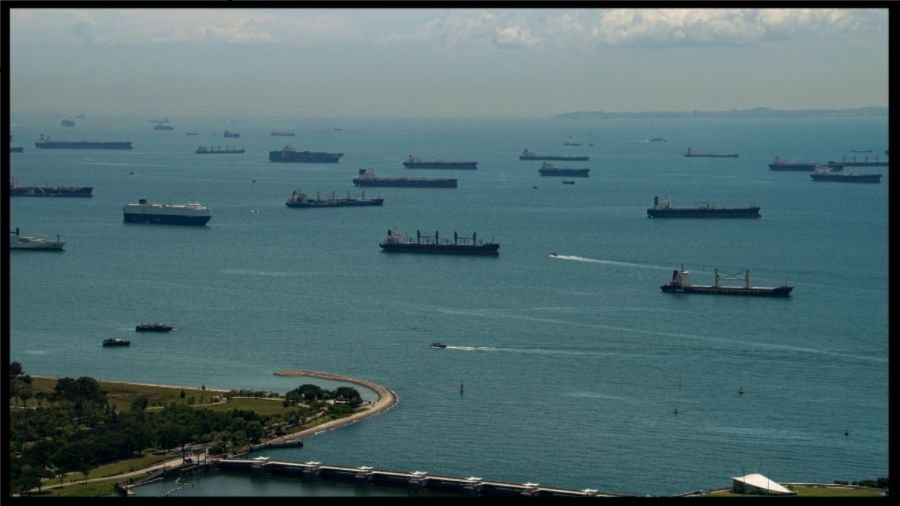
Singapore’s ammonia bunkering plans picked up again on March 17 after Sumitomo Corporation, K Line, and NYK Bulkship (Asia) said they had signed a memorandum of understanding to jointly carry out a front-end engineering design study and examine ownership arrangements for a newbuild ammonia bunkering vessel intended for use in Singapore. The announcement adds a new project layer to a fuel-transition program that has already been taking shape in the port through vessel design work, safety review, and preparation for future bunkering standards. Earlier groundwork included Approval in Principle for an ammonia-fueled ammonia bunkering vessel design developed for local use in Singapore, with that design due to be submitted to the Maritime and Port Authority of Singapore for evaluation, while a separate 5,000 cbm ammonia bunkering vessel has already been ordered for a Singapore-based demonstration project and is expected to be delivered in September 2027 under the Singapore Registry. At the regulatory level, Singapore has also said it plans to publish its first Technical Reference for ammonia bunkering in Q2 2026 to support safe operations, trials, and early adoption, so the latest Japanese-led move arrives as the port continues building both the vessel side and the rulebook side of an eventual ammonia bunkering market.
Subscribe to the Ship Universe Weekly Newsletter
Click here for 30 second summary of the full piece ▶
Singapore’s ammonia push is moving from ambition to hardware
Japan’s majors are stepping deeper into Singapore’s ammonia bunkering buildout with a new vessel FEED study and ownership review. The bigger signal is that the competition is shifting from future-fuel talk to control over the first practical bunkering assets and operating model.
- Fresh move a new Japanese partnership will study and structure a newbuild ammonia bunkering vessel for Singapore.
- Wider backdrop separate vessel designs, demonstrations, and ammonia bunkering standards are already advancing in the same port ecosystem.
- Commercial read-through the winner may be the group that aligns bunker tonnage, safety rules, fuel supply, and first customer demand earliest.
Singapore is trying to secure first-hub advantage in ammonia bunkering before ammonia-fueled ship demand scales. That makes this more than a vessel story. It is a contest over future marine-fuel infrastructure, operating standards, and early market control.
| Fast reader take | Shift now visible | Importance | Negative risk if progress stalls | Shows up first | Closest stakeholders |
|---|---|---|---|---|---|
| Singapore is moving from ammonia concept work toward practical bunkering architecture |
A new Japanese-led FEED study and ownership review is now targeting a newbuild ammonia bunkering vessel for Singapore.
FEED study
ownership model
|
The market is starting to decide who will own the first critical infrastructure rather than just who supports ammonia in principle. | If vessel design, safety approval, and commercial structure drift apart, ammonia adoption stays stuck in pilot mode. | More technical studies, consortium positioning, and first-mover negotiations around supply access. | Shipowners, bunker suppliers, port planners, fuel developers, class societies. |
| The bunkering vessel itself is becoming the strategic asset |
Multiple Japanese groups are now centering the rollout on dedicated bunkering tonnage rather than waiting for fixed terminal-only solutions.
ship-to-ship model
mobile infrastructure
|
A bunker vessel creates operating flexibility, lowers dependence on fixed berth access, and helps Singapore scale early demand more efficiently. | Without a workable bunkering vessel model, ammonia can remain technically possible but commercially awkward. | More focus on cargo handling design, transfer systems, emergency response planning, and harbor procedures. | Harbor authorities, ship operators, designers, emergency planners, traders. |
| Safety and standard-setting are now just as important as ship ordering |
Singapore is preparing its first Technical Reference for ammonia bunkering while project teams continue risk and engineering work.
technical reference
safety framework
|
In early fuel markets, the rulebook often determines market share as much as the hardware does. | Slow or fragmented standards can delay demonstrations, undercut lender confidence, and restrict commercial rollout. | Crew competency requirements, operational envelopes, custody transfer rules, and emergency-response design. | Regulators, class, insurers, operators, training providers. |
| Singapore is trying to secure first-mover advantage before ammonia-fueled tonnage arrives in volume |
The port is lining up standards, pilots, vessel concepts, and registry readiness ahead of the first ammonia dual-fuel ship arrivals.
hub strategy
future fuel positioning
|
If Singapore gets the early ecosystem right, it can shape regional fuel flows, operating practice, and shipping lane relevance. | Competing hubs could capture demonstrations, first cargoes, or longer-term bunkering market share if execution slips. | Registry activity, pilot calls, corridor partnerships, and fuel-producer tie-ups. | Singapore authorities, ship registries, engine makers, cargo owners, regional ports. |
| Japan’s shipping and trading houses are trying to influence the market from both vessel and fuel sides |
The latest move adds to a growing pattern of Japanese participation across bunkering vessels, fuel supply studies, and ammonia-fueled ship development.
Japanese consortiums
value chain play
|
Control over the early value chain can create long-tail advantages in chartering, fuel offtake, and infrastructure ownership. | Fragmented competing models could slow scale and leave the market with duplicated assets or underused infrastructure. | MOU activity, procurement moves, and commercial tie-ups around demonstration cargoes. | Trading houses, owners, financiers, ammonia producers, industrial buyers. |
Ammonia bunker launch meter
Early ammonia bunkering success depends on more than one vessel order. It depends on vessel readiness, safety rules, available receiving ships, and a workable commercial chain. This tool turns those moving parts into a single launch-readiness score.
The pieces that now matter most
- Dedicated bunkering tonnage has become the key enabler because it creates flexible ship-to-ship supply instead of relying only on terminal infrastructure.
- Safety references and harbor procedures will decide how quickly trials can convert into repeatable operations.
- Receiver-vessel demand matters because bunkering infrastructure without ammonia-fueled ships remains stranded capacity.
- Ownership structure matters because the first vessel has to make sense technically and commercially, not just politically.
Interactive launch score
Adjust the inputs to test how close a port ecosystem is to commercially usable ammonia bunkering.
Singapore’s ammonia story is becoming a race to operational credibility. The winner is unlikely to be the company with the boldest decarbonization language. It will be the group that can line up the bunker vessel, risk controls, fuel source, harbor permissions, and real customer demand at the same time.
We welcome your feedback, suggestions, corrections, and ideas for enhancements. Please click here to get in touch.