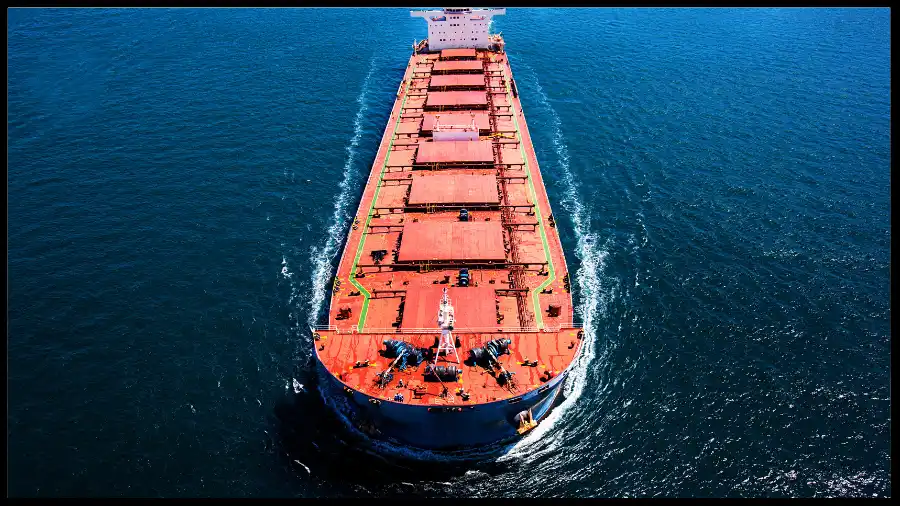
Guinea has formally launched the Simandou iron ore project, with partners marking start of operations this week and first shipments slated around mid to late November 2025. The integrated mine-rail-port system spans 600+ km to new coastal transshipment facilities and is designed to ramp toward up to 120 million tonnes per year of high-grade ore once fully commissioned. Early cargoes will move via the WCS port as Rio Tinto’s SimFer port finishes build-out. For capesize markets this adds a fresh West Africa to Asia flow, lengthening tonne-miles and reshaping fixture patterns that have long centered on Australia and Brazil.
Click here for 30 second summary
Simple Summary in 30 Seconds
Guinea’s Simandou project has started operations and first iron ore shipments are beginning in November 2025. The integrated mine, rail and port system is designed to ramp toward about 120 million tonnes per year with more than 600 km of new rail linking the pits to the coast. This adds a fresh West Africa to Asia flow that is longer than Australia to Asia and closer to Brazil to Asia in haul length, which increases tonne miles and changes capesize scheduling.
🚨 What changed
A new high grade export stream enters the market from West Africa. Early liftings use coastal transshipment while final port facilities complete commissioning.
📍 Where and flows
Exports move from Guinea to China and other Asian buyers, with India also in play. The haul is materially longer than Australia to Asia, which lifts tonne miles per cargo.
💰 Risk and cost effect
More sail days per voyage support capesize utilization and can help day rates when demand is steady. Commissioning and rainy season risks can still cause laycan slippage and demurrage until the system settles.
📌 Bottom line: Simandou adds a long haul iron ore corridor from West Africa into Asia. Owners who position tonnage near West Africa and use flexible clauses can capture the utilization tailwind while limiting early ramp risk.
Simandou iron ore launch reshapes capesize trades: Industry Impact
Point
Summary
Business mechanics
Bottom line effect
Launch status and first liftings
Start of operations celebrated this week in Guinea. First shipments targeted for mid to late November 2025 using WCS transshipment while SimFer port completes.
Stockpiles built to ~2 million tonnes. Rail movements already trialed, linking inland pits to coast.
📈 Near-term new cargoes for capesizes. 📉 Early-phase schedule risk around commissioning windows.
Scale and ramp profile
Design capacity up to ~120 mtpa when fully commissioned. Market coverage could reach a mid-single-digit share of seaborne supply once ramped.
Progressive mine and rail ramp with dual-developer model: SimFer for Blocks 3–4 and WCS for Blocks 1–2.
📈 Structural tonne-mile support for capesizes as West Africa to Asia lanes develop.
Rail and port system
More than 600 km of new multi-use rail plus coastal barge and transshipment facilities commissioned for the initial phase.
Rail throughput, train length, and port cycle times set the upper bound for early volumes; power and weather can constrain.
📈 Efficiency gains tighten voyage windows. 📉 Any bottleneck can add waiting time and demurrage.
High grade ore
Ore is high grade and attractive for lower-emission steelmaking routes and pelletizing.
Premium grades can command better pricing, sustaining flows even in softer price cycles.
📈 Supports stable liftings to China and other premium buyers, improving employment visibility.
Route mix and tonne miles
West Africa to China and other Asian buyers lengthens average haul compared with Australia, and competes with Brazil flows.
New export strings add optionality for owners and charterers, change ballasting patterns, and may lift triangulation efficiency.
📈 Positive for capesize utilization and day rates when demand is steady.
Counterparties and governance
Project partners include Rio Tinto SimFer with Chalco and the Guinean state on Blocks 3–4, and Winning Consortium Simandou with Baowu interests on Blocks 1–2.
China-linked offtake likely dominates early, with Guinea marketing its state shares.
📈 Bankable counterparties for fixtures. 📉 Concentrated buyer mix can shape rate dynamics.
Impact on Australia and Brazil
Added supply can trim margins for higher-cost exporters and shift share over time.
Pricing premia for grade and freight spreads determine how much Simandou displaces other origins.
📉 Potential pressure on some long-haul fixture volumes from incumbents. 📈 More lanes for owners to bid.
Risks and sensitivities
Commissioning reliability, rainy season exposure, community and environmental approvals, and political stability in Guinea.
Delays could push volumes to the right; rail or port constraints would cap early throughput.
Confirmed first cargo window, monthly run-rate, and any guidance on 2026 export targets.
Fixture counts West Africa to China, laycans at the new terminal, and demurrage trends.
📈 Early utilization pop if transit and loading times hold. 📉 Rate volatility if commissioning slips.
Notes and sources: partners marked start of operations this week; first shipments targeted around November 2025; stockpiles ~2 mt ready; full ramp aims up to ~120 mtpa with 600+ km rail and new port system. Ownership across Blocks 1–2 (WCS with Baowu interests) and Blocks 3–4 (Rio Tinto SimFer with CIOH) per company and press materials. Simandou expected to be a multi-billion dollar project that shifts a meaningful share of global seaborne iron ore once ramped.
Simandou Launch - What Changes For Capesize Scheduling
New West Africa to Asia flows, longer hauls, different ballast logic
Quick visuals showing route geometry, ton mile effects, commissioning sensitivities, and who gains or loses on the P and L.
Voyage geometry
Simandou to East Asia is a longer haul than Australia to Asia and competes with Brazil flows.
Owners can pair West Africa exports with new backhaul legs, changing traditional ballast patterns in the South Atlantic and Indian Ocean.
Higher grade cargo helps sustain liftings through softer price patches, supporting steadier scheduling once ramped.
Ton mile lift potential
Ton miles equal tons moved × distance sailed. When the same ore cargo sails farther, it ties up a capesize for more days. More ship-days per cargo can lift utilization and support day rates when demand is steady.
Illustrative relative haul length (Brazil set to 100%)
Australia → North Asia
~0.45×
Simandou → Asia
~0.8×
Brazil → North Asia
1.0×
What this means in practice
More sail days per cargo: Simandou lifts typically take longer than Australia lifts, so a ship is occupied longer per voyage.
Utilization tailwind: if ore demand holds, extra days at sea shrink prompt lists and can help day rates.
Triangulation gains: West Africa exports unlock different backhauls, cutting empty ballast and improving daily earnings.
Bars are illustrative to show relative haul length. Actual distances and days vary by load/discharge ports, routing, weather and speed.
Commissioning sensitivities
Rail throughput and port cycle times set the near term ceiling for shipments.
Rain season exposure and power availability can add waiting time and demurrage.
Transshipment handoffs need tight procedures to protect laycans and avoid rehandles.
Early lanes
What to expect
Fixture feel
Owner signal
Guinea to China capesize
Longer haul than Pacific routes, subject to commissioning tempo and weather windows.
Firming on fresh demand
Position tonnage in West Africa
Guinea to India capesize
Shorter than China but still meaningful ton miles, premium grade supports liftings.
Selective interest
Offer flexible laycans
Backhaul to Brazil or South Atlantic
Changed ballast logic as more ships exit West Africa loaded rather than in ballast.
Watch lists tighten
Rework triangulation plans
📈 Supportive signals
New capesize demand stream can lift utilization and stabilize earnings when Pacific slows.
Higher grade ore supports steady liftings and improves fixture visibility for owners and charterers.
More routing options allow better triangulation and less idle ballast time.
📉 Headwinds
Ramp delays cap early volumes and can trigger laycan slippage and demurrage.
Concentration of early offtake in a few buyers can shape rate behavior and negotiation leverage.
Port and rail bottlenecks add variability to voyage times and cash flow.
Owner checklist for the first wave
1) Positioning
Keep prompt capes near West Africa with bunker plans and crews ready for Asia or India discharge. Watch queue times, weather and STS windows.
2) Clauses
Add flexible laycans, commissioning allowances, rain season language and clear terms for any transshipment handoff.
3) Ops discipline
Align agents, bunkers and surveys early. Confirm rail and berth timing to reduce idle time and demurrage risk.
4) Market watch
Track West Africa to Asia fixtures, laycan slippage and queue length. Decide between short period cover or spot based on these signals.
In plain terms, Simandou adds a new long haul iron ore stream from West Africa into Asia. That supports capesize utilization and offers more routing options, but early volumes depend on how smoothly rail and port operations settle. Owners who position tonnage close to West Africa and use flexible clauses will capture the upside while limiting delay risk.