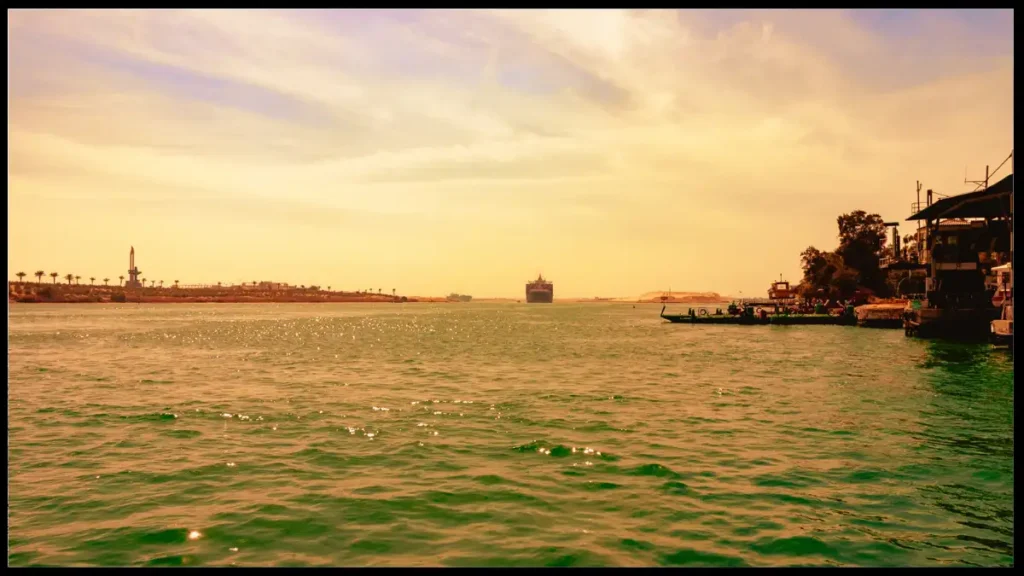
Improved security signals and a fragile Gaza ceasefire have eased Red Sea attack risk, and Egypt’s Suez Canal Authority is actively inviting carriers to move back from the Cape of Good Hope to the shorter Suez route. Canal revenues and transits have already climbed as more ships test the corridor, helped by a halt in Houthi attacks and diplomatic efforts to reassure operators.
| Red Sea And Suez Controlled Return Signals: Industry Impact |
| Item |
Summary |
Business Mechanics |
Bottom-Line Effect |
| Security backdrop |
A ceasefire in Gaza and public messages from Yemen linked to halting Red Sea attacks have coincided with several weeks of calmer conditions and no new reported strikes on commercial ships.
|
The perceived threat around Bab al Mandab has shifted from active missile and drone risk to a more latent one, though operators still plan routes as if the danger could resurface at short notice.
|
📈 Opens the door for test voyages and escorted transits, 📉 but risk premia do not disappear overnight given the possibility of sudden escalation.
|
| Suez Canal Authority stance |
Egypt reports a low double digit rise in Suez revenue and vessel counts since mid year and is actively calling on carriers to bring services back from the Cape route as security improves.
|
More ships have started to reappear in the daily transit statistics, encouraged by political summits, direct carrier engagement and marketing that stresses route safety and shorter passages.
|
📈 Canal becomes a viable planning option again on some strings, 📉 owners lose the extra tonne miles they earned on full Cape detours once flows normalize.
|
| Early movers and trials |
CMA CGM has already sent larger boxships through with naval escorts and is preparing a full capacity return from December, using a mix of trial voyages and monitored sailings to rebuild confidence.
|
By moving first, early adopters can secure attractive slots, demonstrate service reliability to cargo owners and test convoy and escort protocols while rivals remain cautious.
|
📈 Potential to gain schedule and customer share advantages, 📉 exposure to any residual or renewed security incidents along the corridor.
|
| Cautious carrier group |
Maersk has signed a strategic partnership with the canal and says it will gradually reintroduce Suez legs once conditions allow, while Gemini partners Maersk and Hapag-Lloyd state there is no specific timing yet to shift their Cape based East West network.
|
Large alliances and vessel sharing structures need a stable risk picture to reorganize full service networks, so they keep core loops on the Cape while monitoring security and the experience of early returners.
|
📉 Limits immediate release of capacity and rate pressure, 📈 but reduces bunker and time savings in the near term for these carriers compared with a fast switch back.
|
| Capacity release from Suez return |
Sea based supply chain analysis suggests that a full restoration of Suez routing on Asia to Europe and related trades could free around 2.1 million TEU of nominal capacity, roughly 6.5 percent of the active global box fleet.
|
Detours around the Cape added several ships per weekly loop. Shorter Suez transits reduce the number of hulls needed to move the same volume, effectively increasing capacity without new deliveries.
|
📉 Medium term downward pressure on freight rates if demand is flat, 📈 short term risk of port congestion as traffic patterns and arrival bunching reset.
|
| Freight and schedule impact |
A controlled return is more likely to appear as a gradual shift in transit times and schedule reliability rather than an overnight freight collapse, especially if carriers phase vessels back over several weeks.
|
Line management can hold some of the benefit through blank sailings, slow release of spare ships and selective rate discipline, while still offering faster transits to key cargo owners.
|
📉 Spot volatility moderates but does not disappear, 📈 better schedule integrity can support premium services and contract renewals.
|
| Fuel burn and emissions |
Returning to Suez cuts voyage distance for Asia to Europe and Gulf to Europe trades, which lowers bunker consumption and emissions for each round trip compared with the Cape of Good Hope detour.
|
Lower fuel use improves voyage economics on a per sailing basis and helps carriers and cargo owners with CII scores and regional carbon pricing schemes that penalize longer routes.
|
📈 Stronger margins on individual voyages and a cleaner carbon story, even if fleet wide earnings soften as more capacity returns.
|
| Insurance and war risk pricing |
War risk premia and special coverage requirements are unlikely to vanish immediately, but a sustained halt to attacks and more navy escorts can gradually bring down additional insurance costs.
|
Clubs and underwriters watch incident data and security assessments. As the risk profile improves, surcharges and extra documentation demands can be trimmed, although a sudden incident could reverse this quickly.
|
📉 Over time, lower add on premiums reduce voyage opex, 📈 continued compliance workload in the interim as insurers and banks test the new normal.
|
| Ports and hinterland logistics |
A renewed Suez flow will push more Asian cargo back into North Europe and Med hubs on shorter rotations, which may stress terminals and inland networks if the capacity release is concentrated in a short window.
|
Ports must handle a jump in arrivals as loops convert back to shorter routes. Yard, crane and rail barge capacity become critical, especially in gateways that already struggled during earlier peaks.
|
📈 Opportunity for well prepared ports and inland operators to capture more volume, 📉 risk of congestion, storage fees and schedule knock ons where infrastructure is tight.
|
| Owner playbook and outlook |
Most owners are planning for a staged Suez return scenario, where security remains fragile and network changes are phased. They balance shorter voyages and lower fuel costs against the loss of extra tonne miles once full detours end.
|
Chartering teams model both Cape and Suez variants for key strings, update bunker and time charter assumptions and build clauses that allow for route changes if the risk picture shifts again.
|
📈 Those who adjust early can secure better contracts and cost positions, 📉 those who misjudge the timing risk getting caught with the wrong route choice as conditions change.
|
|
Notes: This snapshot reflects public statements and data as of late November 2025, including canal revenues, carrier guidance, security developments and capacity estimates. Actual impacts vary by trade lane, ship size, alliance setup and risk appetite.
|
For owners and charterers, a controlled Suez return is likely a balancing act. The longer the industry stays on the Cape, the more tonne miles and short term rate support you keep, but at the cost of higher fuel bills and fragile schedules. A gradual move back through the canal will shrink voyage times and lower bunkers while quietly adding capacity back into the system. The portfolios that come out ahead will be the ones that already know which contracts, ships and lanes depend on Red Sea tension for their returns, and which can still earn well once East–West trades stop running in emergency detour mode.