Ship Passage by Permission in Hormuz
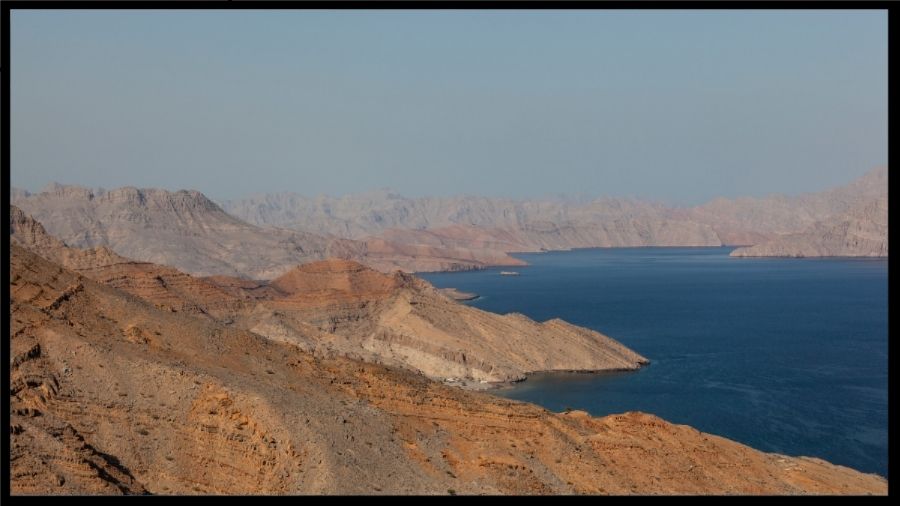
Iran has now put its position on Hormuz transit into more formal language, telling the United Nations Security Council and the International Maritime Organization that “non-hostile” vessels may pass through the Strait of Hormuz if they coordinate with Iranian authorities and refrain from involvement in hostile actions against Iran. In the same communication, Tehran said ships linked to the United States, Israel, or other aggressors do not qualify for innocent passage. The message comes while commercial movement through the strait remains heavily disrupted and operators continue to navigate a threat picture that includes possible mine deployment, drone and missile attack risk, selective access signals, and continuing uncertainty over whether any broader international protection framework will emerge. Current reporting and official advisories show that the issue is no longer whether Hormuz is simply open or closed. It is now a corridor where transit conditions are being framed as conditional, politically filtered, and subject to active coordination demands even as the wider security environment remains unstable.
Subscribe to the Ship Universe Weekly Newsletter
Click here for 30 second summary of the full piece ▶
Hormuz moves from disruption to conditional passage
Iran has now told the U.N. and IMO that non-hostile ships can transit Hormuz if they coordinate with Iranian authorities, while ships linked to hostile states do not qualify for innocent passage. That shift comes while the same corridor still carries mine, drone, missile, and policy risk severe enough to keep normal commercial confidence badly damaged.
- New passage formula transit is being framed as conditional and coordinated, not broadly routine.
- Threat picture mine and drone danger still sits on top of the access debate.
- Operator reality tolerated transit is not the same thing as a commercially normal or widely insurable route.
The latest Iranian signaling creates a narrower operating lane for ships seen as acceptable, but it does not remove the broader reasons mainstream operators still view Hormuz as politically unstable, physically dangerous, and hard to price with confidence.
| Fast reader take | Shift now visible | Importance | Negative shipping consequence | Shows up first | Closest stakeholders |
|---|---|---|---|---|---|
| Transit is being framed as conditional rather than normally open |
Iran has told the U.N. and IMO that non-hostile ships may transit if they coordinate with Iranian authorities and avoid involvement in hostile acts.
coordination required
non-hostile ships
innocent passage disputed
|
Passage becomes a managed political process rather than a routine commercial right in practice. | Owners and charterers face a corridor where compliance, identity, and political interpretation become part of voyage planning. | More operator caution, more pre-transit coordination questions, and more uncertainty over which ships are viewed as acceptable. | Tanker owners, ship managers, charterers, flag states, insurers, naval liaison teams. |
| Conditional access is not the same as safe access |
The same operating picture still includes serious mine, drone, missile, and small-boat threat concerns across the wider Gulf and Hormuz approaches.
mine risk
drone threat
kinetic exposure
|
Even vessels that may be allowed through still face a waterway where physical threat conditions remain unresolved. | Passage may be politically possible while remaining commercially and operationally unacceptable for many mainstream operators. | Continued low traffic, more waiting outside the zone, and higher reluctance to commit tonnage. | Owners, masters, underwriters, war-risk desks, cargo planners. |
| Policy signals remain volatile and hard to price |
Tehran’s language on who may pass has shifted over recent days, while outside powers continue debating pressure, protection, and response options.
volatile signaling
policy uncertainty
|
Shipping markets do not just need a route to be technically open. They need stable rules around who can move and under what conditions. | Sudden changes in declared access conditions can undermine fixture confidence and insurance willingness. | More short-notice route changes, higher advisory dependence, and weaker market confidence in “reopening” headlines. | Freight desks, operations teams, legal teams, insurers, commodity traders. |
| Selective passage is already changing ship behavior |
Some vessels have been using China-linked identity messaging near the area, apparently to reduce perceived targeting risk.
identity signaling
risk labeling
|
Operators are adapting not only by rerouting, but also by trying to shape how they are perceived by the parties controlling risk. | This adds ambiguity to AIS interpretation, commercial transparency, and confidence in declared affiliations. | More unusual AIS messages, more scrutiny from compliance teams, and more caution from counterparties. | Intelligence providers, owners, compliance teams, coastal states, insurers. |
| Mainstream traffic still cannot treat Hormuz as commercially normal |
Reporting and advisories continue to describe traffic as heavily disrupted, with commercial movement still far below normal conditions.
traffic disruption
confidence collapse
|
A handful of tolerated movements does not restore a functioning market for broad commercial transit. | The market fragments between ships willing to test conditional passage and those that remain on the sidelines. | Stranded tonnage, uneven pricing, selective routing, and persistent insurance gating. | Tanker operators, liner networks, energy buyers, ports, cargo interests. |
Conditional passage stress gauge
This tool measures when a chokepoint is merely disrupted and when it has shifted into a permission-based operating model. Move the sliders to test whether the corridor behaves more like a difficult commercial lane or more like a politically filtered transit zone that still carries hard physical risk.
The pressure points now in play
- Coordination demands matter because a route starts behaving differently once ships are expected to coordinate with a coastal state for acceptable passage.
- Mine and drone risk matter because political tolerance does not remove physical danger from the waterway.
- Policy volatility matters because operators still face rapidly changing signals about access, retaliation, and outside military response.
- Commercial confidence matters because a corridor is not truly open if mainstream shipping cannot schedule, insure, and route ships through it normally.
Interactive passage score
Adjust the inputs to estimate whether Hormuz looks closer to controlled transit under conditions or a corridor still too unstable for routine commercial use.
The latest Iranian signaling does not restore normal trade-lane behavior. It creates a narrower concept of passage where some ships may be tolerated under conditions, but the broader market still has to weigh kinetic risk, mine-clearance uncertainty, drone danger, and unstable policy signals before treating Hormuz as commercially usable again.
We welcome your feedback, suggestions, corrections, and ideas for enhancements. Please click here to get in touch.