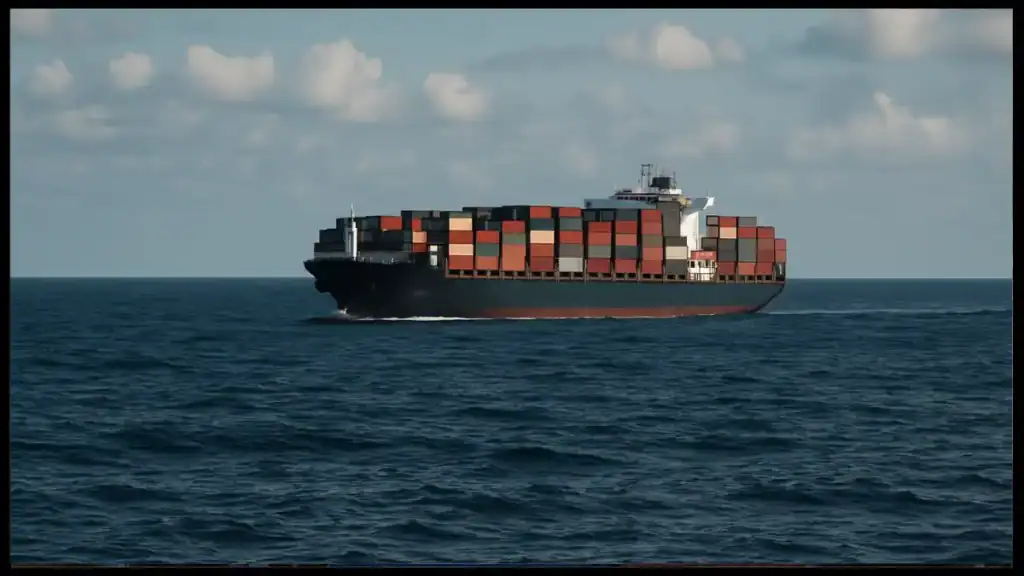
In recent days, container shipping has been marked by developments that highlight both resilience and uncertainty across the sector. A leading carrier adjusted its financial outlook in the face of geopolitical pressures, while a major data provider expanded its reach through acquisition. Key European ports reported solid gains, fresh orders at Chinese yards pointed to long-term confidence in capacity, and the rate environment reflected a split between steady charter markets and softening spot prices. Together these moves paint a clear picture of an industry adapting quickly to shifting trade flows and evolving global dynamics.
Container Shipping - Recent Developments
Development
What Happened
Industry Impact
Timing
Hapag-Lloyd trims full-year guidance
Carrier narrowed FY25 outlook after H1 results amid tariff and Red Sea uncertainty.
Signals cautious revenue expectations and continued cost focus despite volume growth.
Reported last week
Xeneta acquires eeSea
Deal adds global schedule, transit-time and reliability datasets to Xeneta’s rate platform.
Strengthens data-driven procurement and service-level benchmarking for BCOs and NVOs.
Announced today
Hamburg H1 rebound
Container throughput rose 9.3% year-on-year to 4.2m TEU in H1 2025.
Suggests European demand resilience and recovering network connectivity.
Reported today
Seaspan orders 12 x 9,000 TEU at CSSC
Order split across Hudong-Zhonghua and Shanghai Waigaoqiao yards in China.
Extends mid-size fleet pipeline; underscores China’s shipbuilding pull for boxeships.
Reported today
Charter vs. spot: signals diverge
Charter rates stayed firm while spot rates fell for a ninth straight week.
Carriers lean on capacity management and charters to cushion sliding spot markets.
Last 7 days
Note: This table highlights distinct developments across carriers, data/tech, ports, fleet orders, and pricing dynamics; it is not a duplicate of prior Arctic/Churchill coverage.
Industry Impact Overview
Recent developments in container shipping underline how the sector is not just shifting through carrier strategies and port recoveries, but also through deeper structural changes. Technology integration, port competitiveness, and workforce challenges are becoming equally critical in determining resilience. The interplay between financial caution, infrastructure expansion, and long-term fleet investments is reshaping how container shipping operates on a global scale.
Key Impacts
Financial Caution: Major carriers are tempering earnings forecasts despite stable or growing volumes, reflecting heightened sensitivity to geopolitical and trade uncertainties.
Technology Integration: Data-driven acquisitions are giving shippers and forwarders greater transparency on rates, transit times, and service reliability.
Port Competitiveness: European and Asian ports are jockeying to secure volumes, with throughput rebounds in some hubs signaling shifts in routing preferences.
Fleet Evolution: Orders for new vessels point to long-term confidence, but also raise questions about balancing future capacity against decarbonization mandates.
Market Divergence: Persistent differences between spot and charter rates highlight the challenge of aligning short-term freight markets with long-term strategic planning.
Container Shipping Industry Signals
Focus Area
Recent Movement
Implications
Outlook
Labor & Crewing
Growing concerns about attracting and retaining skilled seafarers for container vessels.
Risk of staffing shortages could affect fleet utilization and operational reliability.
Training investments and better crew conditions will be needed to stabilize workforce pipelines.
Alliances & Partnerships
Carrier alliances continue adjusting schedules to optimize use of major hubs.
Could increase reliance on fewer ports, impacting regional competitiveness.
More reshuffling possible as cost pressures mount.
Port Infrastructure
Key hubs are accelerating dredging and expansion projects to handle larger boxships.
Boosts competitiveness of ports positioned on main East–West routes.
Likely to strengthen concentration of flows through select global gateways.
Sustainability Pressure
Fleet orders increasingly ammonia- or methanol-ready, aligning with decarbonization rules.
Capital-intensive retrofits and builds strain balance sheets but futureproof assets.
Momentum likely to accelerate with EU ETS and global carbon measures.
Freight Market Volatility
Spot rates softened again while charter activity remained firm.
Carriers risk margin squeeze if imbalance persists into peak season.
Continued volatility expected as demand outlook remains uncertain.
Note: This table is designed to complement recent container shipping headlines by highlighting industry-wide themes such as labor, alliances, infrastructure, sustainability, and pricing dynamics.
We take these developments as indicators of how container shipping continues to evolve under pressure from markets, regulation, and operational demands. The picture is not static; it is a mix of challenges and adjustments that point toward ongoing change. We’ve assembled the details to provide clarity on how different forces intersect, offering a straightforward view of the industry’s present trajectory.