Shadow Fleet Scrutiny Rises as Russia Issues Warnings
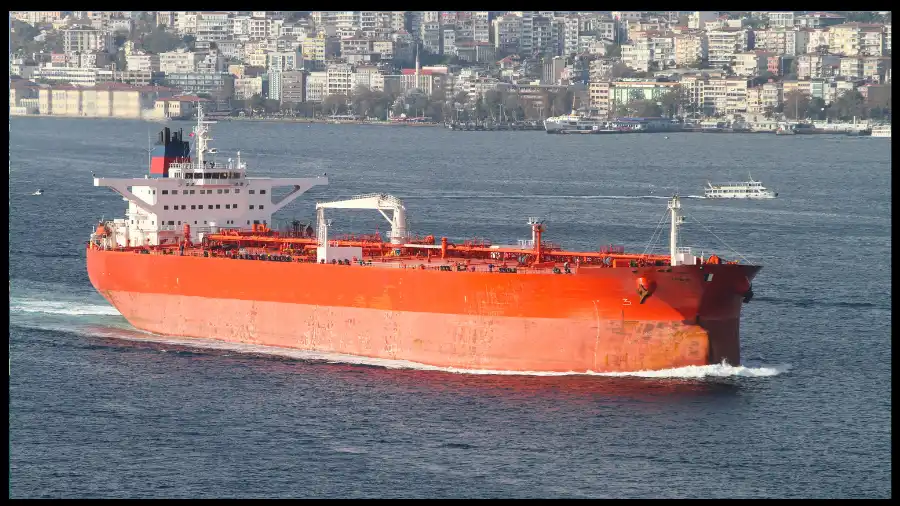
UK and regional partners are publicly discussing tougher action against vessels described as part of the Russian “shadow fleet,” with particular attention on ships whose flag status is disputed or unverifiable. Russia has responded with warnings against interference. In practical terms, the developments being discussed center on boarding or questioning scenarios, closer review of flag and insurance documentation, and more time spent clearing approvals during Baltic departures and onward voyages.
Subscribe to the Ship Universe Weekly Newsletter
Click here for 30 second summary
Shadow fleet interdiction talk in one read
UK and northern European discussion is increasingly centered on tougher scrutiny of tankers linked to sanctions evasion, with focus on vessels whose flag or insurance documentation is disputed or unverifiable. Russia has issued warnings against interference, and the public posture on both sides has sharpened.
-
Main mechanics being discussed
More frequent flag verification, insurance document checks, and possible questioning or boarding scenarios near sensitive waterways. -
Why the Baltic lane is exposed
Long-haul crude movements that begin near multiple jurisdictions can pick up delay risk from checks and coordination, even without any cargo interruption. -
Near-term observable signals
Longer clearance timelines, more variable ETAs around transit windows, and wider approval re-check cadence on voyages viewed as higher risk.
If scrutiny tightens in practice, the first effect is execution friction, not a new trade route: more time lost to verification and approvals can stretch voyage cycles and reduce effective availability on Baltic-to-Asia legs.
| Signal | Shifting | Execution friction that shows up onboard | Commercial read-through |
|---|---|---|---|
| Interdiction moves from theory to posture | UK messaging has become more explicit about stronger enforcement against shadow fleet activity, including willingness to work with European partners on tougher measures. | Higher probability of inspection style encounters, including questioning, document checks, and time lost to coordination and waiting for clearances. | Charterers and owners price in a bigger “time-to-clear” variable, especially for north European approaches and departures. |
| Legal focus: stateless and falsely flagged vessels | Officials are leaning on the idea that vessels without a valid flag, or falsely claiming a flag, have weaker protections under UNCLOS and can face action within international law. | Flag validation and insurance proofs become the first friction point. Any mismatch can trigger delays, diversion decisions, or more detailed scrutiny. | Compliance quality becomes a competitive separator: clean paperwork and verifiable cover can reduce churn versus peers running thin. |
| Baltic states push a shared playbook | Nordic and Baltic partners have signaled joint action and coordinated guidelines, framing shadow fleet traffic as a safety, security, and environmental risk beyond sanctions optics. | More consistent enforcement behavior across multiple coastal states means fewer “easy” transits. Crews may face repeated checks across the same voyage cycle. | Voyage planning adds friction buffers. Laycan discipline gets harder, and the value of schedule slack increases. |
| Direct intervention examples are already visible | European authorities have begun applying pressure through insurance and flag status queries, including instances where suspect ships reversed course after being challenged. | Operators may choose to avoid certain waters or change routing when challenged, which can lengthen transit and disrupt discharge timing. | Longer or more complex routing increases cost variability and reduces effective fleet availability through longer round trips. |
| Russian warning signals escalation risk | Russian officials have warned against interference and have floated the possibility of escorting tankers, framing interdiction concepts as hostile action. | Any escorting posture raises the chance of tactical stand-offs and heightens bridge team workload. Waiting areas and rendezvous behavior can become more conservative. | War-risk perception can shift fast even without an incident. Underwriter questions and approval loops tend to tighten as posture hardens. |
| Operational reality: approvals and insurance churn | The combination of tighter enforcement talk and counter-warnings points toward more frequent re-checks of documentation, coverage, and voyage legitimacy. | Shorter quote validity, more follow-up questions, and more “pause points” between fixture, nomination, and transit. | All-in voyage costs become less predictable. The market often prices uncertainty through wider rate expectations and higher contingency budgeting. |
| Crude flow impact: Baltic-to-Asia is the exposed leg | Enforcement posture matters most where shadow fleet volumes have to pass close to multiple jurisdictions and key waterways on the way out of the Baltic and into longer-haul trades. | Even small delays compound on long-haul cycles. A few days lost per voyage can materially reduce effective supply for certain segments. | Forward positioning tightens if delays become consistent. Expect more sensitivity in prompt tonnage availability and rate discovery. |
Public discussion in the UK and parts of northern Europe is increasingly focused on tougher scrutiny of tankers associated with sanctions evasion, including attention on vessels whose flag status< or insurance documentation is disputed or unverifiable. Russia has issued warnings against interference, and recent messaging points to a higher likelihood of questions, checks, and coordination delays around sensitive transits.
Operational posture
More checks, more “pause points”
Expect more frequent moments where a voyage slows for validation, clarification, or clearance, even without any change in cargo plan.
Legal vulnerability being discussed
Unclear flag status
The focus is on ships that appear falsely flagged or effectively stateless, which can trigger deeper questioning.
Counter-signal
Warnings and possible escort tone
A harder response posture raises the chance that monitoring becomes more visible and time-consuming during transits.
The dial is a simple way to visualize how this story shows up in practice: time lost to checks and coordination can matter as much as the headline itself.
Execution touchpoints that can add delay minutes into delay days
Flag validation becomes a first-pass filter. Any mismatch or uncertainty tends to trigger deeper review.
Insurance and P&I documentation can be requested and re-checked during transit windows near multiple jurisdictions.
Boarding or questioning scenarios create variable dwell time that does not follow normal port-call patterns.
Reroute or hold decisions may appear when clearances stretch, pushing ETAs and discharge sequencing.
The Baltic-to-Asia crude leg is exposed because small delays compound across long-haul cycles. Even a few days per voyage can reduce effective availability by stretching round-trip duration.
Delay to Effective Availability
Convert added delay into a simple “trips per year” and cost sizing. This is arithmetic only and does not assume any rate move.
Trips per year (before)
-
Trips per year (after)
-
Effective availability change
-
Added voyage-days per year
-
Added gross time cost ($/year)
-
Added net running cost ($/year)
-
We welcome your feedback, suggestions, corrections, and ideas for enhancements. Please click here to get in touch.