Russia’s Arctic LNG Winter Problem as Too Few Ice-Capable Carriers to Keep Cadence
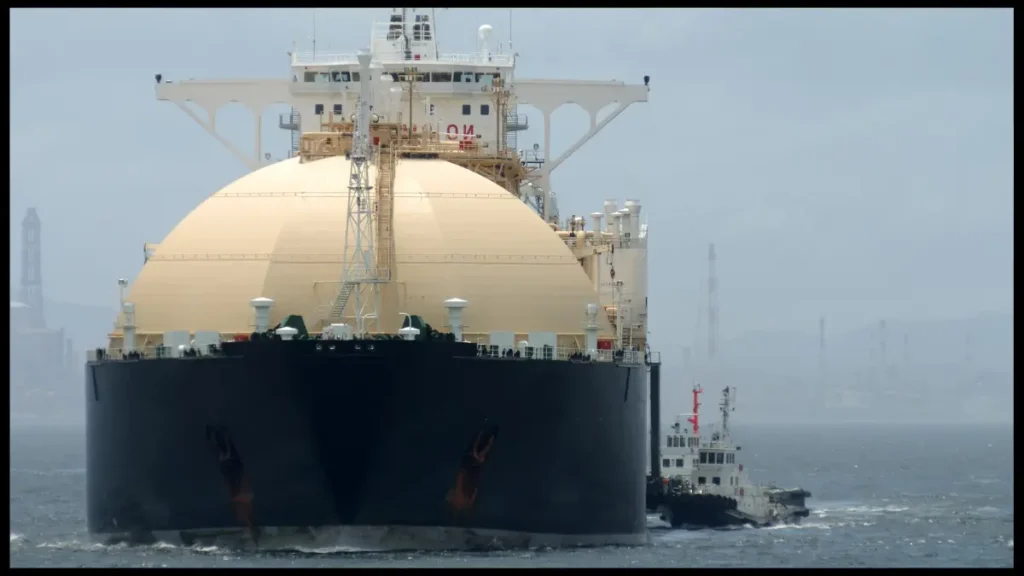
Recent reporting on Russia’s sanctioned Arctic LNG logistics highlights a hard winter constraint: ice-class LNG carriers are limited, and when that capacity is unavailable, exports can stall quickly as storage fills. Coverage has described Arctic LNG 2 relying on a single ice-capable carrier during winter lift windows, after earlier periods where tanker scarcity forced curtailments. The practical shipping impact is not just “can it load,” but when cargoes can clear, where transshipment must happen, and how uncertainty shows up in risk pricing and contract friction.
Subscribe to the Ship Universe Weekly Newsletter
Click here for 30 second summary
Arctic LNG under sanctions is running into a winter shipping ceiling
Recent reporting on Russia’s sanctioned Arctic LNG logistics highlights a blunt constraint: ice-capable LNG carriers are limited, and winter conditions shrink flexibility. When the specialized ships are scarce, cargo timing becomes uneven, storage fills faster, and exports can slow even if the plant is ready to load.
-
The bottleneck that controls everything
Ice-class lift availability sets the monthly export ceiling, because conventional LNG carriers cannot easily replace it during heavy ice periods. -
Why transshipment becomes more important
Flows often depend on ice-class shuttle legs to ice-free handoff points, followed by ship-to-ship transfers onto conventional tonnage, adding timing and documentation touch points. -
Where the market feels it
The knock-on shows up in risk review and pricing sensitivity: uncertainty around lift capacity and cadence can matter as much as the cargo volume itself.
In winter, this trade behaves like a capacity-constrained system: a small number of ice-capable ships can determine whether cargo clears smoothly, bunches into bursts, or backs up into slowdowns that ripple into transshipment patterns and risk pricing.
Arctic LNG logistics: winter turns ship availability into a hard ceiling
When projects are sanctioned and ice conditions intensify, the export system behaves like a chain with a single weak link. Ice-capable lift is the gating factor, and the knock-on effects tend to show up as uneven cargo timing, heavier reliance on intermediate storage, and wider uncertainty bands in risk review.
The logistics chain that matters in winter
In open-water seasons, conventional LNG carriers can do more of the work. In winter, the system leans harder on ice-class capability and on "handoff" infrastructure that keeps cargo moving when direct voyages are not practical.
Load at Arctic export terminal
Winter conditions compress flexibility. If the ice-capable ship is not available, export timing slips quickly.
Ice-class leg to an ice-free handoff point
Ice-capable tonnage becomes the "valve" for flow. Round-trip time and weather windows dictate throughput.
Intermediate storage and staging
Floating storage units and shore storage can buffer timing. When storage fills, production or loading has to slow.
STS transfer to conventional LNG carriers
Transshipment adds optionality but also adds touch points. Each handoff increases schedule and documentation friction.
Discharge into end markets
Flows that clear still face higher sensitivity. Counterparties watch timing gaps, routing patterns, and servicing constraints.
Where friction tends to concentrate
1) Throughput ceiling
With limited ice-capable LNG carriers, exports can be constrained even if the plant is ready to load.
2) Storage pressure
Storage acts like a shock absorber until it fills, then timing becomes non-linear and disruptions compound.
3) More checkpoints
Transshipment and ship-to-ship activity can increase inspection, screening, and contractual debate around delays.
4) Serviceability risk
Specialized ships may depend on specific yards and parts. When servicing is constrained, reliability becomes harder to maintain.
Ice-Class Lift Bottleneck Model
A scenario calculator to translate "how many ice-capable ships are actually available" into a rough monthly export ceiling, storage pressure, and cadence risk. Defaults are placeholders you can adjust.
Max cargoes per month
1.6
Ships × (days / round trip).
Max export ceiling (m³/month)
120,000
Cargoes × cargo size.
Storage pressure (net m³/month)
+100,000
Inflow minus export ceiling.
Buffer runway (months)
1.6
How long storage covers net surplus.
Cadence risk
High
A simple indicator from surplus vs buffer.
Implied export gap (days)
18
Spacing between cargoes at this cycle time.
Bars: export ceiling by ship availability (your inputs)
Winter logistics for sanctioned Arctic LNG are increasingly being defined by a simple limiting factor: how many ice-capable ships are actually available and serviceable at the moments cargo needs to clear. Recent vessel-tracking based reporting has pointed to a single year-round ice-capable LNG tanker effectively keeping winter exports moving for Arctic LNG 2, while other coverage has also highlighted how tanker shortages can force slowdowns when storage fills. At the same time, Russia is pushing domestic Arc7 output forward at Zvezda, but sanctions-driven shipbuilding and equipment constraints continue to shape how quickly additional ice-class capacity can realistically appear.
We welcome your feedback, suggestions, corrections, and ideas for enhancements. Please click here to get in touch.