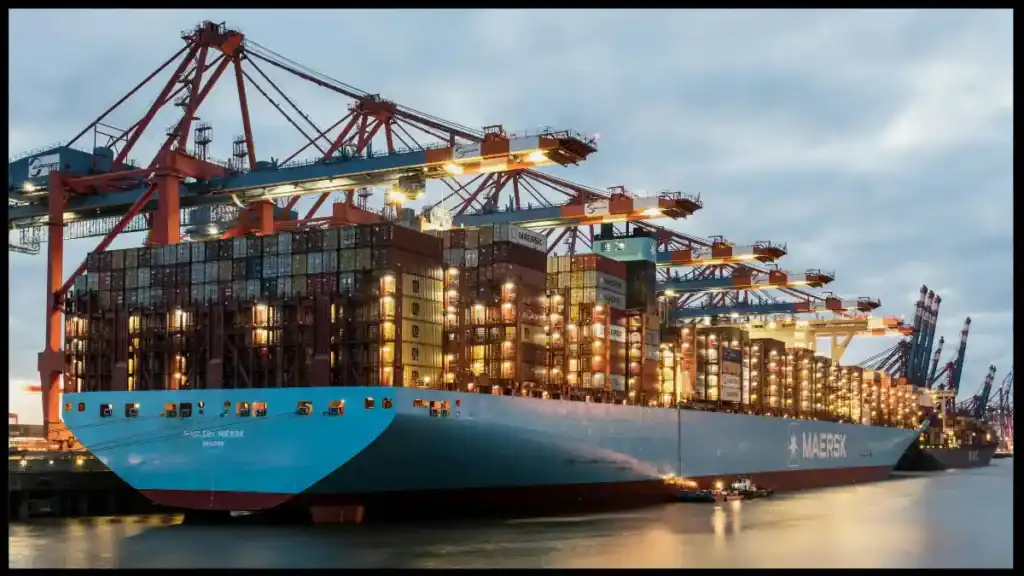
Maersk has outlined a fleet upgrade plan covering roughly 200 time-chartered ships in cooperation with multiple owners. The focus is on fuel-saving retrofits, performance software, and compliance upgrades that reshape opex, emissions scores, and employment prospects across busy trades.
Maersk’s Retrofit Program — Industry P&L Impact
Story
What Happened and Who is Affected
Business Mechanics
Bottom Line Effect
Scope and partners
Maersk and a broad group of shipowners plan retrofits on about 200 time-chartered vessels across sizes and ages.
Program management and standardized work packages lower per-vessel engineering and yard time.
📈 Cost per unit reduced by scale, 📈 faster turnaround improves fleet availability.
Energy saving devices
Propeller and rudder upgrades, wake equalizing ducts, premium hull coatings, air-lubrication where feasible.
Fleet-wide speed and consumption baselines enable tighter schedule design and more reliable arrival windows.
Predictable fuel curves improve service planning and slow-steaming strategies where demand is soft.
📈 Lower operating variance, 📉 fewer fuel surcharges needed in steady states.
Vendor ecosystem
OEMs, coating suppliers, propeller specialists, and digital vendors benefit from multi-year volume.
Framework agreements and repeatable kits shorten lead times and quality checks.
📈 Consistent unit pricing and support, ↔ execution risk mitigated by standardization.
Downside risks
Supply chain bottlenecks, yard congestion, and verification friction for performance guarantees.
Delays can raise off-hire and defer savings, data gaps can complicate benefit sharing.
📉 Temporary opex uptick if schedules slip, ↔ benefits accrue once vessels rejoin service.
Summary reflects publicly described program parameters and typical outcomes for large-scale ESD and optimization campaigns in liner trades.
📈 Winners
📉 Losers
Participating shipowners: improved hire prospects and residual values after efficiency upgrades.
Maersk and charterers on fuel accounts: lower daily consumption and better emissions intensity scores.
OEMs and service vendors: multi-year volume for propellers, coatings, ESD kits, and performance software.
Repair yards and riding squads: steady retrofit pipeline that smooths dock utilization.
Green finance and insurers: stronger cases for sustainability-linked loans and favorable risk assessments.
Crews and ops teams: clearer performance baselines and data tools that stabilize schedules.
Non-upgraded competitors on similar loops: higher fuel bills and weaker CII ratings reduce charter appeal.
Older, fuel-hungry tonnage: larger earnings gap versus retrofitted peers on slow-steam networks.
Owners with tight yard access: delays increase off-hire and defer savings capture.
Bunker suppliers on affected routes: incremental demand reduction from lower consumption per voyage.
Verification laggards: slow measurement and validation can limit benefit sharing and hire adjustments.
Ports with low productivity: less attractive for optimized schedules that value predictable turnaround.
Retrofit Kit — Components and Typical Fuel Impact
Propeller upgrade
Estimated 2% to 6% fuel reduction
Tip re-blade, optimized pitch
Wake equalizing device
Estimated 1% to 4% fuel reduction
Flow straightening at stern
Premium hull coating
Estimated 1% to 5% fuel reduction
Fouling resistance, smoother skin
Air lubrication (where feasible)
Estimated 3% to 10% fuel reduction
Bubble layer cuts resistance
Carbon Intensity Snapshot
Before
Higher grams CO₂ per ton-mile
After
Lower intensity with ESDs and tuning
Retrofit Execution Windows
Bundle with statutory drydock to compress downtime
Riding squads for software, engine tuning, minor installs at sea or alongside
Yard selection aligned to trade loops to reduce deviation
Illustrative share executed without full drydock
Cost and Benefit Archetypes
Model
Capex Bearer
Savings Allocation
Notes
Owner-funded
Owner
Owner retains via higher hire potential
Boosts residual value post-program
Charterer contribution
Shared
Performance-based sharing formula
Requires verified data streams
Service fee per saving
Vendor financed
Pay-as-you-save structure
Common for software and routing
Performance Verification Stack
Noon reports
Baseline and exception flags
High-frequency telemetry
Shaft power, RPM, SFOC
Weather and routing
Current, wind, wave normalization
Third-party audit
Methodology and data QA
Execution and Supply Risks
Risk
Impact
Mitigation Signal
Yard slot congestion
Extended off-hire, delayed ROI
Block booking across multiple docks
Hardware lead times
Schedule slips
Framework agreements and buffer stock
Underperformance vs model
Weaker savings capture
Verified trials and post-fit tuning
Program KPIs
Avg fuel reduction
3% to 8%
CII band shift
Upward likelihood
Off-hire per kit
Compressed
Verification quality
High
Re-charterability
Improved
A coordinated retrofit push across a large time-chartered pool can shift unit economics quickly when savings are standardized and verified. The greatest P and L leverage tends to come from stacking multiple modest efficiency gains, compressing off-hire by bundling work, and locking in cost-sharing terms that reward real-world performance. The end result is potentially a fleet that burns less, scores better on emissions metrics, and secures stronger employment options on competitive loops.