Qatar Waters Strike Marks Gulf Attack Wave’s Return
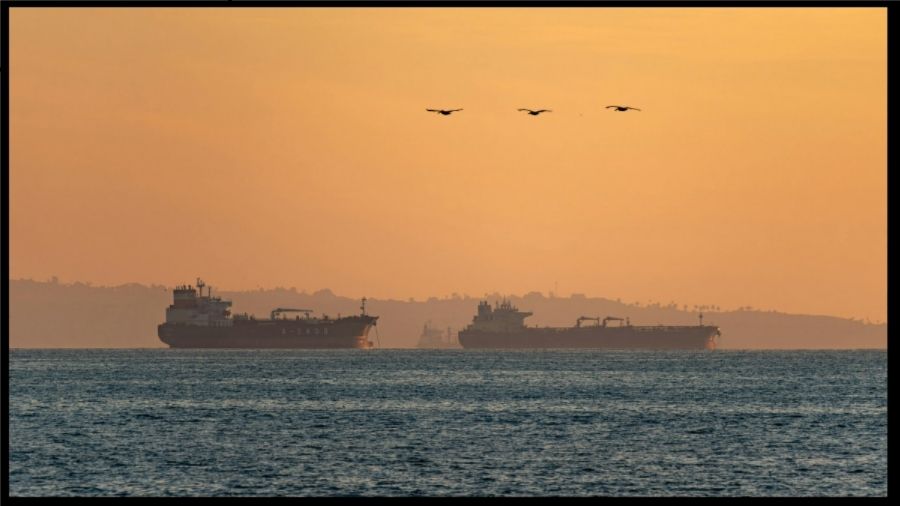
A fuel oil tanker chartered by QatarEnergy was hit in Qatari waters in the early hours of April 1, in what officials described as part of a broader missile attack directed at Qatar. The vessel, Aqua 1, was operating north of Ras Laffan when it was struck above the waterline, with one impact causing a fire that was later extinguished and another projectile reported to remain unexploded in the engine room area. Qatari authorities said two incoming missiles were intercepted and a third hit the tanker, while maritime reporting placed the ship about 17 nautical miles north of Ras Laffan at the time of the incident. No casualties or pollution were reported, but the strike ends a short lull in Gulf ship attacks and pushes the threat picture closer to one of the region’s most important energy export corridors.
Subscribe to the Ship Universe Weekly Newsletter
Click here for 30 second summary ▶
The strike off Qatar pushed Gulf ship risk back into active escalation
The latest incident centers on Aqua 1, a fuel oil tanker working in northern Qatari waters near Ras Laffan, where a projectile impact damaged the hull above the waterline and triggered a fire that was later extinguished. Reporting tied the strike to a wider missile attack aimed at Qatar, with local authorities saying two incoming missiles were intercepted and a third hit the tanker. The vessel’s crew was evacuated safely, no injuries were reported, and no pollution has been identified so far, but the event reopens a maritime attack cycle that had briefly gone quieter and places fresh pressure on traffic moving around one of the Gulf’s most critical energy zones.
| Impact lane | Latest marker | Immediate operating read | Commercial transmission | Terminal and routing implication | Next checkpoint |
|---|---|---|---|---|---|
| Tanker damage event | Aqua 1 was hit above the waterline and a fire broke out before being extinguished. Confirmed physical strike | The market now has a confirmed vessel-hit event in Qatari waters rather than a distant warning or advisory-only condition. | Owners, charterers, and insurers immediately have to price not just transit risk, but proximity risk near a major export coastline. | Routing decisions around northern Qatar and approaches tied to Ras Laffan become more sensitive to timing and naval posture. | Watch for any further updates on the unexploded projectile and the vessel’s repair status. |
| Missile spillover into shipping | Qatari authorities tied the tanker hit to a broader three-missile attack, with two intercepted. Ship caught inside wider strike pattern | That shifts the event from a one-off maritime mystery into a clear overlap between state-level missile activity and commercial shipping exposure. | The cost effect can spread faster because vessels are now exposed to attack patterns aimed at the state and infrastructure around them, not only at ships themselves. | Ships may need to account for both direct sea-lane hazards and collateral exposure near strategic industrial zones. | Watch whether future incidents cluster around infrastructure-linked waters rather than open-lane passages alone. |
| Ras Laffan proximity | The strike occurred north of Ras Laffan, the site of Qatar’s main LNG export system. Energy corridor pressure | The operating concern is no longer only Hormuz passage. It now includes waters serving one of the world’s most important gas export hubs. | Risk spreads into tanker scheduling, bunker planning, terminal calls, and customer assumptions about load-window reliability. | Nearby energy-linked vessel traffic may face tighter movement controls, extra screening, or delayed sequencing. | Watch for any changes in port call procedures, convoy-style protection, or offshore holding behavior. |
| Attack-wave renewal | Maritime reporting described the incident as the return of Gulf vessel attacks after a short lull. Cycle restarted | The latest event suggests the risk curve is not fading in a straight line and can re-accelerate after a pause. | Freight and cover markets usually react more sharply to renewed sequences than to isolated incidents because they imply persistence. | Nearby ports and anchorages can experience abrupt caution-driven slowdowns even without direct damage at the berth. | Watch whether the next 48 hours bring copycat attacks, stand-off strikes, or another lull. |
| Crew safety and pollution | No casualties or pollution were reported after the strike and evacuation. Damage without spill | That limits the immediate environmental consequence, but does not remove the commercial shock from the strike itself. | Markets can still tighten on a no-casualty event because operating confidence, not only damage severity, drives behavior. | Authorities may keep traffic moving more than they would after a spill, but with a much more defensive operating posture. | Watch for revised safety zones, inspection rules, or temporary movement restrictions. |
| Regional energy backdrop | The strike lands amid broader damage already reported to Qatar’s energy system. Stacked disruption risk | Shipping risk is now layered on top of existing stress around export capacity and infrastructure resilience. | A vessel hit near Qatar can amplify concerns far beyond one hull because it interacts with already strained LNG and fuel supply assumptions. | Cargo planning may shift from routine scheduling toward prioritized windows and defensive substitution where possible. | Watch whether ship attacks start interacting with export outages closely enough to reshape cargo allocation patterns. |
We welcome your feedback, suggestions, corrections, and ideas for enhancements. Please click here to get in touch.