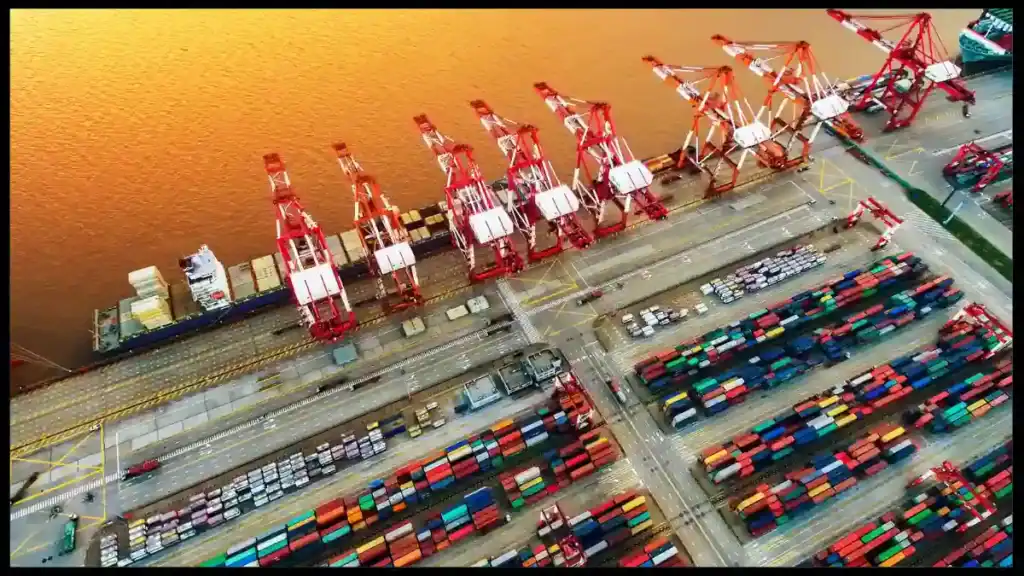
Over the last few days, port headlines have spanned everything from strategic “keep it open” battles in Sydney to heated public hearings in coastal Karnataka, emergency response in Baltimore, and major U.S.–India infrastructure steps at Nome and Vizhinjam.
Recent Port Developments & Infrastructure Upgrades
Port / Project
What Happened (Date)
Importance
Next Steps / Watch Items
Glebe Island Port (Sydney, Australia)
Business & industry leaders urged the NSW government to keep the working port operating rather than convert the site entirely to housing; they argue the port’s location supports major projects and reduces heavy-haul trucking.
Preserves last central-harbour logistics footprint for oversize cargo and construction inputs; reduces citywide congestion exposure if key break-bulk moves shift.
Government deliberations on a hybrid model (port + housing); implications for Western Harbour Tunnel logistics and future metro-area land use.
Keni Port Project (Karnataka, India)
A public hearing drew large turnout and tense exchanges, with fisheries groups and environmental advocates voicing strong objections; authorities recorded both support and opposition.
Highlights social-license risk and potential schedule uncertainty for coastal greenfield ports; livelihood and ecology concerns front and center.
Regulator review of submissions; any further hearings, studies, or conditions could alter project scope and timeline.
Port of Baltimore (USA)
Bulk carrier W-Sapphire had an onboard explosion and fire on departure; no injuries reported. The main channel was briefly closed while debris (including a detached hatch) was recovered, then reopened.
Demonstrates robust incident response and channel resilience near the 2024 bridge-collapse corridor; minimal sustained disruption to port traffic.
Ongoing inspections of the vessel; follow-on safety advisories and any findings relevant to hazardous coal cargo handling.
Port of Nome Expansion (Alaska, USA)
USACE awarded a ~$399.4M Phase 1A contract to Kiewit, including a 1,200-ft causeway extension and ~600-ft of new dock face—first step toward a deep-draft Arctic port.
Advances U.S. Arctic access, SAR and logistics posture; expected to reshape northern sea-route support over the medium term.
Phase-sequenced construction and subsequent dredging; schedule performance and environmental windows will be key milestones.
Vizhinjam International Seaport (Kerala, India)
Kerala sanctioned ₹1.83 crore to appoint a consultant for a DPR on port-led industrial development, including logistics zones and connectivity upgrades.
Signals a pivot from “port first” to “port + industry” ecosystem—critical for sustainable gateway operations and local value capture.
Consultant selection; detailed planning for container yards, PPP logistics sites, NH-66 interchange, and planned 9 km rail tunnel.
Recent port news highlights how decisions in Sydney, Baltimore, Nome, Vizhinjam, and coastal Karnataka ripple far beyond local headlines. Together, they reveal the tension between urban development and port access, the social license required for new terminals, the vulnerability of supply chains to even short closures, and the scale of capital being deployed to reshape infrastructure.
Key Impacts:
Urban vs. Maritime Trade-Offs: Redevelopment debates (e.g., Sydney’s Glebe Island) underscore the push-pull between housing needs and preserving critical port logistics.
Community & Environmental Resistance: Strong opposition at hearings like Karnataka’s Keni project highlights growing scrutiny over port expansions.
Resilience Under Stress: Incidents like Baltimore’s ship fire show how quickly shipping channels can be disrupted, reinforcing the importance of safety protocols.
Strategic Infrastructure Investment: Nome and Vizhinjam illustrate how governments are channeling large sums into ports to expand trade corridors and geopolitical reach.
Supply Chain Recalibration: New routes, added capacity, and changing regulatory frameworks are forcing operators to continually reassess fleet deployment and risk strategies.
Port Industry Dynamics & Structural Shifts
Theme
Current Example
Industry Impact
Longer-Term Implications
Urban vs. Maritime Land Use
Sydney’s Glebe Island facing redevelopment pressure
Potential loss of last inner-harbour logistics space
Cities may adopt hybrid models that preserve strategic cargo capacity while adding residential zones.
Community Pushback
Keni Port hearing in Karnataka
Strong opposition over fisheries & environment
Port developers worldwide must factor in local livelihoods and ecology early to avoid costly delays.
Safety & Resilience
Baltimore’s W-Sapphire fire and channel closure
Temporary shutdown highlighted channel fragility
Reinforces need for contingency planning and investment in emergency response capacity.
Strategic Investment
Nome expansion ($399M) & Vizhinjam DPR
Billions committed to deepwater & industrial ecosystems
Signals a long-term shift toward Arctic trade access and integrated port-led industrial growth.
Supply Chain Recalibration
Global operators adjusting for costs & risks
Rerouting, insurance spikes, and added transit time
Encourages diversification of port calls and new logistics corridors.
Note: Table presents structural themes and sector-wide effects drawn from recent port news.
Ports are no longer just gateways for ships, they are barometers of how cities, communities, and global trade adapt to shifting pressures. From Sydney’s balancing act between housing and harbour space, to India’s debates over new greenfield terminals, to the U.S. pouring hundreds of millions into Arctic and Gulf infrastructure, the direction is clear: ports are strategic assets shaping both local economies and global supply chains.
As these stories evolve, we’ll continue to see recurring themes, land use trade-offs, community consent, resilience under stress, and unprecedented levels of investment.