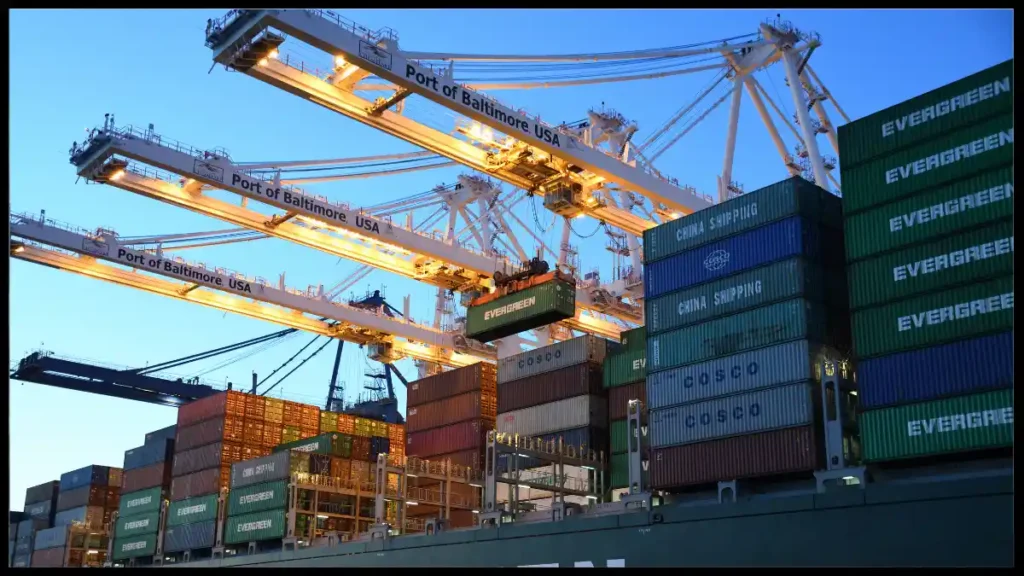
China’s new port levies add hard per-call costs, the IMO’s prospective carbon charge turns emissions into a recurring expense, and Russia’s export surge is boosting tonne-miles for crude. Meanwhile, selective Arctic transits, newbuild programs across crude and bulk, India’s rise in feeder construction, and security incidents in the Caribbean round out a volatile but opportunity-rich landscape.
Top Developments Impacting Maritime P&L - 10/15/25
Story
Impact
Business Mechanics
Bottom-Line Effect
China’s new port levies bite
Large, immediate per-call charges reported, including a seven-figure Shanghai fee on a Panamax call.
Direct opex uplift, emergency repricing, possible blank sailings and diversions on Sino-US corridors.
📈 Supportive for VLCC and Suezmax TCEs; ↔ refiner margins sensitive to delivered costs.
China completes fast Arctic transit to Europe
Seasonal time savings demonstrated, raising service differentiation for select sailings.
Insurance, escort, and weather windows limit scale; marketing advantage on time-critical cargo.
📈 Niche rate upside on qualifying loops; 📉 higher ancillary costs if conditions tighten.
VLCC ordering accelerates at Chinese yards
Fresh 306k dwt tonnage booked at sub-$120m levels adds to future crude supply.
Delivery tail from 2027 onward shapes cycle profile; financing and slot scarcity guide pricing.
📉 Medium-term cap on rate upside if demand underperforms; 📈 near-term yard and equipment revenue.
Capesize ordering resumes
Two 181k dwt units signal renewed appetite for large bulkers.
Adds supply into late ’26 and ’27; exposure to iron ore and bauxite demand cycles.
📉 Potential rate dilution in softer demand windows; 📈 asset liquidity for owners timing the cycle.
CMA CGM turns to India for LNG feeder newbuilds
Six LNG-powered feeders slated at Cochin expand Indian yard participation and regional green capacity.
Supply chain de-risking from China, ETS-friendly fuel profile on short-sea trades.
📈 Opex and carbon-cost advantages on specific loops; 📉 higher capex amortization to manage.
U.S. strike on suspected narco vessel off Venezuela
Security temperature rises across parts of the Caribbean and near US Gulf approaches.
War-risk premia and routing precautions increase for tankers and product carriers trading the region.
📉 Higher insurance and delay risk for exposed voyages; ↔ limited impact outside affected lanes.
Notes: Effects vary by contract structure, ability to pass through costs, and exposure to specific corridors.
📈 Winners
📉 Losers
Mainline carriers with pricing power on China links: better chance to pass through new port levies via emergency surcharges.
Owners of efficient, low-emission tonnage: relative advantage as a global carbon charge moves closer to reality.
VLCC and Suezmax operators: higher utilization from increased Russian crude tonne miles and more barrels in transit.
Arctic-capable service providers and specialty insurers: seasonal premium from time-saving Arctic loops where viable.
Chinese and Indian shipyards: order intake from VLCC and feeder programs supports yard revenues and slot values.
Ports and terminals outside high-fee or high-risk nodes: potential volume gains from rerouting and transshipment.
Compliance, KYC, and emissions data vendors: rising spend on monitoring, MRV, and clause management.
Storage hubs and traders with cheap finance: contango-friendly inventories and optionality when timespreads allow.
Operators exposed to China fee shocks without surcharge headroom: immediate voyage margin compression and schedule slippage.
High-emission or older fleets: carbon costs are harder to pass through and raise effective opex per day.
Prompt-oriented refiners and product carriers: contango weakens near-term pulls and complicates inventory finance.
Owners locked into high time-charter hires: tougher economics for floating storage or opportunistic trades.
Dry bulk owners if capesize deliveries outpace demand: medium-term rate dilution risk into late 2026 and 2027.
Ports on politically exposed or fee-heavy corridors: throughput and ancillary revenues at risk as cargoes divert.
Projects with tight LDs and China-sourced components: higher procurement costs and longer lead times under sanctions or fee regimes.
Insurers with legacy exposure to higher-risk routes: elevated claims potential and pricing pressure on coverage terms.
Port Levy Pass-Through Estimator
Recovered via surcharges
$0
Gap vs target recovery
$0
Residual impact per box
$0/box
Band
Low
Efficient ships on short loops with strong pass-through clauses.
Band
Moderate
Average fleet on mixed trades where MRV and admin add friction.
Band
High
Older ships or energy intensive routes with limited pass-through.
Band
Very high
High emitters on ETS heavy corridors with weak contract coverage.
Crude Flow Pulse
Higher long haul exports raise tonne miles and reduce prompt vessel availability.
Floating inventory increases when timespreads widen and refinery runs soften.
Freight premia emerge on routes with limited alternate tonnage pools.
Arctic Viability Window
Jan
Feb
Mar
Apr
May
Jun
Jul
Aug
Sep
Oct
Nov
Dec
Illustrative window for seasonal routings subject to ice, insurance, and escort availability.
Orderbook Snapshot
Segment
Recent adds
Delivery focus
VLCC
New 306k dwt units at Chinese yards
2027 and beyond
Capesize bulkers
Two 181k dwt additions
Late 2026 to 2027
LNG feeder containerships
Six units at Cochin for regional loops
Mid decade staged
Security and Insurance Heat
Caribbean approaches
Higher war risk and inspection probability after recent strike reports.
Sino US corridors
Fee volatility and compliance checks at key gateways.
Neutral transshipment nodes
Potential volume gains as cargoes avoid higher fee ports.
The near term picture is defined by cost shocks that are immediate and structural costs that are approaching. Port levies change voyage math overnight, the carbon charge hardens opex for years, and crude flow shifts tighten large tanker supply. Seasonal Arctic gains and selective newbuilds add nuance to cycle timing. Risk management, clause quality, and the ability to pass through costs will separate stable earnings from squeezed margins.