Panama Port Fight Escalates as CK Hutchison Pushes Its Claim Beyond $2 Billion
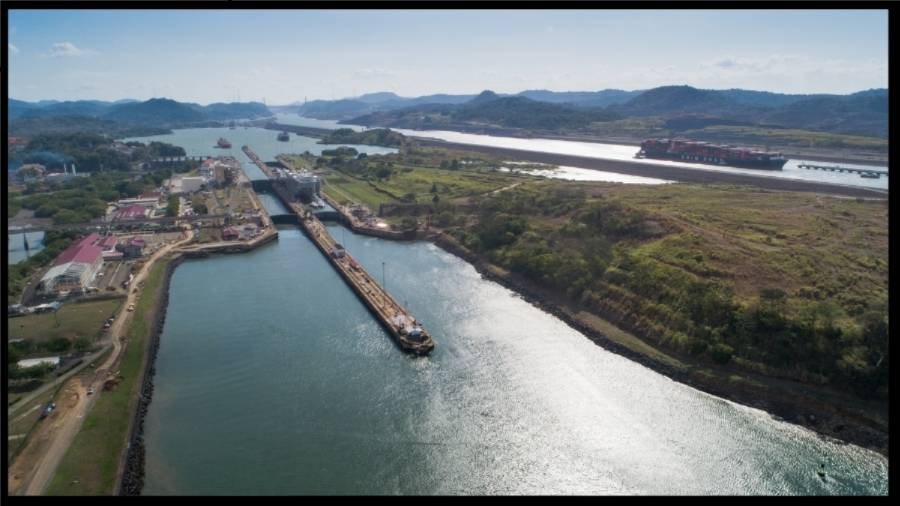
CK Hutchison’s Panama Ports Company has expanded its international arbitration claim against Panama to more than $2 billion after the cancellation of its concessions for the Balboa and Cristobal port terminals. The dispute follows Panama’s Supreme Court ruling in late February that struck down the company’s long-held contracts, after which the government moved to take control of the two canal-linked terminals and associated assets while arranging temporary operating structures to keep the ports running. Panama Ports Company says the state unlawfully seized property, documents, and operational control and has added new claims in a March 24 filing, while the Panamanian government has rejected the accusations and says it has legal representation in the case. The arbitration now sits alongside wider uncertainty around the future of the two ports, the state’s interim operating arrangements, and CK Hutchison’s broader effort to sell a majority stake in its global ports business to a consortium led by BlackRock and MSC.
Subscribe to the Ship Universe Weekly Newsletter
Click here for 30 second summary of the full piece ▶
CK Hutchison has turned the Panama port dispute into a larger damages fight
Panama Ports Company has widened its arbitration against Panama to more than $2 billion after the loss of its Balboa and Cristobal concessions. The case now centers not only on the cancellation of the contracts, but also on the company’s allegations that the state unlawfully took control of terminals, property, and records while Panama works to keep the ports operating under temporary arrangements.
- Claim size: the arbitration demand has now moved beyond the $2 billion level.
- Core dispute: the fight stems from the cancellation of the Balboa and Cristobal port concessions after Panama’s court ruling.
- Commercial angle: the legal battle now sits over two canal-linked terminals while interim operators keep the gateways running.
This is now a larger legal and commercial standoff over control, compensation, and continuity at two of the most strategically sensitive port assets tied to the Panama Canal trade system.
| Pressure lane | Current development | Immediate operator effect | Commercial transmission | Control and continuity consequence | Next watch point |
|---|---|---|---|---|---|
| Arbitration value |
PPC has widened its international arbitration claim so the damages sought now exceed $2 billion.
Claim escalation
|
The dispute moves deeper into a compensation phase rather than staying only a contract-validity fight. | A larger claim raises the financial and political temperature around any future settlement or award. | The ports remain operational, but the legal overhang becomes heavier for all parties tied to ownership, management, and future concession structure. | Watch whether PPC adds more specific damage components or expands its theory of unlawful seizure in later filings. |
| Contract cancellation |
The dispute stems from Panama’s court decision striking down the concession agreements for Balboa and Cristobal.
Root legal trigger
|
The company lost the legal foundation for operating the terminals under the prior structure. | Contract cancellation immediately changes asset value, revenue rights, and bargaining power. | It also forces the state to manage port continuity while the legal case continues. | The next issue is whether the canal-linked terminals move toward a longer interim regime or a new formal award process. |
| State takeover claims |
PPC alleges Panama unlawfully seized port assets, documents, and related property during the takeover.
Seizure dispute
|
The owner’s case is no longer only about lost concessions. It is also about what happened during the transfer of control. | This widens the damages narrative and can materially change the size and structure of compensation demands. | It sharpens the dispute over whether the takeover was lawful administration or unlawful confiscation. | Watch whether arbitral filings or public statements reveal more detail about the specific categories of property and access loss at issue. |
| Panama’s pushback |
President José Raúl Mulino has publicly rejected PPC’s accusations and said the state has counsel defending the case.
Government denial
|
Panama is signaling that it intends to contest both the substance and the procedural claims. | A hard public response reduces the appearance of an easy negotiated reset and points toward a longer legal fight. | It also reinforces the state’s position that the ports should continue under alternative arrangements while the case plays out. | The next read-through is whether Panama keeps the matter mostly defensive or starts pressing its own counter-narrative more aggressively in legal filings. |
| Interim port operation |
Panama has arranged temporary operating structures involving APM Terminals and TIL Panama while keeping the terminals active.
Continuity mode
|
Cargo owners and carriers have operational continuity, even while the ownership and legal picture remains unsettled. | That helps reduce immediate throughput shock but does not remove the strategic uncertainty around long-term control. | The ports can function commercially while still sitting inside an unresolved sovereignty, compensation, and concession dispute. | Watch whether interim operators stay temporary or whether the arrangement begins to look more durable than first presented. |
This tool translates a port-concession arbitration story into numbers. Use it to estimate the size of a dispute by combining assumed lost annual concession value, expected legal duration, annual legal cost, interim-operations drag, and a settlement or award sensitivity range.