London Gateway Breaks 3m TEU and UK Box Volume Gravity Tilts Toward the Thames
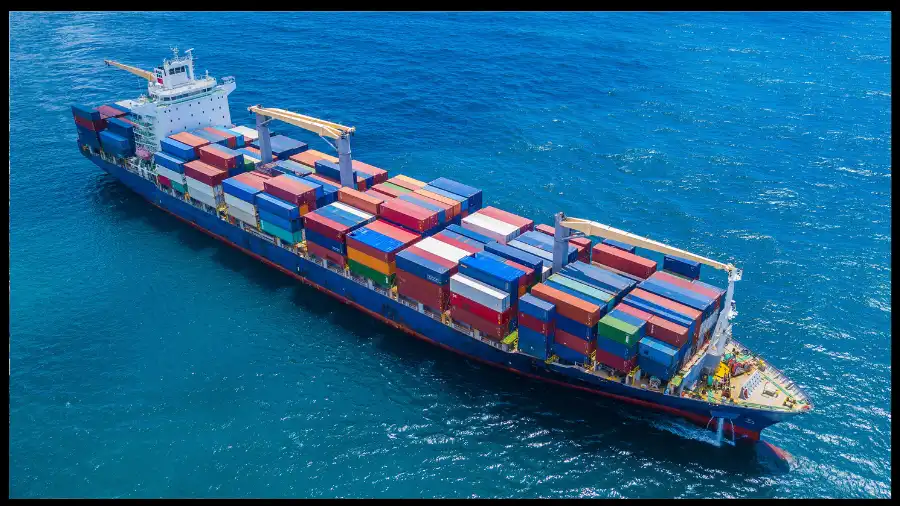
London Gateway handled more than 3 million TEU in 2025, up from about 1.9 million TEU in 2024, according to DP World reporting. DP World also said its combined UK throughput across London Gateway and Southampton was above 5 million TEU in 2025, against a UK market described as more than 9 million TEU. The step-up is being linked to added berth capacity at London Gateway and additional mainline service calls, with the immediate question for 2026 being how consistently that higher volume level holds across peak weeks and call bunching.
Subscribe to the Ship Universe Weekly Newsletter
Click here for 30 second summary
London Gateway in one read
DP World says London Gateway handled more than 3 million TEU in 2025, up more than 52% from 1.9 million TEU in 2024. It also reports Southampton exceeded 2 million TEU, taking DP World’s UK total above 5 million TEU in a UK market above 9 million TEU.
-
Capacity and calls behind the jump
DP World attributes the 2025 record to the newly operational fourth berth and additional vessel calls, including Gemini Cooperation Asia to Europe route calls. -
More capacity is still being added
DP World states construction is underway on two further all-electric berths that will take London Gateway to six berths, and that a second rail terminal began operations in 2025. It also states a BOXBAY system is planned. -
The shift appears in government freight statistics
UK statistics report container tonnage up 43% in Q3 2025 year on year, with London showing the largest rise among major UK ports at +3.0m tonnes (+88%) to 6.5m tonnes, following the fourth berth launch timing.
If the higher London Gateway base volume holds, call patterns and inland flows can keep rebalancing toward the Thames corridor. The practical 2026 test is whether landside velocity stays smooth through peak weeks as berth and rail capacity expands.
London Gateway volume jump: the numbers are now large enough to move patterns
This update is about scale and repeatability. A 3m TEU year at London Gateway, paired with Southampton growth and new capacity projects, raises the stakes for berth windows, inland planning, and hub selection across the UK container system.
London Gateway TEU in 2025 (reported)
London Gateway TEU in 2024 (reported)
Southampton TEU in 2025 (reported)
DP World UK total TEU in 2025 (reported)
Network rotation pressure point
Additional mainline calls have been cited as a driver of 2025 gains, including Gemini Cooperation Asia to Europe route calls. When a terminal moves from opportunistic calls to repeatable volume, berth window discipline becomes a core operating variable.
The key carrier question is whether the higher base volume holds through peak weeks and call bunching, not only in quiet weeks.
Capacity additions that matter for 2026
DP World has described two additional all-electric berths under construction that would take London Gateway to six berths capable of handling the world’s largest container ships. It also states a second rail terminal started operations in 2025 and BOXBAY is planned as a yard handling system.
For planners, the operational question becomes the handoff between quay capacity and inland capacity, especially during compressed discharge windows.
Government stats: London container tonnage jump shows up in the data
UK port freight statistics report a 43% year on year jump in UK container tonnage in Q3 2025, with London recording a 3.0m tonnes increase (an 88% rise) to 6.5m tonnes, and linking the surge to the fourth berth launch timing.
Tonnage metrics are not TEU, but they capture the same signal: London’s container flow has moved into a higher operating gear.
Landside becomes the binding constraint
When berth and crane capability steps up quickly, inland legs typically become the next pressure point: gate peaks, dray cycle times, depot rhythms, and rail slot availability decide whether the benefit shows up as real velocity.
Expect 2026 attention to focus on gate and rail reliability, plus how well equipment positioning follows the new call pattern.
| Metric | Latest stated figure | Context | What it affects |
|---|---|---|---|
| London Gateway 2025 throughput | Above 3m TEU | DP World cites fourth berth plus additional vessel calls as drivers | Call packages, berth windows, yard density planning |
| London Gateway 2024 throughput | About 1.9m TEU | Baseline for the reported 2025 jump | YoY growth framing and capacity math |
| Southampton 2025 throughput | Above 2m TEU | DP World cites growth at the Solent terminal | UK hub balance and inland allocation choices |
| DP World UK total 2025 | Above 5m TEU | DP World total for London Gateway plus Southampton | National market share framing and negotiating leverage |
| UK market size (stated) | Above 9m TEU | DP World cited national market figure | Share math and hub concentration discussion |
| London container tonnage Q3 2025 | 6.5m tonnes (London) | Gov stats: +3.0m tonnes, +88% year on year; UK container tonnage +43% to 19.5m tonnes | Independent confirmation of higher flow through London region |
If London Gateway sustains a 3m TEU base while new berth and rail capacity comes online, the UK container map becomes more concentrated around a Thames plus Solent axis. The operational test for 2026 is whether berth gains translate into consistent landside velocity through peak weeks and call bunching.
We welcome your feedback, suggestions, corrections, and ideas for enhancements. Please click here to get in touch.