Jinjiang’s Bangkokmax plan: a new intra-Asia capacity block on the drawing board
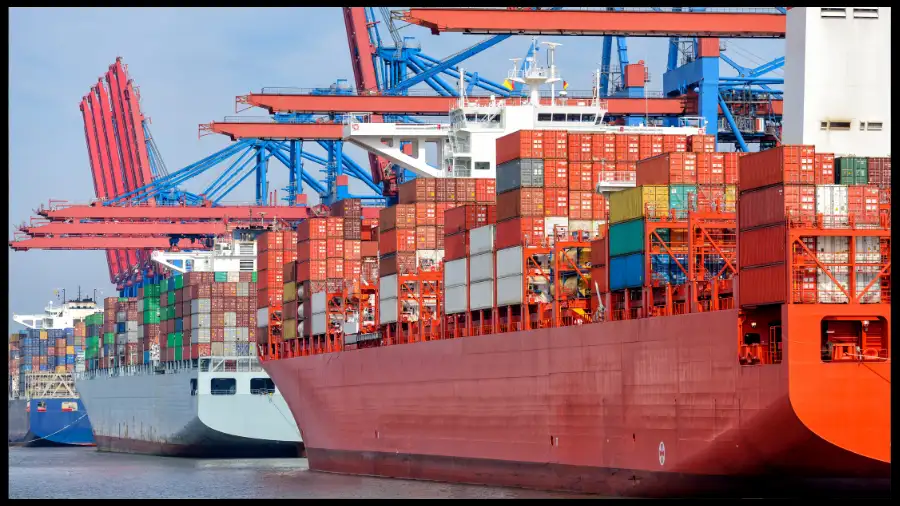
Jinjiang Shipping has put a fresh fleet expansion on the table: a board-approved plan to build four 1,800 TEU “Bangkokmax” containerships, with options for four more, backed by a total budget of up to RMB 1.94 billion (about $270 million). The company frames the move as targeted capacity for Southeast Asia routes, with an emphasis on scaling its higher-end service offering across more loops while tightening links between Northeast Asia and Southeast Asia.
Subscribe to the Ship Universe Weekly Newsletter
Click here for 30 second summary
Jinjiang’s Bangkokmax plan in one quick read
Jinjiang Shipping has approved a newbuilding plan for four 1,800 TEU Bangkokmax containerships, with options for four more, under a total investment ceiling of up to RMB 1.94 billion (about $270 million). The company positions the ships for Southeast Asia services and broader route coverage.
- Scale
Four firm ships equal about 7,200 TEU of capacity. With all options, the block rises to about 14,400 TEU. - Commercial read
This is a frequency and network move. Bangkokmax-sized ships are typically aimed at regional loops where port limits and schedule reliability are key. - Industry ripple
Another order proposal in the regional segment signals continuing appetite for modern intra-Asia tonnage, even as larger-vessel headlines dominate elsewhere.
The plan is a targeted intra-Asia capacity build with a built-in “scale up” option. The biggest swing factors for market impact will be shipyard choice and delivery timing once those details are finalized.
Seacon’s six ultramax resales, financed into a 15-year runway 2027 delivery window
The company is assuming six ultramax shipbuilding contracts and pairing them with sale-and-leaseback financing, turning a resale transaction into a long-dated fleet and liquidity plan.
Vessels
Six ultramax bulk carriers
Contracted build price
US$198.6m total
Delivery range
Jan 30 to Nov 30, 2027
Lease tenor
180 months from delivery
| Transaction snapshot Edit column widths with CSS variables | |||
| Item | Summary | How the structure works | Bottom-line effect |
|---|---|---|---|
| Scope and timing | Six 63,800 dwt bulk carriers under shipbuilding contracts, with deliveries scheduled from 30 January 2027 to 30 November 2027. | The contracts were assumed via novation. The prior buyer transfers rights and obligations, and the shipbuilding contracts continue under amended novation terms. |
Locks in a defined delivery window for fleet growth. Concentrates execution risk into a single program and a tight 2027 schedule.
|
| Price and milestone payments | US$33.1m per vessel, US$198.6m total. Payment schedule is four instalments tied to refund guarantee, steel cutting, keel laying, and delivery. | The largest cash point is the delivery instalment (US$19.86m per vessel). Earlier payments are smaller but still depend on guarantees and milestone confirmation. |
Improves planning visibility for cash calls. Delivery instalments remain the main liquidity test if funding conditions tighten.
|
| Resale paper angle | The prior buyer transferred the contracts at nil consideration and had not paid instalments under the original contracts. | Seacon steps into a clean contract position without inheriting paid-in amounts, then funds construction via its chosen financing route. |
Cleaner entry point than taking over a heavily pre-paid resale. Still requires strong build and delivery control from this point onward.
|
| Leaseback financing | For each vessel, Seacon sells the ship to leasing owners for US$28.135m and charters it back under a 180-month bareboat. | Sale-and-leaseback converts a large portion of construction cost into long-term scheduled hire. The company also provides a guarantee supporting obligations under the leasing documents. |
Reduces upfront equity pressure and supports liquidity. Adds long-dated payment obligations that run through market cycles.
|
| Hire profile and balloon | Hire includes a fixed component (US$285,583.33 per post-delivery payment period) plus a variable component at a 1.85% margin plus a 3-month term SOFR reference rate. A balloon amount of US$11.0m is due on the last day of the charter period. | The floating portion links part of cash cost to rates. The balloon keeps a higher financed amount for longer and shifts part of the paydown to the end of the term, alongside purchase mechanics. |
Rate moves directly affect variable hire. The balloon supports earlier flexibility but concentrates end-of-term planning and refinancing focus later in the lease.
|
| Options and end-game | Purchase options exist during the lease, with an obligation to buy at the end of the charter period under preset pricing mechanics. | This behaves like long-term financing with an operational wrapper. The lessor retains title during the lease; Seacon keeps commercial control through bareboat charter and a defined buyback path. |
Supports fleet continuity and marketing as effectively controlled tonnage. Concentrates long-range balance sheet decisions around maturity.
|
| Note: This block summarizes disclosed terms: six 63,800 dwt bulkers, US$198.6m aggregate shipbuilding consideration, deliveries from 30 January 2027 to 30 November 2027, and 180-month sale-and-leaseback structures including fixed and variable hire plus a US$11.0m balloon at end of term. | |||
- Fleet strategy: a six-ship ultramax series arriving in one year tightens operational planning, but strengthens commercial offering with a consistent platform.
- Financing posture: sale-and-leaseback lowers near-term cash pressure, but shifts emphasis to long-term hire discipline and rate sensitivity.
- Market exposure: if ultramax markets soften in delivery months, bareboat obligations remain, making utilization and charter cover more important.
- Execution focus: a tight delivery band increases the need for clear milestone control and refund guarantee coverage.
- Long-range planning: the balloon and end-of-term purchase mechanics concentrate residual-value and refinancing focus well before maturity.
- Late 2025 to early 2026: first instalments triggered after receipt of the relevant instalment refund guarantees.
- Construction milestones: steel cutting and keel laying trigger the next two instalments per vessel.
- 2027: deliveries staged from late January through late November.
- From each delivery: 180-month bareboat term starts, with fixed and variable hire plus purchase option mechanics during the term.
- End of each 180-month term: purchase obligation applies, with the balloon amount and other defined sums forming the end-payment package.
Jinjiang’s Bangkokmax proposal is a concentrated bet on intra-Asia network buildout, pairing a firm four-ship commitment with optional follow-on tonnage that can scale quickly if demand and trade coverage warrant it. The announcement focuses on Southeast Asia services and expanding premium-route capability, while the underlying numbers show a program that can materially lift capacity relative to the company’s current fleet footprint if the options are exercised.
We welcome your feedback, suggestions, corrections, and ideas for enhancements. Please click here to get in touch.