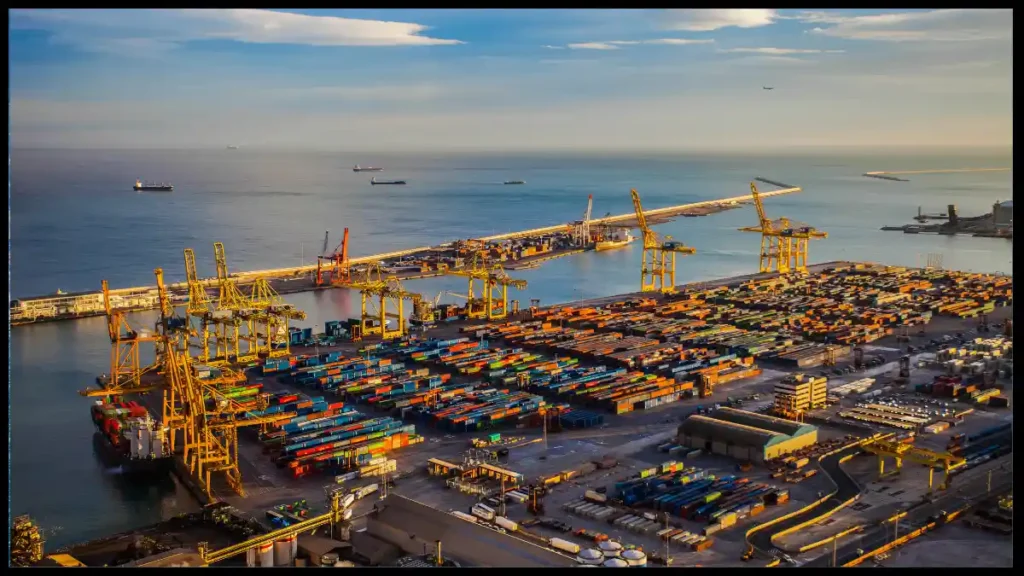
New Delhi has approved a ₹69,725 crore (≈$8B) package to accelerate shipbuilding, long-term maritime finance, and yard capacity, extending build subsidies, creating a sector-specific fund, and targeting multi-million GT of added capacity. The move signals a multi-year bid to shift orders onshore, lower cost of capital for projects, and scale clusters around design, skills, and infrastructure.
India's 8B Rollout: P&L Impact
Item
What Happened & Who’s Affected
Business Mechanics
Bottom-Line Effect
Build subsidy extended
Shipbuilding Financial Assistance Scheme runs to 31 Mar 2036 with a corpus of ₹24,736 cr, including a Shipbreaking Credit Note allocation.
📈 Yard margins and order capture improve; 📉 acquisition cost for Indian-built tonnage reduces.
Maritime Development Fund
Sector-specific fund with a ₹25,000 cr structure, including a ₹20,000 cr Maritime Investment Fund and a ₹5,000 cr interest-incentive window.
Blended-rate debt and interest support cut WACC; expands bankability for yards and owners.
📈 More projects clear investment hurdles; 📉 financing friction and coupons ease.
Capacity expansion scheme
Shipbuilding Development Scheme outlay of ~₹19,989 cr to scale domestic capacity toward ~4.5m GT annually and support mega clusters.
Capex for docks, workshops, heavy-lift, and utilities raises throughput and unit efficiency.
📈 Higher yard productivity and delivery slots; 📉 build times and overhead per GT trend down.
Order visibility
Decade-long policy horizon targets thousands of vessels and deepens domestic demand across defense, coastal shipping, and offshore.
Framework anchors multi-year orderbooks and enables supplier localization.
📈 Better utilization and pricing power for Indian yards; suppliers gain recurring volumes.
Cheaper project finance
Interest incentive lowers effective borrowing costs for eligible maritime projects.
Spread compression on loans; longer tenors align with yard/owner cashflows.
📈 Improved IRR and DSCR; 📉 refinancing risk moderates for qualifying borrowers.
Design & skills push
National ship technology and training initiatives (incl. new IMU-linked centre) expand design and workforce capacity.
Higher local content in design/engineering trims import reliance and lead-times.
📈 Quality and schedule reliability improve; 📉 rework and subcontracting costs decline.
Regional competitiveness
Policy aims to lift India into global top-10 builders by 2030 and top-5 by 2047, challenging mid-tier Asian yards.
Subsidy and finance arbitrage draw price-sensitive orders away from rivals.
📈 Share gains for Indian yards; 📉 pricing pressure for competing builders in region.
Delivery & policy risk
Benefits hinge on timely fund rollout, cluster build-out, and supply-chain depth.
Bottlenecks in skilled labor, steel, and heavy equipment could slow ramp.
↔ Uplift contingent on execution; delays would dilute margin gains.
Note: Summary reflects official cabinet decisions and sector reporting on India’s new maritime package. Scale and timing of P&L effects vary by eligibility, project pipeline, and yard execution.
📈 Winners
📉 Losers
Indian shipyards: build subsidies, financing support, and capacity grants lift order capture and margins.
Local supply chain: steel, outfitting, equipment, and services benefit from localization and predictable volumes.
Domestic owners: lower delivered capex and blended-rate loans improve project returns for India-built tonnage.
Long-horizon projects: navy, coastwise, offshore and specialized builds gain from policy visibility and delivery slots.
Talent and design hubs: training and R&D initiatives raise productivity and reduce rework costs over time.
Banks with program access: interest incentives and structured funds expand eligible lending at manageable risk.
Competing regional yards: subsidy and finance arbitrage pull price-sensitive orders away from mid-tier rivals.
Import-dependent vendors: localization targets displace foreign suppliers on standardized components.
Small yards without eligibility: projects migrate to program-approved facilities, pressuring utilisation elsewhere.
Buyers seeking fastest delivery: ramp-up bottlenecks and learning curves may extend schedules near term.
High-cost capital structures: owners without access to incentive windows face relative funding disadvantage.
Overextended contractors: rapid expansion raises execution risk and warranty exposure if capacity runs hot.
This is a multi-year capacity and finance play, so effects arrive in phases. The near-term read is stronger domestic tender pipelines and easier funding for eligible projects; the medium-term hinge is execution at yards and suppliers as slots fill. Watch three practical markers: subsidy disbursal pace, the timing and size of signed contracts, and on-time delivery rates as facilities scale. The order flow will tell you how quickly the P&L moves from policy to production.