India Coast Guard detains three suspected shadow-fleet tankers west of Mumbai in offshore anti-smuggling sweep
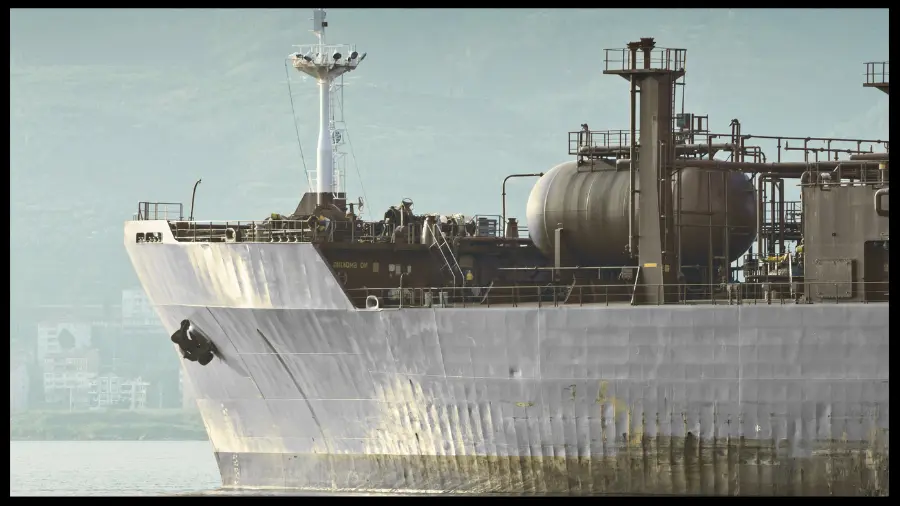
India’s Coast Guard says it intercepted and detained three suspect tankers about 100 nautical miles west of Mumbai in a coordinated operation targeting an international oil-smuggling network that used mid-sea transfers in international waters. The vessels were escorted to Mumbai for legal action after onboard searches, document checks, electronic data review, and crew questioning established the alleged operating pattern.
Subscribe to the Ship Universe Weekly Newsletter
Click here for 30 second summary
India Coast Guard detentions offshore of Mumbai in one read
Authorities report detaining three tankers west of Mumbai in an offshore operation linked to suspected illicit oil movements and mid-sea transfers, with the vessels escorted toward port for legal action and investigative steps.
- Core datapoint
Three tankers detained offshore and brought toward Mumbai as part of an enforcement case. - Focus area
Mid-sea transfer behavior and voyage-history consistency are central to scrutiny. - Near-term effect
Higher-risk profiles can face deeper document checks and longer time-to-clear.
| Reader shortcut | Detention snapshot | Operating set-up | Immediate execution impacts | Knock-on for stakeholders |
|---|---|---|---|---|
| Three ships, boarded offshore |
Authorities report three tankers were intercepted and detained in an offshore operation and are being escorted to Mumbai for legal action.
Boarding, searches, document checks, and electronic data review are described as part of the case-build.
|
Reported position was roughly 100 nautical miles west of Mumbai, with action described as a coordinated sea-air effort. | Higher likelihood of boarding scenarios and longer “time-to-clear” when vessels or voyages match high-risk profiles. | Screening teams tend to widen the net: more questions on AIS history, STS behavior, documentation lineage, and beneficial ownership. |
| Mid-sea transfer focus | The suspected model described involves mid-sea transfers used to move “cheap oil” onto motor tankers while avoiding duties owed to coastal states. | STS activity and “pattern-of-life” tracking become central evidence, not just the cargo paperwork at load port. | Increased attention to STS rendezvous planning, ship-to-ship partner selection, and the completeness of transfer logs. | Charterers and traders are pushed toward cleaner chains of custody and tighter counterparty diligence to avoid disruption risk. |
| Identity-change tell |
Reports describe vessels associated with frequent changes in identity details, a known risk marker used in evasion playbooks.
This is often treated as a “red flag cluster” alongside opaque ownership and irregular AIS behavior.
|
Identity volatility increases the odds of secondary checks (flags, registries, P&I, class, commercial operator). | Longer approval chains: more revalidation steps from fixture to sailing to arrival if any element looks inconsistent. | Elevated friction can reprice voyage optionality, with compliant tonnage gaining a reliability premium. |
| Named ship watchlist |
Tanker-tracking analysts and industry reporting identified the three tankers as Al Jafzia, Asphalt Star, and Stellar Ruby.
Names can change; screening should use IMO and historical identity traces.
|
The operational geography matters: the Arabian Sea is an STS-active zone, so enforcement signals can shift behavior quickly. | Greater probability of route adjustments or “keep-clear” behavior around known STS areas and investigative attention zones. | Counterparties may require expanded representations, warranties, and documentation packs before agreeing to lift or finance cargo. |
| Proof-of-enforcement marker | The action is being framed as a dismantling move against a broader network, not a single isolated vessel incident. | Network investigations tend to widen from ships to facilitators: handlers, intermediaries, and documentation chains. | Detentions create uncertainty windows that can spill into surrounding tonnage, especially for similar trading patterns. | Even without new regulations, enforcement intensity alone can raise cycle time and reduce effective availability. |
This detention action is a clear reminder that enforcement intensity in the Arabian Sea can change the “time-to-clear” for certain tankers without any new rulebook being published. If more boardings or follow-on inquiries show up in the days ahead, the practical effect is usually seen first in slower approvals, more documentary back-and-forth, and more conservative voyage planning around mid-sea transfer patterns and opaque identity histories.
We welcome your feedback, suggestions, corrections, and ideas for enhancements. Please click here to get in touch.