IMO Says Escorts Are No Safety Fix as Emergency Council Meets on Gulf Shipping
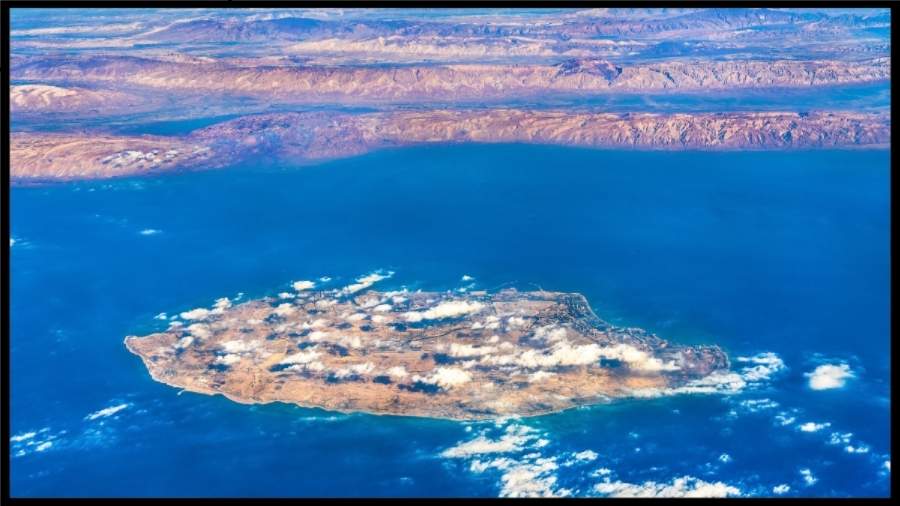
The International Maritime Organization has convened an Extraordinary Council session in London for March 18 and 19 to address the impact of the Middle East conflict on shipping and seafarers in the Arabian Gulf, the Strait of Hormuz, the Sea of Oman, and the wider region. In announcing the meeting, IMO Secretary-General Arsenio Dominguez said naval escorts would not fully guarantee safe passage through Hormuz and described them as not being a long-term solution, while also pointing to the broader security and operational strain facing commercial shipping. The session is set to bring member states together to review the situation as attacks on merchant shipping, electronic interference affecting navigation and communications, and disruption to vessel movements continue to affect trade through one of the world’s most important maritime corridors.
Subscribe to the Ship Universe Weekly Newsletter
Click here for 30 second summary of the full piece ▶
IMO is signaling that escorts do not solve the Gulf shipping problem
The IMO has called an Extraordinary Council session as its leadership warns that naval escorts will not fully guarantee safe passage through the Strait of Hormuz. That matters because the market is no longer dealing with a problem that can be framed only as a shortage of military cover. It is dealing with a broader loss of confidence in whether ships can move safely, predictably, and commercially through a corridor still affected by attacks, interference, and disrupted operating patterns.
- Official signal: IMO is formally convening member states while making clear that escorts are not a complete or durable answer.
- Shipping effect: owners, charterers, and cargo interests still face uncertainty around timing, route confidence, and crew exposure even if naval presence increases.
- Market consequence: freight, insurance, and scheduling pressure can remain elevated because confidence does not automatically return when escorts appear on the water.
This is a signal that the Gulf crisis has moved beyond a simple protection question. Even with warships present, the region can remain commercially impaired if navigation reliability, threat conditions, and operator confidence do not recover at the same time.
| Pressure point | Latest development | Immediate industry effect | Commercial transmission | Seafarer and vessel consequence | Strategic read-through |
|---|---|---|---|---|---|
| IMO emergency posture |
An Extraordinary IMO Council session has been convened to address impacts on shipping and seafarers in the Arabian Sea, Sea of Oman, and Gulf region.
Official escalation signal
|
The crisis is no longer being handled as routine security guidance. It has moved into a higher-level international governance discussion. | Market participants pay closer attention when a global regulator elevates a regional crisis, because it suggests disruption may persist beyond daily headlines. | Welfare, safety, supply access, and movement conditions for crews become part of the formal conversation, not just ship routing and insurance. | This broadens the issue from a transit-risk story into a wider maritime-system problem involving law, safety, and operational continuity. |
| Escort limits |
IMO leadership has warned that naval escorts cannot fully guarantee safe passage and are not a durable long-term fix.
Confidence gap remains
|
Owners and charterers cannot assume that the appearance of warships will automatically make voyages acceptable again. | Freight, insurance, and charter timing may stay stressed because escorts reduce some risk without removing uncertainty about attack exposure, movement rules, or navigation integrity. | Crews remain exposed to a corridor where protection measures may still fall short of restoring a predictable operating environment. | The market is being told to treat escorts as one layer of mitigation, not as a reset button. |
| Navigational interference |
Significant GNSS and GPS disruption, spoofing, and jamming continue across Hormuz approaches, the Gulf of Oman, and the Arabian Gulf.
Electronic fog problem
|
Even protected ships can still face degraded awareness, positioning uncertainty, and more cautious bridge decisions. | This slows voyage confidence and can stretch cycle times, which tightens effective supply even before additional attacks occur. | Bridge teams face a harder workload and a more complex safety environment, especially when operating near other delayed vessels. | Safe passage is not only about physical cover. It is also about whether the ship can reliably navigate and coordinate movement under stress. |
| Vessel clustering |
Delayed transits continue to create clustering near UAE coastal ports, Omani approaches, and Hormuz anchorages.
Queue risk persists
|
Ships spend more time waiting, drifting, anchoring, and trying to avoid predictable patterns, which complicates movement plans. | Waiting time turns into a major cost line through hire, fuel, schedule protection, and missed cargo timing. | Congested approaches raise secondary navigation risks, including reduced maneuvering space and higher collision exposure. | Escorts do little to solve the commercial pain of queues if the corridor still cannot function smoothly and continuously. |
| Industry decision-making |
The practical question is shifting from “Will escorts appear?” to “Under what conditions would normal commercial movement actually resume?”
Decision threshold changes
|
Operators must think in layers: threat level, crew acceptability, interference, congestion, legal exposure, and cargo economics. | This can keep cargoes delayed and rate tension elevated even when political statements sound reassuring. | Seafarers remain in a region where operational permission and practical safety are not the same thing. | The IMO message matters because it reinforces that reopening confidence will require more than armed presence alone. |
This model helps readers put numbers on the IMO message. It estimates how much commercial stress can remain even if escorts are available, by combining delay days, daily voyage cost, interference intensity, queue pressure, and the degree to which escorts reduce perceived exposure. The result is not a freight quote. It is a way to visualize why confidence can stay impaired after a military response appears.
We welcome your feedback, suggestions, corrections, and ideas for enhancements. Please click here to get in touch.