IMO Pushes a Safe Passage Plan for Ships and Seafarers West of Hormuz
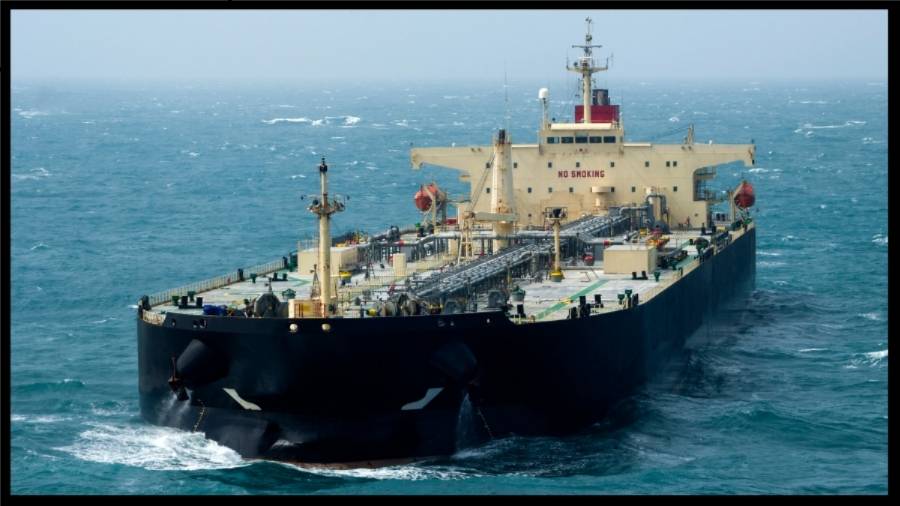
The International Maritime Organization has moved from broad concern to a specific safe-passage proposal for merchant shipping trapped west of the Strait of Hormuz. Following an extraordinary Council session held on March 18 to 19, 2026, the IMO said its Council condemned the attacks and threats against commercial shipping and called for the establishment of a safe maritime framework, described as a provisional and urgent measure to facilitate the safe evacuation of merchant ships currently confined within the Gulf region. The IMO also directed Secretary-General Arsenio Dominguez to take immediate steps to begin establishing that framework with relevant parties, while the organization said around 20,000 seafarers and roughly 2,000 ships are trapped west of Hormuz and that states should continue supplying those ships with food, water, fuel, crew-change support, and communications access.
Subscribe to the Ship Universe Weekly Newsletter
Click here for 30 second summary of the full piece ▶
IMO has opened a formal track for a humanitarian evacuation corridor
Following its extraordinary Council session on March 18 to 19, the IMO said its Council called for a safe maritime framework to facilitate the safe evacuation of merchant ships confined within the Gulf region and directed the Secretary-General to begin immediate work with relevant parties. The same Council action urged states to keep trapped ships supplied with water, food, fuel, and communications access, while also facilitating crew change and crew renewal operations. Current IMO-linked reporting puts the trapped population at about 20,000 seafarers on roughly 2,000 ships west of the Strait of Hormuz.
- Formal move: IMO Council called for a safe maritime framework as an urgent provisional measure.
- Humanitarian focus: trapped ships are to be supported with food, water, fuel, crew-change help, and communications access.
- Operational complication: any corridor still has to function in a navigation environment affected by fatigue, pressure, and GNSS jamming or spoofing.
| Framework bucket | Confirmed development | Current scale signal | Operational effect | Signals to watch next |
|---|---|---|---|---|
| IMO Council action |
The IMO Council said it called for the establishment of a safe maritime framework as a provisional and urgent measure to facilitate the safe evacuation of merchant ships currently confined within the Gulf region.
The decision came out of the extraordinary Council session held on March 18 to 19, 2026.
Formal IMO move
|
Council-level direction with emergency-session backing. | The discussion has moved from abstract de-escalation appeals into a concrete evacuation and passage framework track. | Whether the framework becomes a negotiated operating corridor with agreed procedures, timing windows, and state cooperation. |
| Secretary-General mandate |
The Council directed Secretary-General Arsenio Dominguez to take immediate actions to initiate the establishment of the framework with relevant parties.
He also said he was ready to begin negotiations immediately on a humanitarian framework to evacuate trapped vessels and seafarers.
Negotiation phase begins
|
Immediate engagement authority from the IMO Council. | The issue is now in diplomatic and operational coordination mode rather than remaining only a political appeal. | Which states and naval stakeholders engage first, and whether Iran and regional actors accept a practical evacuation arrangement. |
| Ships and crews trapped |
IMO and current reporting say roughly 20,000 seafarers and about 2,000 ships are trapped west of the Strait of Hormuz.
Earlier reporting also referenced a wider count of around 3,200 vessels affected west of the strait, but the evacuation discussion is centering on about 2,000 ships and 20,000 seafarers.
Large-scale humanitarian exposure
|
Tens of thousands of people and thousands of ships. | The humanitarian problem now includes fatigue, food, water, fuel, communications, crew welfare, and delayed crew changes, not only commercial delay. | Updated trapped-vessel counts, welfare deterioration, and whether supply support keeps pace if evacuation takes time. |
| Immediate welfare measures |
The Council urged states to ensure continuous provision of water, food, fuel, and other essential supplies to ships unable to leave the region, and to facilitate crew change and crew renewal operations.
It also urged states to protect seafarer communications with families and maintain adequate stores and provisions.
Humanitarian support baseline
|
Active welfare support requested now, before any corridor is operational. | Operators and states are being pushed to treat trapped ships as a sustained humanitarian support problem, not simply a waiting game. | Whether ports, flag states, and shipowners coordinate resupply and crew-relief channels quickly enough. |
| Transit hazard conditions |
The Council said the navigation response must account for crew fatigue, master’s overriding authority, and the risks associated with transiting while GNSS suffers extensive jamming and spoofing.
This means any corridor design must deal with degraded navigation integrity as well as armed threat risk.
Corridor design complication
|
Security and navigation degradation are both part of the problem. | A safe-passage scheme will need more than escorts. It will also need bridge-discipline, traffic management, and communications clarity in a degraded electronic environment. | Whether the framework includes reporting rules, convoy timing, routing lanes, communications protocol, or navigation-control measures. |
A safe maritime corridor only becomes operational when several different conditions line up at once. There has to be enough state cooperation to create passage confidence, enough welfare support to sustain ships while negotiations continue, enough communications discipline to manage civilian movement, and enough navigation resilience to cope with a Gulf environment already affected by fatigue, pressure, and GNSS disruption.
A corridor cannot exist on paper alone. It needs consent, restraint, and enough practical alignment from relevant states and security actors to let merchant shipping move.
Food, water, fuel, crew change, and communications support determine whether trapped ships can remain safe while negotiations and sequencing take shape.
Even a humanitarian movement plan faces navigation stress if jamming, spoofing, fatigue, and command pressure remain elevated during any actual evacuation phase.
We welcome your feedback, suggestions, corrections, and ideas for enhancements. Please click here to get in touch.