Hormuz Risk Turns Structural as Iran Signals a Prolonged Closure
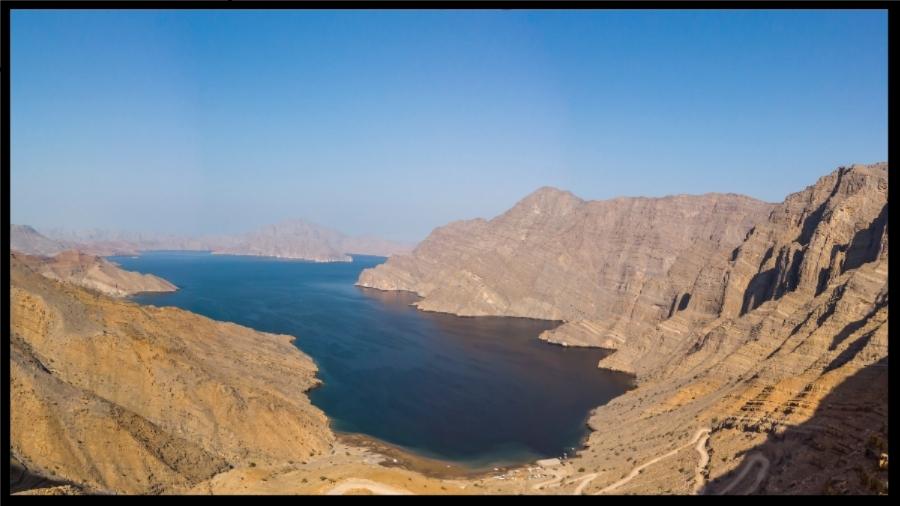
Iran has signaled that the Strait of Hormuz could remain closed for an extended period if U.S. threats against Iranian energy infrastructure are carried out, with Revolutionary Guards officials saying the waterway would be completely shut if Washington follows through on President Donald Trump’s warnings. Trump had issued a 48-hour ultimatum demanding that Tehran reopen the strait or face strikes on its power network, but as of March 23 the White House said it would hold off for five days while talks continue. The immediate result is a still-active chokepoint crisis rather than a resolved deadline, with UKMTO maintaining a critical threat warning for the Arabian Gulf, Strait of Hormuz, and Gulf of Oman, and recent reporting indicating sharply reduced transits, vessel clustering near UAE and Omani approaches, and continued fears around mining, attack risk, and broader disruption to oil, gas, and commercial shipping flows.
Subscribe to the Ship Universe Weekly Newsletter
Click here for 30 second summary of the full piece ▶
Hormuz is still in closure-risk mode, not recovery mode
Iran has signaled that the Strait of Hormuz could remain closed if U.S. threats against Iranian energy facilities continue, while Washington has extended rather than resolved its original ultimatum. That leaves the market with an active chokepoint crisis still hanging over crude, LNG, product shipping, and wider freight.
- Iran signal: Tehran has warned it would completely close Hormuz if U.S. attacks on Iranian energy infrastructure go ahead.
- U.S. timing: Trump’s original 48-hour deadline was followed by a five-day extension rather than an immediate settlement.
- Shipping result: threat levels remain critical, vessel movement is still impaired, and operators are dealing with a corridor that remains commercially unstable.
This is no longer a one-deadline story. It is a continuing chokepoint crisis that can keep routing, war-risk pricing, energy flows, and freight markets under pressure even without a formal final closure announcement.
| Impact lane | Latest escalation marker | Immediate owner and charterer effect | Energy and freight transmission | Port and routing consequence | Next confirmations to watch |
|---|---|---|---|---|---|
| Closure threat language |
Iran has said it would completely close the Strait if U.S. threats against Iranian energy infrastructure are carried out.
Open-ended pressure signal
|
Owners and charterers cannot assume a short-lived showdown if official language is pointing toward a closure that could last as long as the confrontation does. | Oil, LNG, and clean-product trades must price not only current disruption but the risk that blocked or restricted movement persists beyond an immediate military exchange. | Routing logic grows more defensive as ships avoid predictable approaches and plan around a corridor that may remain politically gated. | Watch for any move from threat language toward mining, selective passage rules, or formal navigation instructions that narrow access further. |
| Deadline slippage |
Trump’s original 48-hour ultimatum was not resolved at expiry and was followed by a five-day extension.
Crisis continues
|
The market is left in a prolonged standoff rather than a settled outcome, which is often harder to manage commercially than a clean yes-or-no event. | Time itself becomes a cost driver because war-risk pricing, hedging, and inventory management all stay elevated while the political endpoint remains unclear. | Ships and ports inherit a stop-start operating rhythm, with delayed movement decisions and more staging near alternative approaches. | The next signal is whether the extension produces de-escalation or merely delays a broader round of strikes. |
| Critical maritime threat |
UKMTO maintains a critical threat warning for the Arabian Gulf, Hormuz, and Gulf of Oman.
Operating environment remains severe
|
Commercial movement stays constrained even before a formal all-ships closure, because operators still have to account for attack risk, interference, and incident clustering. | Effective vessel supply tightens as ships wait, reroute, or decline exposure, which can lift freight even without a total halt in trade volume. | Approaches and anchorages become more stressed as delayed traffic builds up outside the most exposed corridor points. | Any change in threat level, additional vessel incidents, or new guidance from naval and maritime security centers will be market-moving. |
| Energy flow impairment |
Reporting indicates the strait has already been effectively closed to the U.S., Israel, and allies, with major losses to oil and gas movement.
Flow shock already underway
|
Chartering desks must treat the problem as actual movement impairment, not simply a threat premium layered onto normal transit assumptions. | Once missing or delayed barrels and molecules start spreading through the system, freight and commodity pricing reinforce each other rather than moving separately. | Storage, sequencing, and replacement sourcing become harder because ships are no longer flowing through the chokepoint on normal cadence. | Watch whether more countries publicly acknowledge volume losses or emergency supply actions tied to Hormuz impairment. |
| General maritime disruption strategy |
Recent incident patterns suggest disruption has not been limited to a narrow set of flags or cargoes.
System-wide shipping stress
|
Operators cannot assume that non-Western ownership, neutral trades, or non-energy cargoes automatically remove exposure. | Broad disruption makes container, dry bulk, tanker, and offshore support costs more vulnerable to delay and insurance spillover. | Congestion can migrate well beyond the Gulf if ships release in waves after pause periods. | The next read-through is whether the market treats Hormuz as partially selective, functionally closed, or operationally closed for wider commercial purposes. |
This model helps put numbers on a prolonged Hormuz disruption by combining affected voyages, extra delay days, daily vessel cost, war-risk or emergency premium, and the share of cargo that must be replaced or rerouted. It is designed to show why a closure scare can become expensive even before a final all-ships shutdown is formally declared.
We welcome your feedback, suggestions, corrections, and ideas for enhancements. Please click here to get in touch.