Hormuz Redrawn Into a Permission-Based Corridor
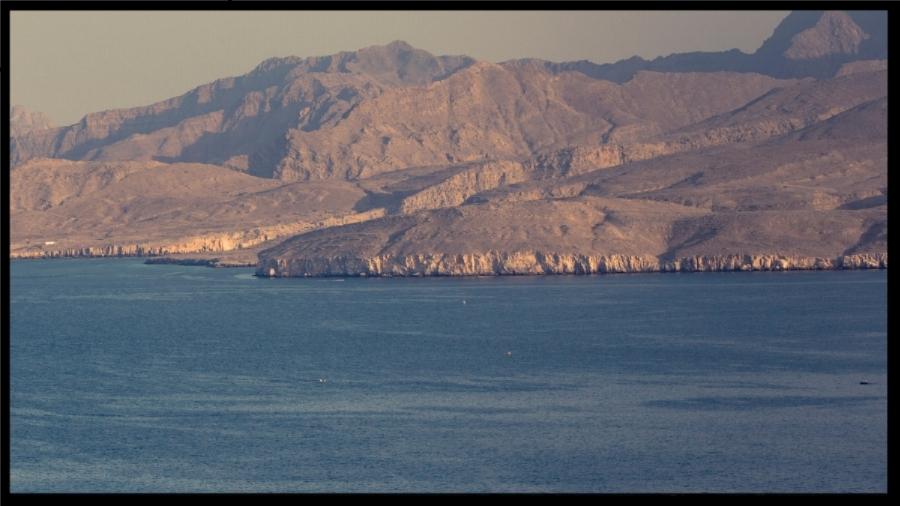
Iran has recast traffic through the Strait of Hormuz from open commercial passage into a tightly controlled, permit-based system in which ships are being told they must coordinate with Iranian forces before entering the waterway, and where selected transits are moving under narrow approval rather than under restored free navigation. Shipping firms are seeking clarity after Iran said the strait remained closed to vessels sailing without permission, while radio warnings shared with shipowners said transit required authorization from the Iranian Sepah navy and that any ship attempting to sail without it could be “targeted and destroyed.” At the same time, Iran was working on a protocol with Oman that would require ships to obtain permits and licences to pass the strait, and said Tehran was considering a limited reopening under Iranian control. Separate industry reporting indicates that nearly every traceable recent transit has been routed through a Tehran-approved corridor linked to Larak Island, under a system that shipping analysts have described as a de facto toll-booth regime with clearance codes, documentation requirements, and escorted passage through a single controlled lane.
Subscribe to the Ship Universe Weekly Newsletter
Click here for 30 second summary of the full piece ▶
The strait is no longer functioning like an open lane
The latest shift is not just reduced traffic. It is a redrawn operating system. Iran is signaling that vessels must obtain permission, follow an approved passage structure, and accept a more controlled transit environment than the traditional free-flow commercial route. In practice, that turns Hormuz from a shared chokepoint into a politically filtered corridor where access, timing, and routing are now part of the risk.
- Control model: passage by permit and military coordination rather than open navigation.
- Route model: a narrow approved lane appears to be replacing normal traffic patterns for many recent ships.
- Commercial effect: the market now has to price political clearance, route concentration, and uncertainty together.
| Fast reader take | Latest confirmed signal | Operational meaning | Negative shipping consequence | Shows up first | Closest stakeholders |
|---|---|---|---|---|---|
| Transit now requires permission |
Iran has said the strait remains closed to ships sailing without a permit, and warnings shared with shipowners said vessels must receive permission from the Iranian Sepah navy.
permit required
armed forces coordination
unauthorized transit warning
|
Ships are no longer operating on the assumption of routine passage. Political clearance has become part of the voyage plan. | Uncertainty over approvals slows sailings, raises hesitation, and complicates chartering decisions. | Delayed departure choices, more legal review, more pre-transit coordination. | Owners, charterers, compliance teams, flag states. |
| A single approved lane appears to be dominating recent movement |
Industry reporting indicates that nearly every traceable transit has gone via a Tehran-approved corridor linked to Larak Island.
Larak detour
approved corridor
recent transits concentrated
|
Traffic is being compressed into a narrower pathway, making routing less flexible and more predictable. | Concentrated routing can amplify congestion, surveillance exposure, and timing sensitivity. | More bunching, slower sequencing, more dependence on approval windows. | Tanker operators, bulk carriers, security analysts, marine insurers. |
| The route is being governed like a control system |
Lloyd’s List reporting describes a regime requiring full documentation, clearance codes, and IRGC-escorted passage through a single controlled corridor.
clearance codes
documentation
escorted passage
|
Access is no longer just nautical. It is administrative, military, and politically filtered. | The commercial risk shifts from open-water navigation to system access, approval logic, and conditional passage. | More voyage paperwork, more uncertainty around who qualifies, more delay risk. | Ship managers, port agents, brokers, underwriters. |
| Iran is also discussing a licensing framework |
Reuters reported Iran’s deputy foreign minister said Tehran was drafting a protocol with Oman to require ships to obtain permits and licences to pass the strait.
protocol with Oman
permits and licences
facilitate transit claim
|
The informal control system may be evolving toward a more formalized passage structure. | Even if framed as facilitation, licensing would entrench political control over a core trade artery. | More legal scrutiny and more confrontation with free-navigation norms. | Governments, legal teams, importers, Gulf exporters. |
| Routing geometry itself is part of the pressure |
Reuters reported some vessels could attempt to hug Oman’s coastline, but said that would constrain traffic volumes and still leave ships within Iranian strike range.
Oman coastline option
volume constraint
still within range
|
Alternative geometry exists, but it does not restore normal throughput or remove military risk. | Reduced corridor capacity means slower normalization and structurally higher friction. | Lower daily transit counts and longer queue logic. | Energy traders, tanker desks, fleet schedulers, Gulf exporters. |
| The market is pricing control, not just closure |
Reuters reported Iran is considering limited reopening under its control and exploring fees or toll-like mechanisms, while rules of passage remain unclear.
limited reopening
Iranian control
rules unclear
|
The issue is no longer simply blockade versus reopening. It is controlled access under terms Tehran can influence. | Insurance, freight, and delivered energy costs stay elevated even if selected ships move. | Persistent war-risk pricing and route-specific premiums. | Refiners, LNG buyers, insurers, commodity markets. |
Hormuz Control Geometry Lab
This dashboard turns the redrawn traffic scheme into a practical shipping model. It measures whether the strait is behaving more like a blocked chokepoint, a tightly filtered corridor, or a gradually broadening but still politically managed lane for selected vessels.
Corridor inputs
Check the conditions that match the current Hormuz system, then fine-tune how tightly the corridor appears to be controlled.
Control signals
Reopening signals
Fine-tune the transit geometry
Operational readout
The model separates pure transit possibility from genuine navigational freedom, because those two conditions are now clearly diverging in Hormuz.
Hormuz currently reads as a filtered corridor rather than an open chokepoint.
| Stage | Traffic picture | Shipping behavior | Main limitation |
|---|---|---|---|
| Stage 1 Blocked by default |
Passage exists only in narrow or exceptional cases. | Most owners avoid movement unless compelled. | Permission barrier |
| Stage 2 Filtered corridor |
Selected ships move through an approved lane under heavy control. | Transit is treated as conditional access, not normal passage. | Political filtering |
| Stage 3 Managed reopening |
More ships are allowed through, but under supervised routing logic. | Commercial movement improves, though freedom remains incomplete. | Confidence gap |
| Stage 4 Broad lane recovery |
The route behaves more like a normal chokepoint again than a controlled gateway. | Owners and underwriters treat transit as commercially workable at scale. | Residual risk pricing |
We welcome your feedback, suggestions, corrections, and ideas for enhancements. Please click here to get in touch.