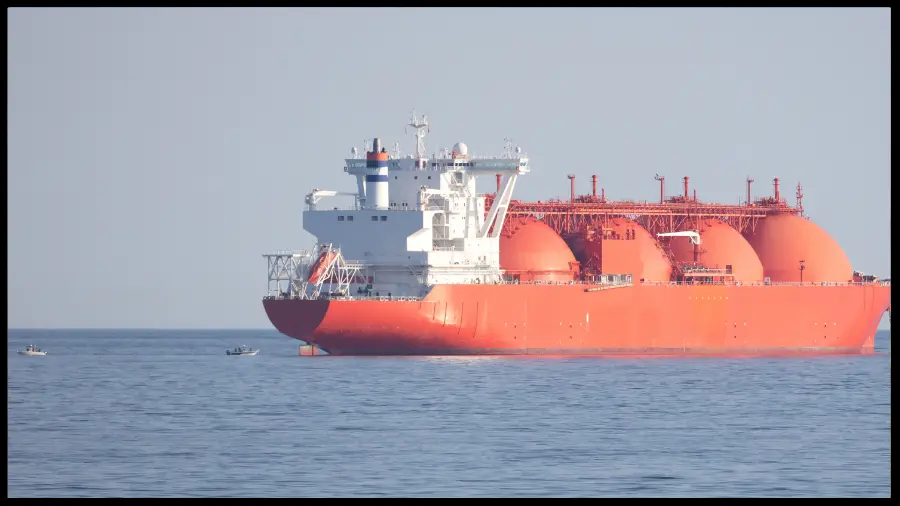
HMM has ordered eight 13,400-TEU LNG dual-fuel containerships from HD Hyundai yards in Korea, a deal valued around $1.46 billion. Public details indicate the ships are LNG dual-fuel, split across HD Hyundai yards, with sequential deliveries running into 2029. The move adds scale on core east-west lanes and signals continued carrier interest in lower-emission large units.
Click here for 30 second summary
Simple Summary in 30 Seconds
HMM ordered eight 13,400-TEU LNG dual-fuel containerships from HD Hyundai, with total value around $1.46B and deliveries expected from 2028 into 2029. The ships add scale on core east-west loops and give fuel flexibility. For the market, this strengthens HMM’s owner-controlled slots and points to more capacity later in the decade, which can pressure time-charter renewals for comparable sizes.
🚨 What happened
Eight mid-teen-k TEU LNG-DF boxships booked at HD Hyundai. Modern specs, large tanks, and efficiency upgrades target regulated corridors and hub bunkering.
📍 Where it fits
Designed for Asia–Europe and select Transpac lanes. Dual-fuel range supports routing through major LNG hubs without sacrificing schedule reliability.
💰 P&L effect
Lower unit costs for HMM and compliance headroom. Medium-term supply additions can soften TC rates and nudge asset values as deliveries approach.
📌 Bottom line: A scale and efficiency win for HMM; a reminder to third-party owners to time renewals and asset sales before the late-decade delivery wave builds.
Eight ~13,400-TEU LNG dual-fuel ships at HD Hyundai. Reported contract value about $1.46B.
Large near-cycle capacity add by a top-10 carrier. Strengthens owner-controlled slots on key strings.
📈 Network scale for the buyer; 📉 medium-term supply pressure for third-party tonnage.
Yards and specification
Build program across HD Hyundai yards. LNG dual-fuel engines with large fuel tanks, modern eco hull.
Lower-emission design with fuel flexibility. Yard capability proven on recent LNG-DF programs.
📈 Compliance and voyage cost options where LNG is competitive.
Deliveries and timing
Deliveries are scheduled sequentially and run into 2029 per local reports.
Phased slot entry aligns with late-decade wave in large container tonnage.
📉 Limited near-term impact; 📉 growing supply over 2027–2029 window.
Corridor fit
Size targets Asia–Europe and select Transpac loops. LNG bunkering available at major hubs.
Slot density improves per-box costs. Dual-fuel range supports flexible port calls.
📈 Unit cost relief for the operator on high-volume lanes.
Unit economics
Larger ships spread fixed costs and can exploit LNG spreads when favorable.
Fuel choice between LNG and conventional bunkers depending on price and availability.
📈 Lower per-slot OPEX in the right fuel market; 📉 exposure if LNG premiums widen.
Market supply context
Alternative-fuel capable ordering remains elevated. Added mid-teen-k TEU units increase future slot supply.
Cascading risk into smaller sizes when new units enter service.
📉 Medium-term pressure on time-charter rates and some asset values.
Charter and counterparty effects
More owner-controlled capacity can reduce reliance on long charters at delivery.
Charter appetite may soften for comparable sizes near handover windows.
📉 Headwind for third-party owners on renewals; 📈 stronger negotiating hand for the buyer.
Regulatory drivers
EU ETS, FuelEU Maritime, and customer emissions targets continue to favor lower-emission mainline tonnage.
Dual-fuel engines and modern EEDI/CII profiles help on covered trades.
📈 Relative margin protection on regulated corridors.
Notes: Order details reflect public reporting. Exact specs and delivery months are subject to contract execution and yard schedules.
🧭 Mid-teen-k TEU class strengthens core loops
🔁 Owner-controlled slots reduce charter reliance
🧪 LNG dual-fuel improves compliance headroom
📅 Phased deliveries support staged capacity entry
Delivery cadence risk
Later wave can bunch capacity near 2028–2029
LowHigh
LNG spread advantage
Benefit depends on LNG versus VLSFO pricing
WeakStrong
Charter renewal pressure
Owner slots may displace third-party time charters
LightHeavy
Yard slot tightness
Top-tier Korean capacity remains selective
LooseTight
📈 Positive
⚠️ Watch-outs
Unit cost edge: scale lowers per-slot costs on high-volume lanes
Compliance buffer: modern EEDI/CII and LNG-DF help on regulated corridors
Network control: more flexibility to shape rotations and service reliability
Supply overhang risk: mid–late decade deliveries can pressure TC renewals
Fuel spread sensitivity: LNG advantage depends on price and availability
Cascade effect: larger units can push mid-sizes into secondary trades
Delivery wave (reported)
Bars reflect share of the 8-ship program expected to deliver in each year.
Share of total hulls delivered in the year
2028
2 hulls
2029
6 hulls
Note: Counts reflect recent public reporting. Exact delivery months remain subject to yard schedules and contract execution.
Owner playbook
Practical step
Bottom-line effect
Renewal timing
Bring TC renewal talks forward where size overlap exists
Protect utilization before new slots land
Fuel game plan
Set LNG vs VLSFO triggers and secure bunkering at core hubs
Stable OPEX and fewer last-minute deviations
Asset strategy
Consider earlier disposals of older mid-sizes before cascade pressure
Value preservation and lower idle risk
Service design
Re-balance rotations to keep schedule integrity and port productivity
Better reliability and customer retention
Note: Indicators are directional. Adjust meter levels and bar widths as real slot and fuel data firm up.
This program adds scale where it matters and gives HMM fuel flexibility, but it also points to a late-decade supply wave. Owners with overlapping sizes should plan renewals early, align fuel triggers with LNG availability, and tune rotations to protect schedule integrity as capacity phases in.