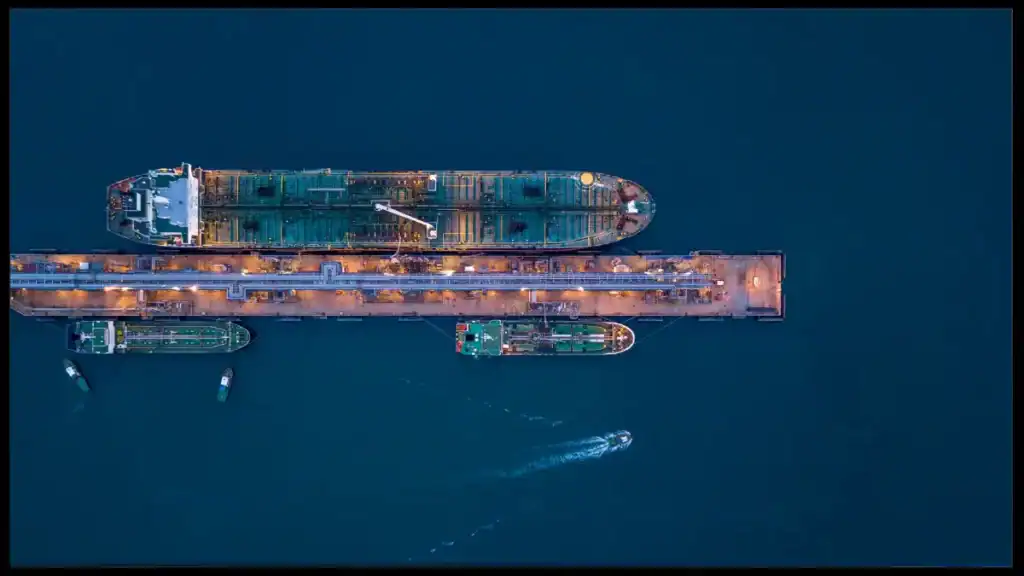
Oil prices ticked higher on fresh supply-risk news, yet the official outlook still points to a well-supplied market into 2026. Bunker prints show a mixed picture, with recent VLSFO moves not always tracking crude one-for-one, and regional availability remains uneven. On gas, one U.S. export project gained schedule relief while a major Asian buyer moved to push out term cargoes, resetting near-term LNG shipping patterns.
Fuel price drivers and LNG flow resets
Topic
What happened
Effect on shipping fuel costs
What to watch
Crude pops on fresh supply risk
Oil prices rose after new attacks on Russian energy sites raised near-term supply concerns.
Potential short-run upside for bunkers if crude strength persists, especially on prompt stems.
Track further infrastructure outages and any follow-through in flat price.
Official outlook still points to surplus
The latest U.S. Short-Term Energy Outlook projects inventory builds into early 2026 and a lower average Brent price next year.
Medium-term pressure on bunker benchmarks if surplus builds; could ease operators’ fuel budgets into 2026.
Watch next STEO update and any revisions from IEA or OPEC.
Bunker prints diverge from crude
Recent readings show the global VLSFO index softening even as crude wobbles, with Singapore VLSFO hovering around the high-$490s per mt late week.
Refining spreads and local supply drive delivered prices; voyage budgets may not move in lockstep with oil.
Watch Singapore, Rotterdam, Fujairah and Houston quotes for trend confirmation.
Regional availability picture
Europe/Africa market checks indicate steady ARA supply, normal LSMGO in Istanbul and off Malta, and about a week’s lead time at Luanda.
Planning buffers still needed on some West Africa calls; otherwise routine in main hubs.
Monitor lead times and barge congestion updates, especially around weather events.
LNG flows get reshaped
One U.S. exporter received more time to start shipments, while Pakistan moved to defer a large block of term cargoes with Qatar into the next decade.
Near-term LNG ton-mile demand may soften from deferrals; project delay flexibility in the U.S. tempers immediate adds to export volumes.
Follow DOE permit milestones and final terms of Pakistan–Qatar adjustments.
Note: This table synthesizes verified reports on crude moves, official forecasts, bunker pricing, regional availability, and LNG schedule changes published over the past few days.
Industry Impact Overview
The latest moves in oil forecasts, bunker markets, and LNG flows show how fragile cost baselines remain for ship operators. While lower crude projections hint at relief, localized fuel dynamics and shifting gas cargo schedules create uneven pressure across segments. The contrast between global oversupply trends and regional supply chain pinch points underscores how fuel strategy is no longer a one-size-fits-all exercise.
Key Impacts
Budget Volatility Remains: Even with Brent forecasts falling, bunker spreads diverge by hub, complicating voyage cost planning.
Energy Trade Realignment: LNG deferrals and U.S. export delays are redrawing cargo origination and destination maps, altering ton-mile demand.
Compliance Costs Creep Up: In Europe, carbon and sulfur rules continue to raise effective bunker costs despite global crude softness.
Geopolitics Drive Short-Term Spikes: Attacks on infrastructure or regional conflict still jolt crude and bunker markets overnight.
Hedging & Procurement Strategy: Operators face growing pressure to secure flexible hedging and diverse supply points to avoid exposure.
Structural Undercurrents in Maritime Fuel & Energy
Theme
Economic Effect
Operational Signal
Forward Outlook
Falling crude benchmarks
Lower fuel input costs reduce voyage OPEX in theory.
Global VLSFO not tracking oil evenly; spread volatility persists.
Longer-term relief possible, but efficiency investments may still lag.
Regional bunker dynamics
Different hubs show varying price stability and lead times.
ARA steady, Singapore softer, West Africa requires 7–10 day lead time.
Operators will diversify liftings and build contingency buffers.
LNG trade deferrals
Deferred cargoes shift billions in liabilities and volumes downstream.
Lake Charles LNG timeline extension tempers spot LNG moves.
Timing of U.S. Gulf projects remains crucial for carrier planning.
Compliance drag in EU
Carbon levies and sulfur cap enforcement raise effective fuel bills.
VLSFO costs in Europe projected toward ~$830/mt in 2026.
Accelerates push toward LNG, methanol, and efficiency retrofits.
Note: Table synthesizes verified fuel and oil market updates, drawing on EIA outlooks, bunker indices, LNG project announcements, and regional market reports.
As we look across these shifts in oil forecasts, bunker pricing, and LNG flows, we can see how layered the challenges have become. We’ve moved past a world where crude direction alone dictated costs, now regional spreads, compliance, and cargo deferrals all shape the picture. We know that to navigate this landscape, we’ve got to track both the global signals and the local details that decide how fuel really prices into shipping.