Fredriksen Reloads in Newcastlemaxes with up to 8 new dry bulk builds
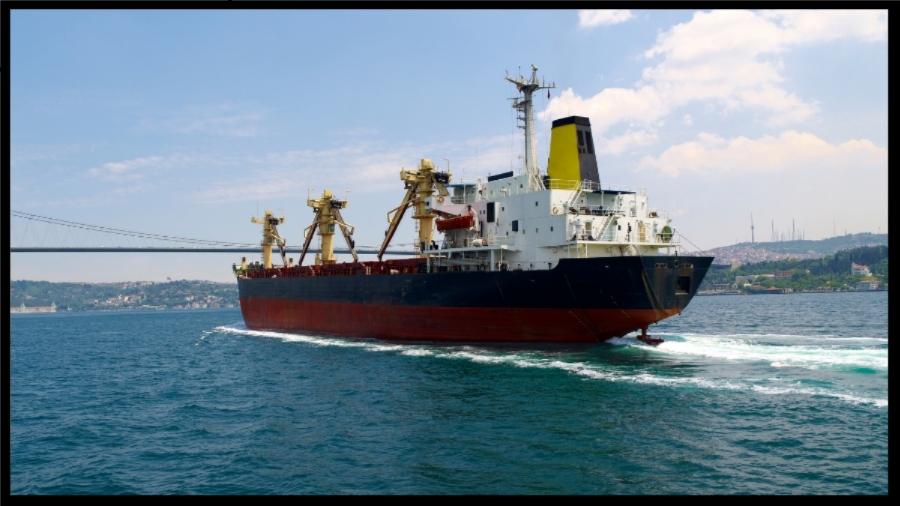
John Fredriksen’s private investment arm, Seatankers Management, has returned to the large dry bulk newbuilding market with an order for four firm 210,000 dwt newcastlemax bulk carriers at China’s Panjin Dajin Offshore, together with options for four more sister ships. Shipbuilding sources cited in trade reporting put the price at about $73.5m per vessel, implying a firm commitment just under $300m and potential total exposure of roughly twice that level if all options are exercised. The four firm ships are slated for delivery from the second half of 2028 through the first half of 2029. The latest order marks another move by Fredriksen back into the top end of dry bulk after earlier newcastlemax contracting in 2024, while also extending Panjin Dajin’s emergence as a more credible builder for mainstream commercial bulk tonnage after separate newcastlemax wins tied to Danaos.
Subscribe to the Ship Universe Weekly Newsletter
Click here for 30 second summary of the full piece ▶
Fredriksen expands again in the biggest bulker class
Seatankers Management has returned to the large dry bulk newbuilding market with four firm newcastlemaxes and four more options at Panjin Dajin Offshore. The order gives the market a fresh price marker, adds weight to the yard’s rise in commercial bulk shipping, and shows that big owners are still willing to secure large-bulker berths several years ahead.
- Deal structure four firm ships plus four options creates both immediate exposure and extra upside.
- Commercial marker the vessels are being discussed at about $73.5m each with delivery between late 2028 and early 2029.
- Market read-through this is another sign that newcastlemax ordering remains active among owners focused on future long-haul cargo demand.
The order is a live vote of confidence in the biggest dry bulk segment and a reminder that berth control for 2028 to 2029 is already valuable enough to pull in high-profile capital.
| Fast reader take | Order signal | Why it matters | Negative risk if the cycle turns | Shows up first | Closest stakeholders |
|---|---|---|---|---|---|
| Seatankers is back ordering the biggest ore and coal bulkers in size |
Four firm 210,000 dwt newcastlemaxes have been reported, with options for four more.
4 firm
4 options
210k dwt
|
This is not a token return. It is a block order structure that gives Fredriksen optionality to scale deeper into the segment. | If capesize and newcastlemax earnings weaken before delivery, the order could look expensive against the future spot market. | More attention on long-haul iron ore and coal trade assumptions, plus scrutiny of 2028 to 2029 delivery timing. | Dry bulk owners, charterers, iron ore traders, shipyards, sale-and-purchase desks. |
| The yard choice matters almost as much as the owner |
Panjin Dajin Offshore is being used again for mainstream commercial newcastlemax work after earlier Danaos-linked wins.
yard credibility
China berth capture
|
The yard is still building its standing in commercial bulk shipping, so each high-profile order helps validate it further. | Newer entrants into mainstream large-bulker construction still have to prove execution, schedule reliability, and resale confidence. | More broker attention on berth availability, contract pricing, and whether other owners follow into the same yard. | Shipyards, brokers, financiers, technical managers, competing owners. |
| Pricing shows the newcastlemax market is still commanding serious capital |
Market estimates place the ships at about $73.5m each, making the firm order just under $300m.
$73.5m each
~$300m firm value
|
That price point gives a live market marker for owners weighing size, fuel profile, and delivery timing against freight expectations. | Owners entering late in a cycle can face weaker returns if the earnings curve softens before the ships hit the water. | Valuation comparisons with 2024 orders and pressure on rivals deciding whether to secure 2028 berths now. | Investors, bankers, rival owners, analysts, yards. |
| Delivery timing points squarely at the next cycle, not the current one |
The four firm ships are scheduled between the second half of 2028 and the first half of 2029.
2028-2029
next-cycle positioning
|
This is a forward bet on where large dry bulk demand and fleet efficiency will stand several years from now. | Macroeconomic slowing, trade-route changes, or excess contracting can all weaken the case by delivery. | More debate around orderbook growth, future scrapping, and the balance between eco tonnage and legacy capes. | Fleet planners, commodity houses, analysts, shareholders, lenders. |
| The move fits a broader Fredriksen capital-allocation pattern |
Seatankers has been more visibly active in tanker ordering recently, and this order reopens a larger dry bulk lane alongside that activity.
portfolio spread
asset-class optionality
|
It suggests Fredriksen wants exposure across major shipping asset classes rather than keeping capital concentrated only in tankers. | Multi-segment exposure can improve optionality, but it also raises questions about timing across several volatile markets at once. | Closer reading of Seatankers ordering strategy across dry bulk and tankers. | Equity investors, private shipping groups, rival asset allocators, shipyards. |
Newcastlemax commitment meter
Large bulker ordering is always a mix of freight conviction, yard timing, and balance-sheet confidence. This tool turns those moving pieces into a single pressure score to show when a newbuilding decision looks opportunistic and when it starts to look more cycle-dependent.
The signals now worth watching
- Order size flexibility matters because four firm ships plus four options creates a built-in scale lever if sentiment improves.
- Yard entry timing matters because securing 2028 to 2029 berths can be as important as getting the exact lowest price.
- Price drift matters because the move gives the market a fresh marker above earlier 2024 Fredriksen-linked newcastlemax pricing.
- Segment preference matters because owners are still favoring large bulkers when they want maximum long-haul cargo leverage.
Interactive order strength score
Move the sliders to test whether a big newcastlemax order looks like disciplined future positioning or a higher-risk cycle bet.
This order is a fresh signal that the biggest dry bulk sizes are still attracting capital from owners willing to look several years out. The real test is not whether the ships look well-timed today. It is whether the demand and fleet balance still support this conviction when the vessels actually start delivering.
We welcome your feedback, suggestions, corrections, and ideas for enhancements. Please click here to get in touch.