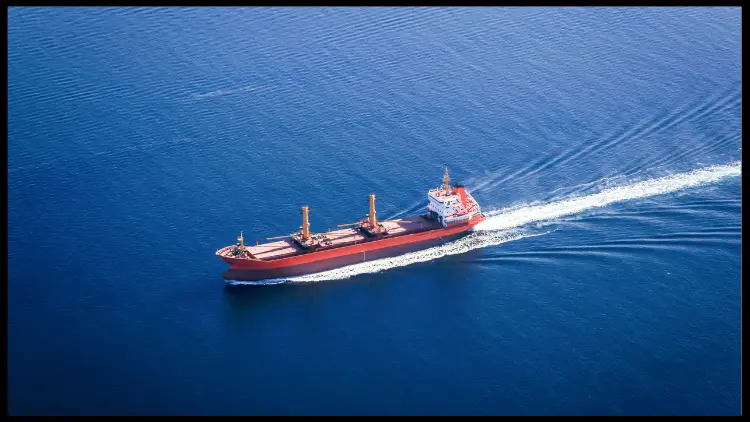
Shipping’s inclusion in the EU Emissions Trading System has moved from theory to cash impact. For 2024 emissions, companies must surrender allowances by September 30, 2025, covering 40% this cycle, rising to 70% for 2025 emissions and 100% from 2026. FuelEU Maritime also kicked in on January 1, 2025 with a 2% greenhouse-gas intensity cut and monetary penalties for shortfalls. With EU carbon permits trading around €81 per ton on November 5, 2025, carbon exposure is now a measurable line item for EU-linked voyages.
Click here for 30 second summary
Simple Summary in 30 Seconds
Shipping is now paying for carbon on EU trades. For 2024 emissions companies must surrender 40 percent of allowances by September 30, 2025, then 70 percent for 2025 and 100 percent from 2026. Intra EU voyages and time at berth count fully, EU to non EU legs count half. FuelEU adds a separate 2 percent fuel intensity cut from 2025. Carbon is now a recurring voyage cost.
What changed
EU ETS for shipping is live with phased coverage and annual surrender.
Who pays
The designated shipping company buys and surrenders allowances.
Cost signal
Exposure rises with emissions, EU coverage share and the EUA price.
Bottom line: Carbon rules are now part of voyage math. Efficient ships and clear pass through terms fare better on EU linked routes.
EU ETS and FuelEU Maritime: Impact
Issue
Summary
Business Mechanics
Bottom-Line Effect
First surrender cycle
Allowances for 2024 emissions must be surrendered by 30 September 2025 at 40% of reported emissions. Phase rises to 70% for 2025 and 100% from 2026 onward.
Cash outflow tied to verified emissions and EUA price at surrender. Reporting under MRV feeds the payable.
📉 Direct cost line this year and growing share next years.
Scope of coverage
100% of emissions on intra-EU voyages and at berth within the EU; 50% of emissions on voyages to or from non-EU ports.
Voyage mix and routing determine exposure. Extra-EU legs count at half weight.
📉 Higher exposure for EU-centric networks and trades.
Gases and ship types
CO2 covered now. Methane and nitrous oxide scheduled to join from 2026. Cargo and passenger ships ≥5000 GT covered from 2024; offshore ships ≥5000 GT from 2027.
Future inclusion of CH4 and N2O raises exposure for LNG-fueled ships unless mitigated.
📉 Broader gas scope increases liabilities over time.
Who is responsible
The “shipping company” is the responsible entity. By default the registered owner, but responsibility can be transferred to the ISM company or bareboat charterer if formally mandated.
Contract clauses can pass costs commercially, but public-law responsibility sits with the designated company on record.
📉 Compliance and cash-flow burden sits with the named company.
EUA price signal
EU carbon permits trading around €81 per ton on 5 Nov 2025. Forward prices vary by delivery year.
Allowance cost multiplies by covered emissions share. Timing of purchase versus surrender date adds price risk.
From 2025 ships must meet a 2% GHG-intensity reduction versus baseline. Shortfalls trigger a monetary penalty set per VLSFO-equivalent energy.
Compliance options include cleaner fuels, energy-saving tech and pooling. Regulation is fuel-agnostic with incentives for RFNBOs and wind-assist.
📉 Additional cost exposure if intensity targets are missed.
Commercial knock-ons
ETS costs are increasingly priced into fixtures and surcharges on EU-linked voyages.
Allocation and documentation of carbon cost in charter parties reduces disputes and recovery gaps.
🔁 Margin impact depends on pass-through strength and market rates.
Planning signals
Phase-in to 100% coverage and broader gas scope tighten economics through 2026 and beyond.
Voyage mix, fuel choice and efficiency measures shape the net carbon bill over the next cycles.
📉 Structural cost headwind for high-emitting legs; 📈 relative advantage for efficient ships.
Notes: Compliance dates, phase-in shares and scope per European Commission and EU guidance current to Nov 6, 2025. EUA price is indicative and changes intraday. Effects vary by route mix, ship efficiency and contract structure.
📈 Positive
📉 Negative
Owners with efficient tonnage on EU trades: lower emissions per voyage reduce allowance needs and improve relative margins.
Operators with clear ETS pass-through clauses: stronger recovery of carbon costs in EU-linked fixtures supports cash flow.
Ports offering shore power and low-carbon bunkering: increased calls from lines seeking FuelEU and ETS benefits.
Suppliers of biofuels and RFNBOs: rising demand on EU routes where GHG intensity rules apply.
Data, MRV and compliance providers: higher spend on monitoring, verification and reporting services.
Older, higher-emission fleets on EU-centric routes: larger allowance bills weigh on voyage P&L.
LNG dual-fuel ships from 2026 without methane controls: CH4 inclusion raises exposure if slip is not mitigated.
Tramp owners with weak charter terms: carbon costs that are not contractually recoverable hit margins.
Shortsea and feeder networks inside the EU: 100% coverage on intra-EU legs and at-berth increases recurring costs.
Companies exposed to EUA price spikes: unhedged purchases near surrender dates add volatility to cash outflows.
EU ETS phase-in at a glance
Surrender in 2025 for 2024 emissions
Coverage share: 40%
Surrender in 2026 for 2025 emissions
Coverage share: 70%
Surrender in 2027 and beyond
Coverage share: 100%
What counts toward EU ETS
Intra-EU voyages
100% of emissions
EU to non-EU or non-EU to EU
50% of emissions
At berth in EU ports
100% of emissions
Gases in scope
Now: CO₂
From 2026: CO₂ + CH₄ + N₂O
Phase adds methane and nitrous oxide in 2026
Who is responsible
The “shipping company” is responsible by law.
Default: registered owner
Possible mandate: ISM company or bareboat charterer that is ISM company
Responsibility changes only with formal documentation
FuelEU Maritime targets
2025 target
−2%
2030 guidepost
−6%
2050 end-state
−80%
Targets apply to ships ≥5000 GT calling EU ports
Key compliance dates
By 30 September each year: surrender allowances for the prior year’s reported emissions
First surrender for shipping: 30 September 2025 for 2024 emissions, at 40%
Typical MRV cycle includes a verified company emissions report due around end of March
Deadlines set by EU rules and national administering authorities
EU ETS Exposure by Year — Simple Ship Calculator
Annual CO₂ (t)
Voyage emissions, exclude at berth
Intra-EU share (%)
100% covered
EU↔Non-EU share (%)
50% covered
At-berth CO₂ (t)
Not included above, 100% covered
EUA price at surrender 2025 (€ / t)
Applies to 2024 emissions (40%)
EUA price at surrender 2026 (€ / t)
Applies to 2025 emissions (70%)
EUA price at surrender 2027 (€ / t)
Applies to 2026 emissions (100%)
Emission year
Coverage share
Covered CO₂ (t)
Allowances (t)
Cost (€)
Notes: Coverage shares per EU ETS phase for shipping (40% of 2024, 70% of 2025, 100% of 2026+). Exposure depends on verified MRV emissions, voyage mix and EUA prices at surrender.
Cost bars by year
This tool estimates EU ETS allowance exposure for a single ship by year. It applies 100% coverage to intra-EU and at-berth emissions and 50% to EU↔non-EU voyages. From 2026, additional gases are regulated, but this view uses CO₂ only.