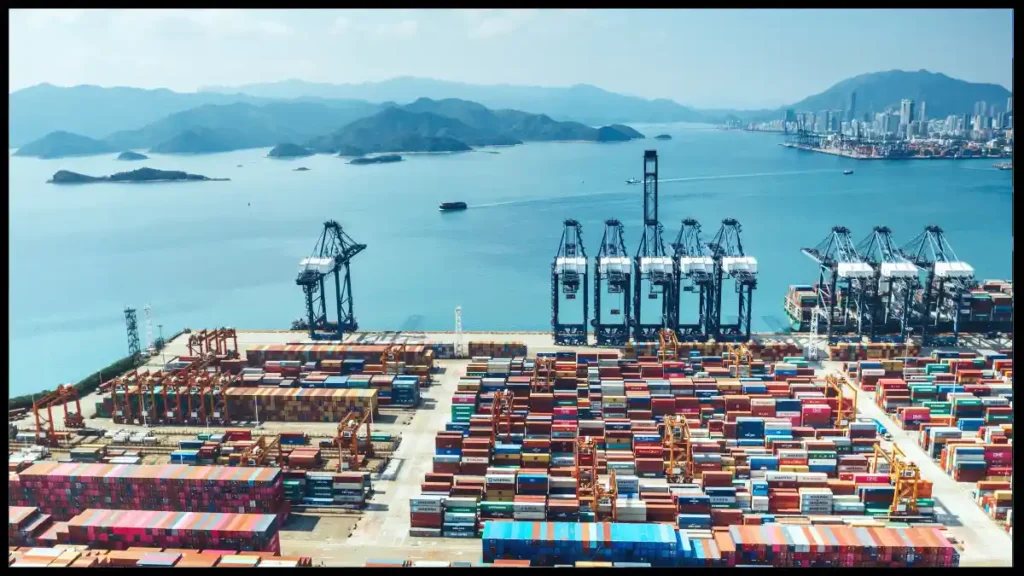
China began collecting special port fees on U.S.-linked vessels on October 14, 2025, starting at 400 yuan per net ton and stepping up to 1,120 yuan by 2028. Early application included a roughly 12.1 million yuan charge, about $1.7 million, for the Matson Waikiki at Shanghai. Chinese-built ships are exempt, and authorities outlined limits such as payment at the first Chinese port only and a cap on how many voyages are charged each year. Analysts estimate the levy can add more than $7 per barrel for VLCCs in some cases, and freight benchmarks have already reacted.
China Special Port Fees: Industry P&L Impact
Story
Impact
Business Mechanics
Bottom-Line Effect
Fee schedule starts at 400 yuan per net ton
Immediate per-call cost for eligible ships from Oct 14, 2025, with scheduled step ups through 2028.
Applied at the net tonnage scale, collected at Chinese ports, reviewed annually.
📉 Direct opex uplift per call, 📈 stronger case for emergency surcharges and selective diversions.
Scope covers U.S.-owned, operated, built, or flagged vessels
A wide ownership and control test can touch non U.S. flags if ownership links meet thresholds.
Ownership, operator, build, or flag connection can trigger the fee, creating counterparty screening needs.
📉 More KYC time and potential fixture refusals for borderline cases.
Exemptions include Chinese-built ships and certain repair calls
Only first Chinese port on a voyage is charged, and annual charge limits apply per vessel.
Empty ships to yard for repair can be exempt, collection rules reduce multiple hits on coastal strings.
📈 Some mitigation for liners with multi port rotations, 📉 residual cost remains material on first call.
First high profile case, about $1.7 million fee in Shanghai
Confirms order of magnitude for large calls and sets expectations for recovery attempts.
Transparent invoicing triggers contractual review of surcharge rights and bunker adjustment factors.
📉 Voyage margin compression without rapid pass through, 📈 potential yield lift if surcharges clear.
VLCC sensitivity, several dollars per barrel in extreme cases
Higher effective delivered cost can shift discharge choices and arbitrage windows.
Levy stacks on freight, insurance, and demurrage, influencing route selection and laycan timing.
📈 TCE support if diversions lengthen voyages, 📉 negative if demand softens on cost shock.
Container lines weigh surcharges versus schedule integrity
Potential blank sailings, hub changes, and transshipment shifts to neutral nodes.
Carrier advisories update surcharge tables, terminal windows adjusted to new call patterns.
📉 Throughput risk at fee heavy gateways, 📈 volume gains at alternative ports and hubs.
Banks, insurers, and clubs tighten screening
More diligence on beneficial ownership and intended Chinese port calls.
Policy riders address levy exposure, clauses spell out cost allocation and cancellation rights.
📉 Longer cycle time for fixtures and documentation, 📈 preference for transparent ownership.
Freight benchmarks react to policy risk
Crude routes tighten on diversions and ship scarcity near China, rate volatility increases.
Tonne miles rise if calls are re sequenced, insurance and operational buffers widen.
📈 Rate support on lanes with limited substitutes, ↔ mixed for segments with reroute options.
Notes: Summary reflects published measures and market indications. Effects vary by vessel eligibility, contract pass through, and exposure to China linked rotations.
Fee to Freight Ratio
$0.00 per unit
First Port Rule Planner
Hub A (neutral)
Feeder
China Port 1
China Port 2
China Port 3
Backhaul
Illustrative rotation: fee assessed at first China port only, later domestic calls not charged.
📈 Winners
Neutral transshipment hubsOwners with strong surcharge clausesPorts with spare berth capacity
📉 Losers
Operators without pass-through roomFee heavy gateways on main loopsTight-schedule services with LD risk
Ownership and Control Triggers
U.S. beneficial ownership
Qualifies even under foreign flag if control thresholds met.
U.S. operator or manager
Management link can trigger fee eligibility.
U.S. build
Build origin counts regardless of current registry.
U.S. flag
Flag status alone may qualify, subject to guidance.
Generalized view. Actual determinations depend on official criteria and documentation.
Fee Glide
2025: 400 CNY per NT
2026: higher band
2027: higher band
2028: up to 1,120 CNY per NT
Contract Levers
Emergency surcharge tables and notice periods
Cost sharing clauses for policy-driven charges
Right to resequence ports or hubs without penalty
Trigger events for bunker and risk premia adjustments
Mainline container
Per box surcharge more feasible on tight services. Hub choice and slot mix influence recovery speed.
VLCC crude
Fee adds to delivered cost and can redirect discharge choices. Diversions lift tonne miles if economics allow.
Product tanker
Shorter hauls limit pass-through. Charterparty wording and terminal access become pivotal.
The new fee regime lands directly on call economics and then ripples through pricing, routing, and counterparty terms. Operators with flexible rotations and strong contract levers can steady margins while others face a heavier lift. Expect neutral hubs to pick up incremental volume, wider rate dispersion on China-linked corridors, and a premium on transparency and documentation at booking.