Ceasefire on Paper, Gridlock in Practice
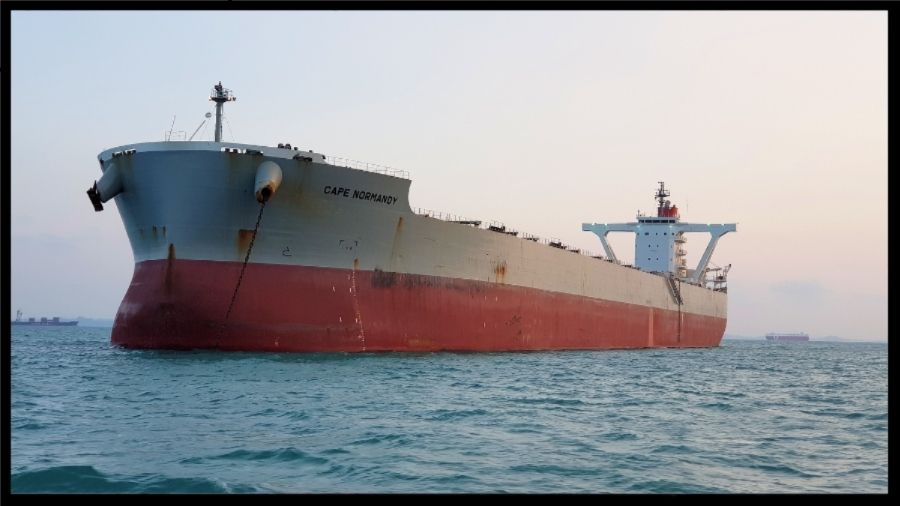
Shipping through the Strait of Hormuz remains close to a standstill even after the U.S.-Iran ceasefire, with the latest vessel-tracking data showing only one oil-products tanker and five dry-bulk ships transiting the waterway in the last 24 hours, versus roughly 140 vessels a day before the war began on February 28. The ceasefire has reduced the immediate risk of renewed fighting, but it has not restored normal maritime confidence. Shipowners, charterers, and cargo interests are still dealing with military coordination requirements, threats against unauthorized passage, unresolved toll and access disputes, and a very large queue of vessels and cargoes that built up while the strait was effectively blocked.
Subscribe to the Ship Universe Weekly Newsletter
Click here for 30 second summary ▶
The ceasefire stopped the war pulse, not the shipping freeze
The latest traffic data show that Hormuz is still running at something much closer to emergency trickle flow than commercial recovery. In the last 24 hours, only one oil-products tanker and five bulk carriers transited the strait, a level that remains dramatically below the roughly 140 ships a day that moved before the war began. That means the ceasefire has changed the political backdrop without yet restoring the operating confidence needed for tankers, liners, and cargo interests to move normally. Passage exists in principle, but the waterway is still behaving like a controlled-risk corridor with thin movement, selective access, and heavy caution.
| Pressure lane | Latest marker | Immediate operating read | Why the standstill persists | Commercial consequence | Next checkpoint |
|---|---|---|---|---|---|
| Traffic count | Only one oil-products tanker and five dry bulk carriers crossed in the last 24 hours. Ceasefire without flow | The traffic count is still so low that the corridor remains functionally near-frozen for core commercial users. | A ceasefire can reduce immediate danger without restoring trust, routing certainty, or operational clearance. | Buyers and owners still behave as if the lane is exceptional, not normal. | Watch whether tanker counts, not just dry bulk counts, begin moving up meaningfully over several consecutive days. |
| Iranian coordination rules | Iran says passage remains subject to military coordination and stricter regulations during the truce. Conditional lane control | Passage is still being treated as permissioned movement rather than open commercial navigation. | Operators remain exposed to reversibility, selective treatment, and new conditions if the political environment shifts. | That keeps insurance, scheduling, and vessel-acceptance decisions defensive. | Watch whether formal navigation guidance becomes broader, clearer, and less selective. |
| Backlog overhang | More than 1,000 vessels remain affected and hundreds of tankers still sit in the wider queue. Open lane, crowded system | Even if more ships are allowed through, the traffic pile-up itself becomes the next brake on fluid movement. | The market is not just reopening a strait. It is trying to unwind a maritime traffic jam under live political conditions. | Rates, berth windows, and downstream cargo timing stay distorted long after the first passage approvals. | Watch whether the queue clears in orderly releases or turns into bunching and secondary congestion. |
| Carrier caution | Maersk says the truce may create transit opportunities, but not full maritime certainty, while Hapag-Lloyd says normalisation still takes 6 to 8 weeks. Network confidence still absent | The biggest operators are still treating Hormuz as a restricted-risk environment. | Container lines need more than a political pause. They need reliable, repeatable, insurable passage. | Alternate routings, surcharges, and selective Gulf booking policies can remain in place even with a truce. | Watch whether major lines start broadly reopening Gulf bookings or continue testing the market in narrow segments. |
| Energy cargo hesitation | Some traders and refiners have begun fixing tankers again, but activity remains cautious and uneven. Interest returning, trust not yet | Buyers are probing the lane, not embracing it. | The economics of replacement barrels may force some movement even while the legal and military framework remains unresolved. | Cargo fixing can restart before normal traffic does, keeping the market split between willing risk-takers and cautious holdouts. | Watch whether fresh crude loadings scale up or remain limited to selective early movers. |
| Unresolved end-state | The truce leaves open major disputes over tolls, guaranteed access, and the terms of any longer settlement. Policy uncertainty still embedded | The market still does not know whether the future lane will be free, conditional, tolled, or guaranteed. | That ambiguity directly depresses maritime confidence even after gunfire stops. | Freight, cover, and cargo decisions stay conservative because the rules of the corridor remain unsettled. | Watch whether negotiations begin to produce enforceable terms on access rather than only temporary truce language. |
We welcome your feedback, suggestions, corrections, and ideas for enhancements. Please click here to get in touch.