Black Sea Tanker Hit Near Bosphorus After Leaving Russian Oil Port
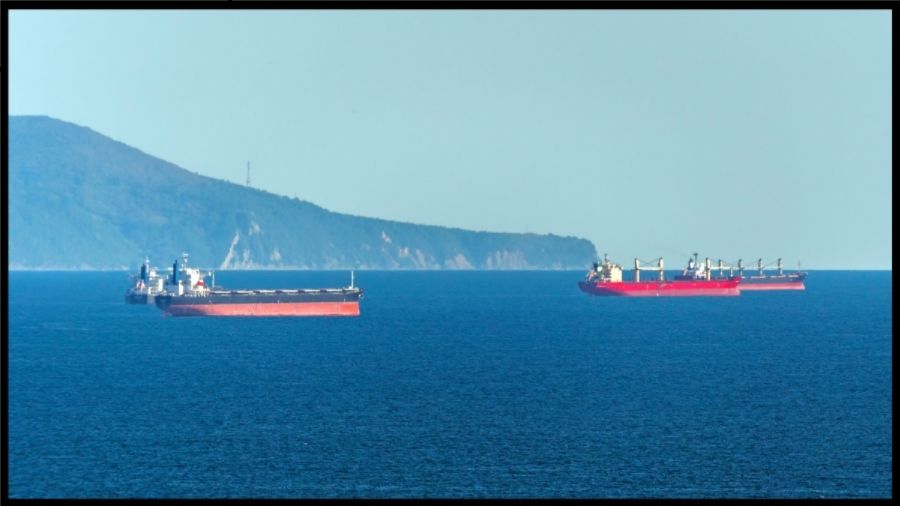
A tanker carrying Russian crude was struck by a marine drone in the Black Sea near the Bosphorus approach on March 26, after leaving Russia’s Novorossiysk export terminal. Turkish officials identified the ship as the Sierra Leone flagged, Turkish operated tanker ALTURA, said the attack took place within Türkiye’s exclusive economic zone but outside Turkish territorial waters, and confirmed that all 27 Turkish crew members were safe. Current reporting says the vessel was carrying about one million barrels of crude oil when the blast occurred, with Turkish authorities opening an investigation and responding publicly that the incident created serious risks to life, property, navigation, and environmental safety in the region.
Subscribe to the Ship Universe Weekly Newsletter
Click here for 30 second summary of the full piece ▶
A loaded tanker was hit near the Bosphorus approach
A marine drone struck the Turkish-operated tanker ALTURA in the Black Sea on March 26 after it departed Novorossiysk carrying about one million barrels of Russian crude. Turkish officials said the attack took place inside Türkiye’s exclusive economic zone but outside Turkish territorial waters, and confirmed that all 27 Turkish crew members were safe. Türkiye also said the incident created serious risks to navigation and environmental safety in the region.
- Ship identified: ALTURA, Sierra Leone flagged and Turkish operated.
- Cargo profile: about one million barrels of crude oil on board in current reporting.
- Official position: Türkiye called the attack a violation of international law and a threat to navigation and environmental safety.
| Incident bucket | Confirmed development | Scale signal | Practical shipping effect | Signals to watch next |
|---|---|---|---|---|
| Vessel and crew |
Türkiye identified the vessel as the Sierra Leone flagged and Turkish operated tanker ALTURA, and said all 27 Turkish crew members were in good health.
The crew status was confirmed by the Turkish foreign ministry after the attack.
Crew reported safe
|
27 crew safe. | The absence of casualties lowers one part of the immediate emergency, but does not reduce the navigational, legal, or environmental consequences. | Crew statements, bridge timeline, and any later classification or flag-state findings. |
| Attack location |
Turkish officials said the strike occurred within Türkiye’s exclusive economic zone in the Black Sea and outside Turkish territorial waters, near the Bosphorus approach.
That places the event close to one of the world’s most sensitive maritime gateways without occurring inside the strait itself.
EEZ incident
|
Near the Bosphorus approach. | Coastal-state concern rises sharply when an armed incident happens this near to heavy traffic, pilotage logic, and chokepoint scheduling. | Any navigation advisories, tighter Turkish monitoring, or revised traffic discipline near the approach zone. |
| Cargo profile |
Current reporting says the tanker had departed Novorossiysk carrying about one million barrels of Russian crude.
That makes the event both a security incident and a pollution-risk event.
Loaded crude tanker
|
About 1 million barrels on board. | Hull damage, cargo integrity, and pollution prevention become central operational questions immediately after the strike. | Damage assessment, cargo transfer need, tug or escort support, and any evidence of leakage. |
| Type of attack |
Turkish officials and current reporting describe the strike as a marine or unmanned sea vehicle attack.
Public comments from Turkish officials ruled out a simple aerial incident and pointed toward a sea-drone strike profile.
Marine drone
|
Unmanned sea-attack profile. | A marine-drone hit close to a chokepoint approach alters risk assumptions for tankers leaving Russian Black Sea ports even before authorities change formal procedures. | Confirmation of impact location on the vessel, engine room effects, and whether more such attacks appear near approach routes. |
| Official Turkish response |
Türkiye said the attack violated international law and posed serious risks to life, property, navigation, and environmental safety, while reserving the right to take necessary measures to protect its economic interests and activities.
The official wording gives the incident broader maritime and economic weight beyond a single-vessel casualty report.
Formal state warning
|
Navigation and environmental risk highlighted at state level. | The incident is being treated as a regional maritime-security problem, not just a shipboard damage case. | Any Turkish protective measures, coordination with coastal agencies, or tighter commercial transit messaging. |
| Wider Black Sea pattern |
The strike follows other recent attacks involving tankers trading to or from Russian ports, with insurers and operators already watching Black Sea risk more closely.
Current reporting ties the event to a wider pattern of drone-related pressure on Russian-linked shipping.
Pattern risk building
|
Repeat-attack concern is now credible. | Owners, charterers, and insurers may begin treating Bosphorus-adjacent Black Sea transit as part of a broader risk envelope rather than a separate safer zone. | War-risk premium adjustments, route timing changes, and whether more tankers wait farther off or alter approach behavior. |
A tanker strike near the Bosphorus approach becomes more disruptive when several factors combine at the same time. Damage to the ship matters, but so does whether the vessel is fully loaded, how close the incident happens to a major traffic gateway, and whether operators think it is part of a repeatable pattern. This monitor turns those conditions into a practical commercial and navigational risk score.
A fully laden crude tanker carries a much heavier environmental and operational burden than a ballast vessel or a lighter products cargo.
A violent incident close to a major maritime gateway affects market behavior more quickly because navigation confidence and traffic management are more easily shaken.
Markets react much more strongly when an incident looks like part of a rising sequence instead of a one-off strike.
We welcome your feedback, suggestions, corrections, and ideas for enhancements. Please click here to get in touch.