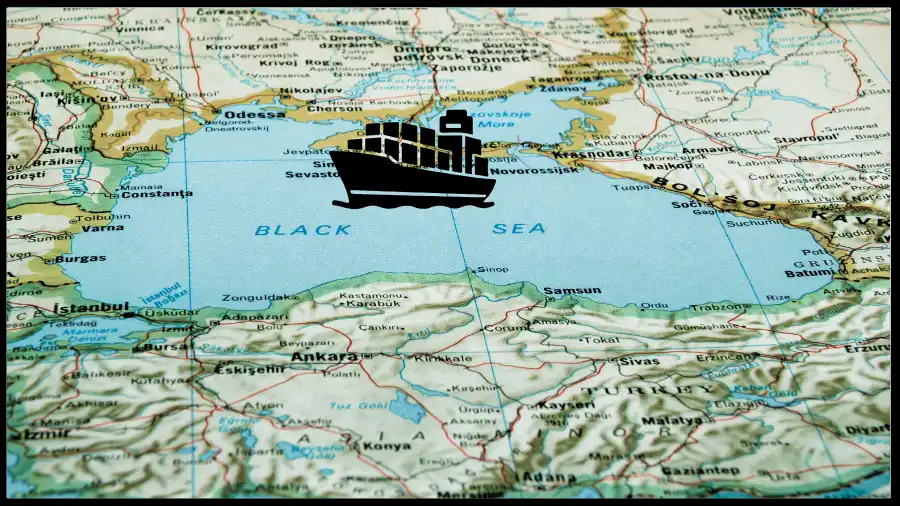
Ukraine has moved its Black Sea campaign into a new phase. Naval drones have now hit two sanctioned shadow fleet tankers heading to Novorossiysk and damaged key infrastructure at the Caspian Pipeline Consortium terminal that handles more than 1 percent of global oil flows. For owners and charterers trading Russian and Kazakh barrels, this combines into a single risk overlay - more questions around insurance and routing, higher war risk premia and a sharper split between compliant fleets and opaque tonnage.
Click here for 30 second summary
Black Sea drone risk in 30 seconds
Ukraine’s naval drones have moved from symbolic strikes to a rolling campaign in the Black Sea. Two sanctioned shadow-fleet tankers heading to Novorossiysk have been hit, and one of the Caspian Pipeline Consortium’s offshore loading buoys has been damaged. That combination puts both the grey fleet moving Russian crude and a major export route for Kazakh barrels under sustained pressure.
🧭 What changes on the water
Tankers trading Russian and CPC barrels now face live strike risk on hulls and offshore gear, not just sanctions paperwork. Routes, waiting areas and approach windows around Novorossiysk and nearby corridors need rethinking, with more conservative speeds and longer buffers baked into each voyage.
⚓ Shadow fleet vs. clean tonnage
Older, opaque hulls on discounted trades are clearly in the crosshairs, raising casualty odds and complicating insurance and finance. As some owners, banks and underwriters step back from these flows, compliant fleets with solid documentation can capture better earnings on safer routes as effective supply tightens.
💸 Knock-on for costs and schedules
Each strike or repair window at CPC risks queues, extra days at anchor and more demurrage, with spillover to clean cargoes using shared straits and anchorages. War risk premia, deviation rights and laytime are now central to how Black Sea fixtures are priced, not fine print added at the end.
Bottom line: the Black Sea has become a drone-shaped risk corridor. Owners and charterers who treat it as a voyage-by-voyage risk trade, with clear clauses and disciplined routing, can still find upside. Those relying on old hulls, thin margins and vague contracts are carrying more downside than the headline freight rate suggests.
Ukraine’s widened Black Sea drone campaign: Industry Impact
Item
Summary
Business mechanics
Bottom-line effect
Scope of drone campaign
Sea drones have moved from mainly coastal and port targets to a mix of tankers and offshore export infrastructure in the Black Sea, including operations near Turkey and at Russia’s Novorossiysk hub.
Naval drones add a mobile, low cost strike option that can be directed at specific ships and single point moorings, overlaying physical risk on top of sanctions and price cap rules for Russian linked trades.
📉 Extra days at anchor raise costs for owner and charterer as ships wait out closures or checks. 📈 Sends a clear signal that documentation and routing for higher risk passages will be tested in practice, not just on paper.
Shadow fleet tanker hits
Ukrainian drones struck the sanctioned tankers Kairos and Virat while they were ballasting toward Novorossiysk to load Russian crude, causing fire damage and a crew evacuation on one vessel and repeated hull impacts on the other.
Both ships belong to the loosely regulated shadow fleet carrying Russian oil outside mainstream insurance and class. Targeting these hulls shows that old, opaque tonnage on discounted trades is now a direct focus, not incidental exposure.
📉 Extra days at anchor raise costs for owner and charterer when damaged tonnage is withdrawn and replacement hulls are late. 📈 Sends a clear signal that sanctioned or older ships will be scrutinised in real time, which can push charterers toward cleaner fleets.
CPC terminal disruption
A sea drone strike damaged one of the Caspian Pipeline Consortium’s offshore loading buoys near Novorossiysk, temporarily halting loadings at that mooring and constraining export capacity for Kazakh and Russian crude.
CPC is the main outlet for Kazakh crude from Tengiz, Karachaganak and Kashagan and handles a meaningful slice of global seaborne supply. With one buoy damaged and another under repair, loadings must be juggled across remaining capacity and fair weather windows.
📉 Extra days at anchor raise costs for owner and charterer when loadings are delayed or re sequenced. 📈 Sends a clear signal that reliance on a single export system carries real operational and political risk that boards need to factor into long term contracts.
International response
Russia has condemned the CPC strike as an attack on critical infrastructure, Kazakhstan has highlighted the terminal’s international ownership, and Turkey has raised concerns about drones operating close to tankers in its waters.
States that rely on shared export systems or corridors now have more at stake in how drones are used, which can drive new navigation advisories, security zones and informal limits on how close merchant ships are expected to sail to potential target areas.
📉 Extra days at anchor raise costs for owner and charterer when authorities freeze movements to assess an incident. 📈 Sends a clear signal that political appetite for unpriced Black Sea exposure is falling among banks, insurers and public companies.
Insurance and finance split
Strikes on sanctioned ships and shared export infrastructure sharpen questions for banks and insurers still connected to Russian oil flows through price cap compliant structures or indirect exposure.
Lenders and insurers can respond with tighter KYC on charterers and beneficial owners, higher war risk surcharges, narrower trading areas and closer checks on AIS gaps and document trails for voyages linked to the region.
📉 Extra days at anchor raise costs for owner and charterer when voyages stall over missing approvals or cover. 📈 Sends a clear signal that well documented, transparent fleets will have better access to capital and insurance than opaque structures.
Routing and operations
Masters and operators are adjusting approaches, waiting areas and timing for calls in and around Novorossiysk and other Black Sea ports to reduce exposure to known drone paths and potential strike zones.
This can mean avoiding certain anchorages, changing arrival windows, limiting night manoeuvres in narrow approaches and coordinating more closely with coastal states and agents on recommended tracks and live security guidance.
📉 Extra days at anchor raise costs for owner and charterer when more conservative routing and tidal choices are built in. 📈 Sends a clear signal that documented route planning and security procedures can support higher freight and better charterparty protection.
Spillover beyond Russian cargoes
Non Russian cargoes share the same straits, anchorages and offshore infrastructure, so they can be delayed by security closures, inspections or temporary suspensions triggered by strikes on Russian linked assets.
Owners carrying neutral cargoes may seek war risk premia, additional laytime and deviation rights similar to those used on Russian trades if their vessels transit the same risk corridors and could be held up by the same incidents.
📉 Extra days at anchor raise costs for owner and charterer even when lifting clean cargoes through shared choke points. 📈 Sends a clear signal that cargo interests cannot treat Black Sea exposure as “business as usual” simply because the bill of lading is non Russian.
Short term outlook
CPC aims to keep exports moving via undamaged buoys while repairs continue, and Ukraine has signalled unmanned systems will remain central to its strategy. Russia expects more attempts against energy infrastructure and has promised responses.
The baseline pattern is intermittent disruption rather than full shutdown. That keeps schedules fragile and tonnage lists volatile, with short bursts of tightness when strikes, weather and maintenance overlap.
📉 Extra days at anchor raise costs for owner and charterer in each disruption wave. 📈 Sends a clear signal that fleets with flexible deployment and solid war risk playbooks can monetise volatility better than those locked into thin margin contracts.
Notes: This summary combines recent reports on Ukrainian naval drone strikes against the tankers Kairos and Virat and on damage to Caspian Pipeline Consortium offshore loading infrastructure near Novorossiysk, together with official statements from regional stakeholders. Actual exposure depends on individual fleet profiles, contract structures, insurance terms and route choices.
Risk zone
Black Sea / Novorossiysk
Tankers, shadow fleet and CPC exports share the same pressure points.
Key trigger
Naval drone strikes
Direct hits on named tankers and an offshore loading buoy.
Signal for owners
Risk priced voyage by voyage
Every fixture needs explicit assumptions on strikes, delays and cover.
Route risk intensity (directional)
Shadow fleet to Novorossiysk
Very high
CPC Aframax / Suezmax calls
High
Clean cargoes via shared straits
Medium
Diversions that avoid region
Lower
Bars are directional, not probabilities. Use live advisories, insurer guidance and local agents to refine for specific voyages.
Where disciplined owners can gain
Modern, well documented fleets become the default choice when charterers back away from opaque tonnage.
Owners that price war risk, delays and diversion options clearly can command a premium when incidents spike.
Consistent AIS, compliance and security procedures help keep insurance open while rivals hit coverage limits.
Main pressure points to track
Older, sanctioned hulls carry layered risk: physical damage, weak cover and fast changing rules.
Any longer outage at CPC can quickly build queues, demurrage and port congestion around remaining buoys.
Mixed fleets with exposure to both Russian and clean trades risk stricter bank and insurer scrutiny on the whole group.
Taken together, the drone strikes on the shadow fleet and on CPC’s offshore infrastructure turn the Black Sea into a test case for how far unmanned systems can reshape oil trades. For shipowners and charterers this is no longer a side story; it changes how voyages are priced, which hulls are acceptable and how much delay and deviation has to be baked into every fixture that touches the region.
The fleets that come out ahead will be the ones that treat war risk, documentation and routing as core commercial tools instead of afterthoughts. Those that keep leaning on older, lightly insured tonnage or vague contracts may find that one weekend incident is enough to lock them out of finance, cover and the better cargoes just when volatility is most profitable.