Baltic Navigation Risk Alert as Coastal States Cite GNSS Interference and AIS Spoofing
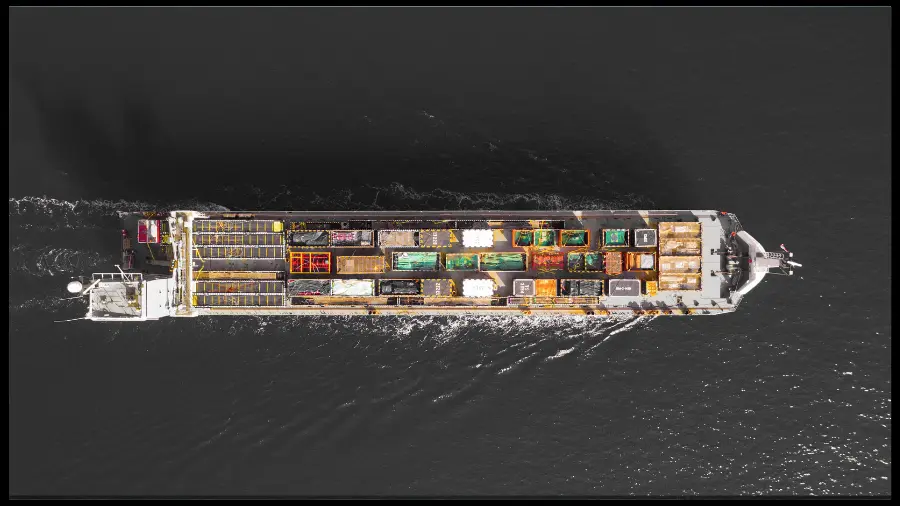
A group of 14 European coastal states, joined by Iceland, has issued a joint open letter to the international maritime community warning that growing GNSS interference in European waters, particularly the Baltic Sea region, is creating new safety situations for shipping. The letter attributes the disturbances to the Russian Federation and pairs the warning with a second concern: AIS manipulation and spoofing, which the signatories say undermines situational awareness, increases accident risk, and can hinder rescue operations. The group urges stronger recognition of the threat, better vessel preparedness for navigation outages, and accelerated work on resilient alternatives to satellite navigation.
Subscribe to the Ship Universe Weekly Newsletter
Click here for 30 second summary
GNSS and AIS risk warning in one read
Fourteen European coastal states plus Iceland published a joint open letter warning that GNSS interference in European waters, especially the Baltic Sea region, is creating new safety situations for shipping. The letter also highlights AIS manipulation and spoofing as a separate integrity risk that can degrade traffic coordination, situational awareness, and emergency response.
- The signatories call for recognition of GNSS interference and AIS manipulation as safety and security threats.
- The letter emphasizes preparedness to operate safely during navigation system outages under international convention expectations.
- Winter conditions are highlighted as a risk multiplier in the Baltic operating environment.
- The group urges cooperation on terrestrial radionavigation alternatives that can be used when GNSS is disrupted or lost.
A formal multistate warning increases the likelihood of tighter scrutiny and faster follow-up around navigation integrity anomalies, and it keeps Baltic transits in a higher-attention posture when GNSS reliability or AIS integrity is in question.
| Signal | What was issued | Operational friction | Commercial read-through |
|---|---|---|---|
| Formal multistate warning | An open letter from coastal states in the Baltic Sea and North Sea, with Iceland, addressed to the international maritime community on navigation safety and security risk. | Higher expectation that bridge teams can operate safely during satellite navigation disruption and explain actions when positioning data degrades. | More attention to vessel preparedness can become a soft filter in counterparty acceptance and voyage planning in the region. |
| Attribution | The letter describes growing GNSS interference in European waters and attributes the disturbances to the Russian Federation, with particular emphasis on the Baltic Sea region. | More frequent positioning uncertainty events, with knock-on effects for pilotage timing, channel transits, close-quarters navigation, and restricted waters operations. | Higher probability of schedule buffers, especially for time-critical calls and winter movements where margins are already tight. |
| AIS integrity elevated | Signatories highlight AIS manipulation and spoofing as a parallel risk that undermines traffic coordination, situational awareness, and emergency response. | Greater scrutiny of AIS anomalies, identity inconsistencies, and track behavior that does not match normal operating patterns. | Operators with clean, consistent signal behavior and strong documentation routines face fewer questions when conditions deteriorate. |
| Winter multiplier | The letter notes that safety risks increase further during winter when ice conditions are challenging. | Reduced tolerance for navigation ambiguity during ice operations, convoying, or icebreaker-assisted movements. | Winter risk can widen the reliability gap between well-prepared vessels and the rest of the fleet in Baltic schedules. |
| Preparedness asks | The letter calls on the maritime community and national authorities to recognize GNSS interference and AIS manipulation as threats and to ensure vessels have adequate capabilities and properly trained crews to operate during outages. | More emphasis on bridge drills and procedures for degraded positioning, including cross-checking methods and fallback navigation. | Training and equipment readiness become a more visible due-diligence item for some fixtures and coastal state interactions. |
| Resilience roadmap | Signatories call for cooperation on developing alternative terrestrial radionavigation systems that can be used when GNSS is disrupted or lost. | Operational focus shifts toward layered navigation, not single-source dependency, for corridor and approach planning. | Over time, resilient positioning solutions can influence which ports and corridors are viewed as lower-friction in the region. |
- GNSS interference is described as a growing risk to maritime safety and security in European waters, with emphasis on the Baltic Sea region.
- AIS manipulation and spoofing are highlighted as undermining situational awareness, increasing accident risk, and complicating rescue operations.
- The letter calls for recognition of these threats, adequate onboard capability and crew readiness during outages, and cooperation on terrestrial alternatives to GNSS.
- Restricted waters, coastal approaches, and high-density traffic corridors where positioning ambiguity compresses margins.
- Pilotage windows and port approaches where timing and track clarity matter.
- Winter navigation when ice conditions add workload and reduce tolerance for uncertainty.
- Traffic coordination relies on AIS as a shared picture, so false targets or false tracks can distort the bridge and VTS view.
- Anomalies can create false collision cues or hide real close-quarters risk.
- Search and rescue planning is harder when identity, position, or track history is unreliable.
We welcome your feedback, suggestions, corrections, and ideas for enhancements. Please click here to get in touch.