Aground After a Drone Hit: Shadow-Fleet Tanker Qendil Tests Turkey’s Response Playbook
Subscribe to the Ship Universe Weekly Newsletter
The sanctioned, Oman-flagged tanker Qendil ran aground off Turkey near Bozcaada after drifting from an anchorage, weeks after being reported as damaged in a Ukrainian long-range drone strike in the Mediterranean. The incident is being watched less for freight impact and more for what it exposes about shadow-fleet casualty handling near busy coastal routes: towing capacity, documentation and insurance clarity, and spill prevention readiness when a high-risk vessel gets into trouble close to shore.
Click here for 30 second summary
Qendil grounds off Bozcaada, putting shadow-fleet risk back on the near-shore radar
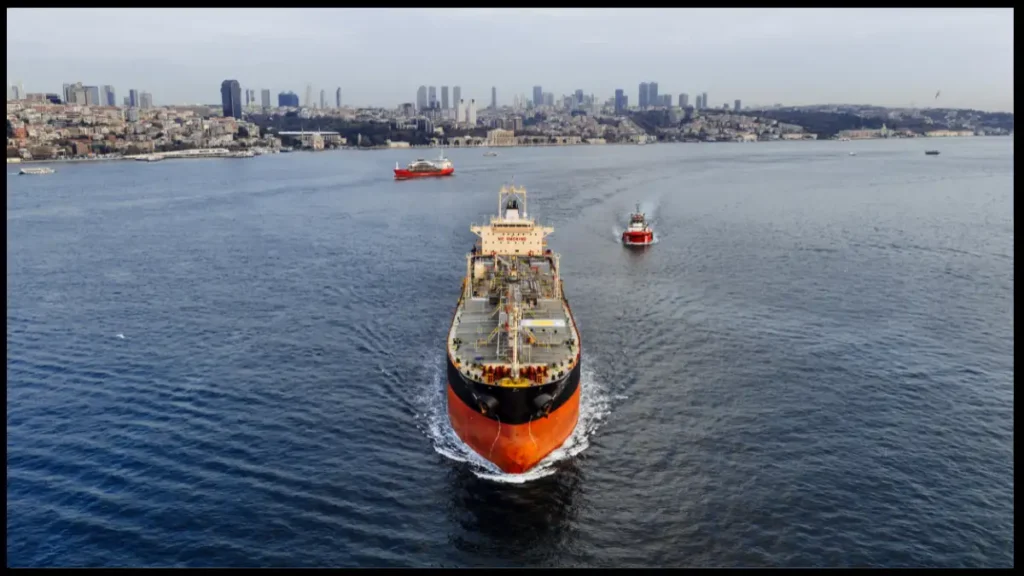
The crude tanker Qendil ran aground off Turkey’s Bozcaada on January 4, with Turkish coastal safety authorities dispatching tug support. Early reporting said the ship was in ballast, with no injuries or pollution reported at that stage, but the incident drew extra attention because Qendil was previously reported struck by Ukrainian aerial drones in the Mediterranean in December.
-
The trigger chain to watch
A drift-from-anchorage grounding in heavy conditions is a different risk profile than an open-water casualty, especially near a busy choke-point entrance. -
The paperwork drag factor
When the vessel is tied to sanctions and shadow-fleet trading, verification and counterparties can add friction even after tugs arrive. -
The immediate exposure lens
Ballast condition lowers cargo spill risk, but bunker fuel and shoreline sensitivity still shape the response posture.
This grounding is a reminder that security incidents and operational failures can compound, and that near-shore shadow-fleet casualties can become as much about clearance and liability pathways as about the physical refloating.
Qendil grounding: when a security story becomes a near-shore casualty
The tanker Qendil’s grounding off Turkey is being tracked as a layered event: a recent, widely reported drone strike history, then a drift-from-anchorage casualty close to shore. Early updates emphasized ballast condition and no initial pollution, but the shadow-fleet profile tends to add extra friction around documentation, liability routing, and clearance steps.
Fast facts readers keep coming back to
Where
Off Bozcaada, Turkey (Aegean Sea)
What happened
Grounding after reportedly drifting from an anchorage
Reported condition
Ballast or empty cargo, per early Turkish authority reporting
Response posture
Tug support dispatched; initial reporting said no injuries or pollution observed at that stage
Security backdrop
Qendil was reported struck by Ukrainian aerial drones in the Mediterranean on Dec 19, 2025
Timeline that explains the attention
Dec 19, 2025: reported drone strike in the Mediterranean
Reporting from multiple outlets cited an SBU source saying the tanker was hit more than 2,000 km from Ukraine and was empty at the time.
Late Dec 2025 to early Jan 2026: anchorage period near Bozcaada
Marine traffic reporting described the vessel holding in the area before the grounding sequence.
Jan 4, 2026: grounding off Turkey
Turkish coastal safety assets were mobilized and early reporting focused on ballast condition and the absence of an initial pollution report.
Why shadow-fleet casualties feel different in coastal waters
The physical sequence of a grounding is only one lane of the story. When the vessel is widely described as part of the shadow-fleet trade and tied to sanctions reporting, the administrative lane can get heavy: verifying parties, confirming coverage, determining who can contract salvage and services, and handling port and coastal authority checks.
- Near-shore location increases urgency because shoreline sensitivity and traffic management become part of the response.
- Ballast condition reduces cargo-spill exposure, but bunker fuel still keeps pollution risk on the table.
- Security context can widen scrutiny of movements, paperwork, and counterparties even after tugs arrive.
The drone link: what it changes, and what it does not
The reported drone strike is important because it shifts the lens from routine casualty to compound risk. It does not automatically explain the grounding, but it keeps attention on potential latent damage, operational reliability, and the question of how quickly a vessel can return to normal trading after a high-profile security event.
- If the earlier damage was significant, it can influence inspections and the refloating plan.
- If the grounding is weather and seamanship driven, it still lands inside a high-scrutiny profile because of the vessel’s trading context.
Casualty friction dial (interactive)
Slide the inputs to see how quickly “time to normalize” can grow when the event is not just technical, but also administrative. Default settings reflect the broad contours of early reporting: sanctions exposure and a recent security incident are elevated; documentation clarity is not assumed.
The grounding of Qendil off Bozcaada sits at the intersection of two storylines: a near-shore casualty response in a sensitive, high-traffic area and the growing operational and administrative complexity tied to sanctioned, shadow-fleet trading. Early official updates emphasized ballast condition and no immediate pollution or injuries, while reporting around the vessel’s recent drone-strike history kept attention on how quickly a case like this can be stabilized and processed once it is close to land.
We welcome your feedback, suggestions, corrections, and ideas for enhancements. Please click here to get in touch.