Small Ships Big Role: Why Lighter Naval Platforms are Growing
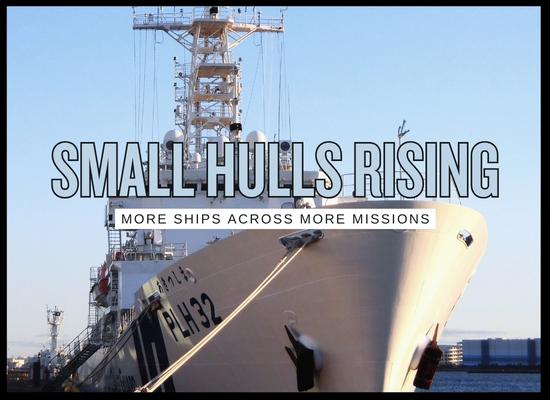
Lighter naval platforms are growing as many fleets no longer see every maritime problem as a destroyer or frigate problem. In 2026, the pressure is coming from chokepoint security, grey-zone presence, distributed operations, budget realism, shipyard constraints, and the need to put useful hulls in the water faster. That is pushing more attention toward patrol vessels, offshore patrol ships, corvette-sized combatants, Medium Landing Ships, and unmanned surface craft. The pattern is not about replacing major warships altogether. It is about building a force mix that can stay present, scale faster, and carry more of the daily operational burden without forcing every mission onto the most expensive ships in the fleet.
Small platforms are moving from support layer to force design layer
Navies are buying and testing lighter ships because they need more hulls on station, more distributed sensors and launch points, and more flexible ways to patrol, deter, and absorb risk without tying every job to a few expensive front-line combatants.
The pressure behind the move
This trend is not built on one lesson. It comes from procurement strain, missile risk, autonomous systems, and the reality that navies need visible sea presence in more places than their destroyer and frigate fleets can continuously cover.
① Fleet math is getting harder
Large warships remain essential, but they are expensive to build, expensive to maintain, and limited in number. Many navies are finding that they need more deployable hulls faster than capital-ship programs can deliver them. Smaller patrol ships, corvettes, and unmanned craft offer a way to widen force presence without waiting on a handful of top-end platforms.
Operational effect: more patrol days, more coverage at chokepoints, and less pressure to use a major surface combatant for every routine task.
② Dispersion has become a form of protection
Modern surveillance, anti-ship missiles, and drone-enabled targeting make concentrated fleets more vulnerable. Smaller ships and unmanned nodes can help distribute sensing, scouting, decoys, and in some cases weapons across a wider battlespace. The point is not that a light platform is invulnerable. The point is that distributed forces are harder to paralyze with a small number of successful strikes.
Operational effect: a fleet can stay useful even when it is spread, contested, and operating under persistent surveillance.
③ The Black Sea changed the conversation
Recent naval combat showed that sea denial can be imposed with a mix of missiles, drones, intelligence, and lower-cost maritime tools. That did not eliminate the need for frigates, destroyers, or submarines. It did, however, convince many planners that smaller and cheaper platforms can play a much larger operational role than older assumptions allowed.
Operational effect: navies now see more value in systems that scout forward, absorb risk, or create tactical problems for an opponent at relatively low cost.
④ Presence missions are eating ship time
Gray-zone competition, EEZ patrol, offshore infrastructure protection, sovereignty missions, convoy support, partner engagement, and maritime interdiction all take time on station. These are not rare side jobs. For many navies, they are the daily operating reality. Lighter platforms fit these jobs better than burning major combatant readiness on routine or semi-routine deployments.
Operational effect: larger warships can stay focused on higher-end deterrence and combat tasks while smaller hulls handle persistent maritime pressure.
⑤ Autonomy makes smaller craft more useful
Unmanned surface vessels are moving from experiment toward practical fleet integration. They can extend scouting range, support distributed sensing, reduce human exposure in higher-risk areas, and act as testbeds for new concepts faster than a traditional ship program can. Even a crewed light platform becomes more potent when it can launch, control, or cooperate with unmanned systems.
Operational effect: the value of a small hull increasingly comes from what it can connect to, not just what it physically carries.
⑥ Industry and procurement timelines are favoring lighter classes
Some lighter ships can move through procurement faster than high-end combatants, especially when they rely on proven hull forms, less complex combat systems, or modular payload logic. That makes them attractive when navies want visible fleet growth or mission relief sooner rather than later.
Operational effect: a navy can improve maritime coverage and readiness balance while longer strategic shipbuilding programs continue in parallel.
The platform mix that is expanding
The growth story is not limited to one class. It covers several layers of lighter maritime capability, each serving a different piece of the modern naval workload.
| Platform type | Best fit | Where it helps most | Main tradeoff |
|---|---|---|---|
| Offshore patrol vessel | Presence, patrol, escort, maritime security, sovereignty missions | Long-endurance peacetime and gray-zone tasks | Lighter combat fit than frigates or destroyers |
| Light corvette or patrol corvette | Coastal defense, sea denial, escort, limited multi-role combat | Contested littorals and regional deterrence | Less magazine depth and less command capacity than larger combatants |
| Shallow-water ASW craft | Coastal anti-submarine work, harbor approaches, chokepoint defense | Waters where larger ASW ships are not the best fit | More specialized mission profile |
| Fast patrol or missile craft | Rapid response, short-range sea denial, local punch | Congested littorals and dense coastal traffic zones | Limited endurance and seakeeping |
| Small and medium unmanned surface vessels | Scouting, decoy roles, surveillance, autonomy trials, risk-forward operations | Distributed fleets and higher-risk forward tasks | Doctrine, communications resilience, and integration still maturing |
Europe is pushing multi-role patrol combatants
The European Patrol Corvette effort is built around both full-combat and long-range multipurpose variants, showing that even collaborative European programs see demand in this lighter band of naval capability.
Asia is reinforcing coastal and patrol layers
Programs in India and the Philippines show continuing demand for lighter ships that support coastal defense, patrol persistence, and practical maritime control in pressured waters.
The U.S. angle is increasingly unmanned and distributed
American force-design debate keeps pulling toward distributed maritime operations and greater use of unmanned surface vessels to extend reach and reduce concentration.
Programs that make this trend real
This is no longer just a theory debate. Current programs across several navies show that lighter platforms are part of active procurement, not a future-only concept.
| Country or program | Recent signal | Importance | Fleet meaning |
|---|---|---|---|
| United States Navy | Continuing work around large and smaller unmanned surface vessels, distributed operations, and dedicated unmanned squadrons | Shows that smaller autonomous nodes are being treated as real fleet architecture, not just lab experiments | Higher value on distribution, risk-forward sensing, and lower-crew exposure |
| France | Launch of the first new Patrouilleur Hauturier offshore patrol vessel | Confirms continuing investment in lower-tier but important maritime presence ships | Steady hull count for patrol, policing, and maritime approaches |
| European Patrol Corvette | Program advancing with combat and long-range multipurpose variants | Suggests lighter combatants still fit future European fleet planning | Balanced mix between patrol endurance and scalable combat capability |
| India | First Mahe-class anti-submarine shallow-water craft commissioned | Highlights demand for specialized lighter ships tuned to coastal defense needs | Strengthens littoral ASW layer without relying only on larger surface combatants |
| Philippines | Arrival and commissioning steps for the Rajah Sulayman-class OPV | Reinforces the value of persistent patrol hulls in a high-friction maritime environment | Supports visible maritime presence in contested and closely watched waters |
The navies moving fastest are not abandoning larger ships. They are widening the lower and middle layers of the fleet so more missions can be covered without exhausting a few premium assets.
Light platform force-balance calculator
This quick tool estimates why fleet planners keep returning to lighter ships and unmanned craft. It does not measure combat quality perfectly. It helps visualize how smaller platforms can widen daily coverage and reduce pressure on a limited number of major combatants.
TIn Conclusion
The growth of lighter naval platforms should be read as a layering strategy, not a declaration that large warships no longer matter.
Major surface combatants still bring magazine depth, air defense, command facilities, and survivability that smaller craft cannot fully replicate. But many navies are finding that large ships alone do not produce enough day-to-day maritime leverage. Smaller platforms fill that gap by widening presence, supporting distributed operations, and creating more flexible ways to patrol, scout, escort, and contest maritime space.
The fleets likely to benefit most are the ones that combine major combatants, lighter manned ships, and unmanned systems into a coherent operating architecture. In that model, a light platform does not need to be a mini-destroyer. It only needs to be good enough, numerous enough, and networked enough to make the whole fleet more resilient and more available.