Additive Manufacturing Moves From Demo to Readiness Tool
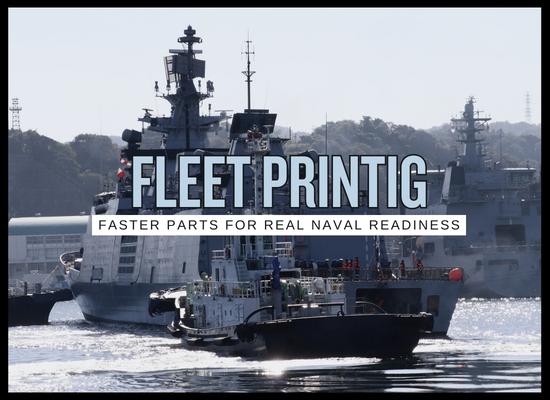
Naval 3D printing is starting to solve readiness problems, not just showcase technical possibility
Naval additive manufacturing is becoming more relevant because it is now being used to attack some of the ugliest maintenance and sustainment problems in the fleet: long waits for low-volume spares, vendor bottlenecks, forward repair delays, obsolete parts, and the distance between the ship that needs the component and the industrial node that can produce it. The opportunity is strongest in spare parts, repair components, emergency replacements, and distributed maintenance support. The friction is strongest in qualification, repeatability, technical data access, material control, and deciding which parts are low-risk enough to move quickly without undermining safety.
1️⃣ Spare parts are becoming the most practical entry lane
Naval additive manufacturing makes the most immediate sense where the part is low-volume, time-sensitive, hard to source, or embedded inside a larger assembly that would otherwise require replacing the whole unit. That is exactly where conventional procurement can be too slow or too expensive for readiness needs.
2️⃣ Repair lead time is becoming the real scoreboard
For years, additive manufacturing was discussed in terms of innovation. The stronger measure now is whether it materially cuts repair delay. Once fleet maintainers can point to parts delivered in days instead of months, the value proposition changes from interesting to operational.
3️⃣ Low-risk approval pathways are widening practical use
One of the biggest changes is procedural. NAVSEA has been empowering waterfront engineers and maintainers to approve low-risk additive parts more quickly. That matters because the biggest enemy of useful adoption is often not the printer, but the administrative pathway between the need and the installed component.
4️⃣ Distributed manufacturing is turning into a fleet-support model
Once a digital file, process recipe, approved material, and trained operator can move work across locations, the industrial footprint widens. That is strategically important because naval readiness often suffers when too much production is trapped in too few physical nodes.
5️⃣ Qualification remains the main gatekeeper
The hardest problem is not producing an object. It is proving that the object is acceptable, repeatable, and safe in the actual operating environment. The more essential the part, the more this qualification burden dominates schedule, cost, and adoption speed.
6️⃣ Technical data rights can still stop the whole process
Even if a machine is ready and a maintainer is trained, additive manufacturing may still stall if the government lacks the detailed data or process information needed to reproduce the part. In sustainment, data rights problems can lengthen repairs and reinforce sole-source dependence.
7️⃣ Material and process control matter more than the printer brand
The serious Navy research work is centered on controlling feedstock, parameters, post-processing, inspection, and performance consistency. That is the difference between a machine shop novelty and a repeatable production pathway that can support fleet standards across vendors.
8️⃣ Forward and shipboard printing are becoming more credible
Work aboard ships and submarines, plus experiments around printing under motion conditions, suggest the Navy is trying to push additive manufacturing closer to the point of need. That is important because the payoff rises sharply when the supply chain is bypassed rather than merely accelerated.
9️⃣ AUKUS gives additive manufacturing strategic scale
Once additive manufacturing becomes part of allied industrial cooperation, it is no longer only a local maintenance tool. It becomes part of a wider sustainment architecture where trusted partners can share standards, data, and manufacturing pathways for common fleets and submarine support.
🔟 Obsolescence and fragile supplier lanes are a natural fit
Legacy naval systems often depend on vendors, tooling, or procurement pathways that no longer behave like healthy industrial markets. Additive manufacturing is especially attractive where it can recreate needed geometry without waiting on a supplier base that is thin, slow, or no longer interested in the work.
1️⃣1️⃣ The readiness case is strongest before the construction case
Right now the most persuasive argument is sustainment, not full design replacement. Additive manufacturing is proving itself in repair and support first. The move into primary mission-critical construction components is coming more slowly because the evidence threshold is much higher.
1️⃣2️⃣ The main question is no longer whether AM can work
The main question is where it can be trusted, how fast it can be qualified, and how broadly the industrial base can reproduce it. That is a more mature question, and it is a sign that naval additive manufacturing has moved out of the curiosity phase.
| # | Use lane | Current practicality | Main readiness upside | Main bottleneck | Best operating environment | Risk posture |
|---|---|---|---|---|---|---|
| 1 |
Low-risk spare parts
Brackets, fittings, housings, selected support hardware.
|
High and growing because approval can move faster when failure does not threaten ship safety. | Shorter waits, lower dependence on fragile vendor lanes, better part availability. | Part file access, material selection, final inspection discipline. | Waterfront shops, regional maintenance centers, forward locations. | Low to moderate if screening is tight. |
| 2 |
Emergency repair components
Fast solutions when the alternative is missed availability.
|
Strong for urgent sustainment if reverse engineering and approval support are available. | Days instead of months in selected cases, more self-sufficiency. | Engineering validation under time pressure. | Forward repair settings, ships with onboard or nearby capability. | Moderate and tightly managed. |
| 3 |
Obsolete or long-lead items
Where classic supply options are weak or slow.
|
Attractive because conventional alternatives are already poor. | Alternate sourcing and faster restoration of maintenance flow. | Data rights, geometry reconstruction, repeatability proof. | Depots, specialized AM centers, industry partners. | Moderate. |
| 4 |
Shipboard printing at sea
Point-of-need production is the biggest long-run payoff.
|
Promising but still constrained by machine size, motion, materials, and crew expertise. | Bypasses long logistics chains and supports distributed operations. | Motion effects, training, post-processing, shipboard quality assurance. | Larger ships, tenders, selected expeditionary settings. | Moderate to high depending on part class. |
| 5 |
Mission-essential metallic components
The most strategically important and hardest lane.
|
Advancing, but qualification depth and consistency demands are much higher. | Potential for major readiness and industrial gains if scaled safely. | Qualification cost, certification time, fatigue confidence, process control. | Controlled industrial environments first, then limited field use. | High. |
| 6 |
Allied distributed production
AUKUS and shared support pathways expand the concept.
|
Increasingly practical where standards, data release, and trust are aligned. | Wider manufacturing network and better regional sustainment depth. | Data transfer rules, shared standards, approval reciprocity. | Trusted allied industrial ecosystems. | Moderate, but strategic value is high. |
| 7 |
Organic depot and waterfront support
Often the most practical scale-up lane right now.
|
High because infrastructure, engineers, and QA can be concentrated. | Faster repair execution and better local responsiveness. | Throughput, approved material lists, workflow integration. | Regional maintenance centers and naval shipyards. | Low to moderate. |
| 8 |
New construction integration
Where AM becomes part of baseline program planning.
|
Still selective because proof burden is high and construction schedules are unforgiving. | Potential schedule relief and new supply options. | Program approval, lifecycle confidence, production repeatability. | Prime yards and tightly managed supplier chains. | High for core systems, lower for secondary items. |
The Navy said in January 2026 that additive manufacturing had moved into frontline operations
That is important because it frames AM as a warfighting and readiness capability, not only a research effort.
Fleet and waterfront cases showed real repair-time improvement
Reported examples included a 70 percent lead-time cut for a destroyer valve, an 80 percent reduction in repair time in Rota, and ship or service-level fixes that avoided much longer waits.
Qualification work is getting more practical
Recent Navy-linked research emphasized that machine certification and qualification can be streamlined if the process controls that actually drive repeatability are understood and managed properly.
Forward support is widening beyond one service or one location
Cases involving the Coast Guard, submarine platforms, and AUKUS industrial cooperation suggest the concept is expanding from local shop success to distributed support logic.
The hardest constraints remain bigger than the printer itself
Data rights, vendor lock, dry dock and repair infrastructure limits, standards, and broader industrial-base fragility still affect how fast AM can improve actual fleet availability.
Start with the part classes that already punish the fleet most
The best first lane is usually the ugly middle of sustainment: low-volume spares, obsolete components, internal sub-assemblies, and items that create long delays out of proportion to their size or price.
Treat technical data access as a readiness input
If the government cannot lawfully or practically access the manufacturing and process data needed to reproduce a part, the printer does not solve the problem. Data rights are part of the readiness equation.
Do not confuse lower testing volume with lower standards
The smarter path is not to skip qualification. It is to learn which process variables matter most, reduce unnecessary burden, and hold the truly critical quality controls much more tightly.
Think in networks, not machines
The real strategic gain comes when approved materials, validated parameters, trained operators, inspection methods, and secure data pathways allow more than one node to produce the part credibly.
Keep shipboard printing in the right lane
Point-of-need production is one of the most powerful outcomes, but the near-term strength is still selected parts under controlled risk, not a fantasy where every vessel becomes a freeform metal factory.
Measure success by restored availability
The strongest scorecard is not number of prints completed. It is the number of maintenance delays avoided, the amount of repair time removed, and the number of ships or submarines returned to schedule faster.
Move the sliders based on the environment you want to test. Higher bottleneck pressure, stronger qualification maturity, better data access, stronger forward repair need, and a wider trusted manufacturing network tend to push additive manufacturing from occasional fix toward routine readiness enabler.
Which lanes benefit most
Reader interpretation
- The strongest near-term wins usually sit in spare parts and repair items where logistics delay is already painful.
- A printer alone does not create readiness. The combination of technical data, qualification, approved materials, and trained operators does.
- The more trusted nodes that can reproduce the same part correctly, the more additive manufacturing starts to behave like real industrial resilience.
Naval additive manufacturing still has hard limits. It does not erase the need for shipyards, dry docks, quality assurance systems, foundries, or stable industrial suppliers. But the 2025 to 2026 evidence points to a real shift: 3D printing is increasingly being judged by whether it restores availability, shortens repair timelines, and widens trusted manufacturing options. That is a much more serious place for the technology to be than where it was a few years ago.
We welcome your feedback, suggestions, corrections, and ideas for enhancements. Please click here to get in touch.