The Supplier Edge Naval Buyers Will Value Most When Capacity Gets Tight
When the naval industrial base gets tight, buyers usually stop rewarding suppliers simply for being available and start rewarding them for reducing…
Read More →
Naval shipbuilding, programs, capabilities and fleet operations.
When the naval industrial base gets tight, buyers usually stop rewarding suppliers simply for being available and start rewarding them for reducing…
Read More →
Shipbuilding growth is not just a money question because the real bottlenecks sit inside yards, suppliers, designs, and labor pipelines Buyers looking…
Read More →
When naval conflict risk rises, the most profitable demand does not always flow first to the obvious prime contractors. A large share…
Read More →
Naval yard productivity in 2026 looks less likely to be transformed by one giant breakthrough and more likely to improve through a…
Read More →
The parts and overhaul demand picture for 2026 and 2027 looks less like one giant wave hitting every naval supplier equally and…
Read More →
The modern readiness stack is becoming more synthetic, more networked, and more repeatable Naval training products are increasingly being judged by how…
Read More →
The pressure is building in the support contracts that sit underneath naval readiness Spare parts problems in the naval world are rarely…
Read More →
Naval 3D printing is starting to solve readiness problems, not just showcase technical possibility Naval additive manufacturing is becoming more relevant because…
Read More →
Distributed manufacturing is moving from an interesting industrial theory to a more practical naval supply-chain concept. The shift is being driven by…
Read More →
The naval workforce problem in 2026 is no longer one issue hiding behind another. It is a stack of connected problems: too…
Read More →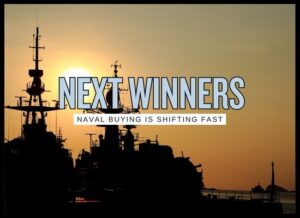
Naval procurement is starting to reward a different set of strengths than the old headline cycle suggested. In 2026, the most important…
Read More →
The Navy’s new MUSV direction is starting to look less like a niche unmanned program and more like an industrial signal. In…
Read More →
If naval throughput becomes the real priority, the biggest winners may not be the most visible prime contractors. They are more likely…
Read More →
AUKUS is already changing the alliance machinery The submarine pathway still dominates public attention, but the deeper transformation is happening in export…
Read More →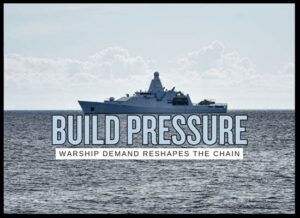
Naval build priorities in 2026 are starting to matter well beyond warship counts. The clearest shift is that submarine expansion, amphibious connector…
Read More →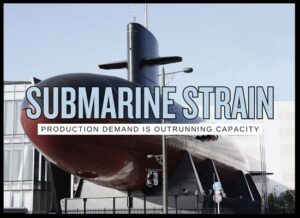
The submarine production push looks straightforward from a distance: build faster, restore numbers, strengthen deterrence. But the deeper 2026 picture is much…
Read More →
Lighter naval platforms are growing as many fleets no longer see every maritime problem as a destroyer or frigate problem. In 2026,…
Read More →
Adding hulls looks like the simplest answer to naval gaps, especially when fleet-size comparisons dominate headlines and political debate. But the harder…
Read More →
Autonomous warships and naval unmanned systems are no longer sitting in the experimental corner of fleet planning. In 2026, the shift is…
Read More →
Naval cyber risk is no longer a niche IT problem sitting somewhere below missiles, propulsion, or ship design. The gap now is…
Read More →