10 Naval Training Simulators and Synthetic Environment Products Used for Readiness
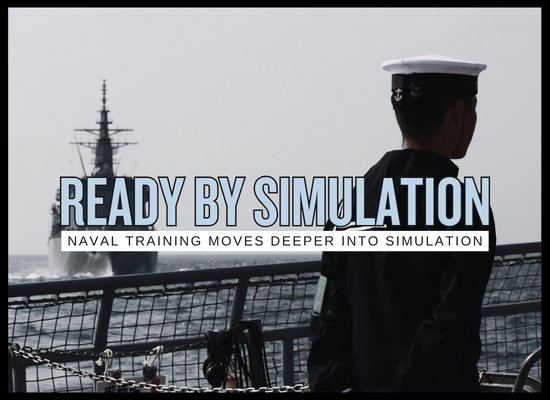
The modern readiness stack is becoming more synthetic, more networked, and more repeatable
Naval training products are increasingly being judged by how well they compress learning curves, improve team coordination, raise repetition without consuming scarce live assets, and move more realistic instruction closer to the waterfront, flight line, and deployed unit. The strongest systems do not just imitate equipment. They create usable repetitions, realistic decision pressure, after-action feedback, and multi-station teamwork that helps crews arrive better prepared before high-cost live events begin.
1️⃣ Bridge team and ship-handling trainers
Shiphandling remains one of the clearest use cases for simulation because crews can practice bridge resource management, navigation, replenishment approaches, visual and radar correlation, and special evolutions without tying up a warship for every repetition. The strongest products here train the entire bridge and CIC relationship together rather than teaching conning skills in isolation.
2️⃣ Integrated combat-systems tactical trainers
Surface combat training products matter most when they let crews operate in ship-like tactical conditions, not sterile classroom conditions. A strong combat-systems trainer blends virtualized code, emulations, synthetic tracks, instructor control, and debrief capability so operators can rehearse air defense, ASW, and tactical coordination in a more realistic loop.
3️⃣ Virtual maintenance trainers for combat and mission systems
Maintenance readiness is becoming a stronger simulation lane because the Navy needs faster, repeatable instruction without endlessly expanding hardware footprints at schoolhouses. Virtual maintenance products are strongest when they let Sailors practice troubleshooting logic, component relationships, safety checks, and procedural flow before touching real gear.
4️⃣ Aviation platform simulators for pilots, crews, and maintainers
Naval aviation still depends heavily on full-mission simulators, weapons-tactics trainers, maintenance trainers, and related training devices because aircrew and maintainer proficiency cannot rely on live events alone. The strongest aviation products keep hardware and software aligned with the real platform while supporting mission rehearsal, emergency procedures, systems familiarity, and crew coordination.
5️⃣ High-end contested-fight simulators and synthetic air battle labs
At the top end of the training market are synthetic environments built to recreate contested situations that are difficult or impractical to generate live. These products become especially important when the fleet wants to stress fifth-generation aviation, collaborative tactics, dense threat presentations, and cross-service integration under far more demanding conditions than a routine range event can offer.
6️⃣ Fleet synthetic training and live virtual constructive network products
Distributed synthetic training products become strategically important when they connect ships, command centers, aircraft, and synthetic participants into the same event. The value is not just simulation realism. It is the ability to make geographically separated units fight the same tactical problem together and do it more often than live scheduling would normally allow.
7️⃣ Damage-control and firefighting trainers
Readiness is not just about fighting the ship. It is also about saving the ship. Damage-control trainers keep their value because they let sailors rehearse flooding, fire response, casualty isolation, and team coordination under stress in a way that is hard to duplicate with slides or lectures. These are some of the most practical and durable training products in the fleet.
8️⃣ Submarine handling and submarine team trainers
Submarine training products matter because undersea operations require tight team coordination, limited error tolerance, and skills that can be hard to rehearse repeatedly in live operations. The strongest systems give crews immersive shiphandling or system-response practice while expanding access beyond one fixed location or one large centralized trainer.
9️⃣ Reconfigurable shipboard and rate training systems
Reconfigurable trainers are attractive because they can support multiple systems, failure scenarios, and procedural drills from a smaller footprint. Their value rises when the Navy wants training that can follow sailors closer to the ship and support both schoolhouse instruction and pre-deployment refresh rather than forcing everything through one fixed legacy setup.
🔟 Tower, deck, and specialty operational trainers
Specialty trainers can look narrow until the fleet hits a bottleneck in carrier operations, air traffic control, launch and recovery, or another specialized evolution that is difficult to rehearse at scale. These products earn their place when they replicate a demanding operating station closely enough to build judgment, pacing, and coordination before the real event starts costing time or risk.
| # | Product lane | Main readiness job | Where it performs best | Main strength | Main limitation | Best buyer lens |
|---|---|---|---|---|---|---|
| 1 | Shiphandling trainers Bridge and navigation team repetition. |
Builds confidence and coordination for special evolutions and routine watchstanding. | Bridge-team and CIC teamwork, navigation drills, replenishment practice. | High repetition with strong team realism. | Needs current scenarios and instructors who understand bridge behavior deeply. | Look for team realism, not just visual quality. |
| 2 | Combat tactical trainers Surface warfare and tactical decision loops. |
Sharpens operators and teams for complex combat-system use. | Air defense, ASW, watchteam coordination, integrated debrief. | Lets crews rehearse tactically dense scenarios more often. | Loses value if software and threat representation drift. | Prioritize concurrency and debrief depth. |
| 3 | Virtual maintenance trainers Technical troubleshooting and procedure flow. |
Builds maintainer familiarity before real hardware interaction. | Schoolhouses, refresh training, procedure rehearsal. | Reduces hardware burden and expands reps. | Cannot replace every tactile task alone. | Blended training is usually best. |
| 4 | Aviation platform simulators Pilot, crew, and maintainer proficiency. |
Supports mission rehearsal, emergencies, systems knowledge, and crew coordination. | Fleet replacement, operational squadrons, maintenance instruction. | High-value repetition for expensive live missions. | Constant update pressure as aircraft baselines change. | Concurrency and reliability matter most. |
| 5 | High-end synthetic battle labs Contested and joint mission rehearsal. |
Prepares crews for threat-rich conditions that are difficult to recreate live. | Advanced aviation, dense integrated threat scenarios, joint tactics. | High realism where live training is constrained. | Complex and expensive to sustain. | Buy for hard scenarios, not generic syllabus filler. |
| 6 | LVC fleet training networks Distributed fleet and command-center events. |
Connects separate units into one synthetic tactical problem. | Fleet exercises, joint rehearsal, synthetic missile-defense training. | Scales collective training across geography. | Interoperability and network stability become decisive. | Think ecosystem, not one device. |
| 7 | Damage-control trainers Casualty control and survivability drills. |
Improves team reaction under stress. | Flooding, firefighting, isolation, casualty leadership. | Practical and directly tied to ship survival. | Needs physical realism and disciplined safety management. | Measure team behavior, not course completion. |
| 8 | Submarine trainers Undersea handling and team proficiency. |
Creates immersive repetitions for a low-margin environment. | Shiphandling, onboard systems, distributed submarine training. | Strong value where live access is limited. | Specialized content can be costly to expand. | Access and realism should be balanced. |
| 9 | Reconfigurable onboard trainers Flexible rate and system refresh training. |
Moves more learning closer to the user and platform. | Pre-deployment refresh, rate training, fault-based drills. | Good footprint efficiency and repeatability. | Best for selected procedures, not every task. | Best when tied to fleet workflow. |
| 10 | Tower and specialty operational trainers ATC, deck, launch, recovery, and niche stations. |
Protects quality in demanding, narrow skill lanes. | High-consequence specialty roles with limited live reps. | Builds judgment and rhythm without burning live opportunities. | Narrower audience can make scaling harder. | Best where throughput and precision both matter. |
Bridge-team simulation has become more integrated
Recent surface-force reporting shows ship-handling trainers now emphasizing full bridge teams, CIC coordination, and special evolutions instead of isolated watchstation work.
Fleet synthetic events are now doing joint and allied work
Distributed synthetic training is being used to connect ships, command centers, and partner forces into tactically demanding events that would be much harder to run live at the same tempo.
Combat systems training is pushing deeper into virtual and blended maintenance models
Virtual maintenance tools and ship-like tactical trainers suggest the Navy wants more repetitions without relying only on large, expensive, hardware-heavy schoolhouse footprints.
High-end aviation training is moving harder into synthetic contested scenarios
Programs such as the Joint Simulation Environment point to a demand for training environments that can present higher-end threats, joint integration, and more complex mission rehearsal.
Training modernization is increasingly tied to delivery closer to the fleet
Career Training Continuum language and newer training products both point toward the same end-state: more modern training, available at more useful points in the sailor and unit workflow.
Buy for team performance first
Products that improve collective timing, communication, and crew judgment usually generate more operational value than products built around one isolated user station.
Do not confuse visual polish with readiness value
The right test is whether the product improves real decisions, real procedures, and real debrief quality. Good graphics help, but training logic matters more.
Concurrency is one of the most important product features
If the simulated system no longer reflects the operational baseline, the readiness value falls quickly. Updates and sustainment support should be treated as core requirements.
Point-of-need access raises product value sharply
When a trainer can move closer to the ship, squadron, or deployed force, it often creates more usable repetitions than a technically excellent product trapped in one location.
Debrief capability is a real discriminator
A trainer that records decisions, team actions, errors, and timing cleanly can multiply the value of every session. The learning loop matters as much as the simulation itself.
Think in training ecosystems, not isolated devices
The most powerful readiness gains usually appear when simulators, synthetic networks, courseware, instructor tools, and fleet workflows reinforce one another instead of operating as standalone products.
Move the sliders based on the training environment you want to evaluate. Higher scores suggest a product is more likely to contribute directly to readiness because it is realistic, accessible, team-oriented, current, and well-suited for repeated use.
Where the product helps most
Reader interpretation
- The best naval training products usually solve a repetition problem that live training cannot solve cheaply or often enough.
- Tools that strengthen whole-team behavior tend to create more readiness value than tools focused only on individual familiarization.
- Configuration drift is one of the easiest ways for a promising simulator to lose real fleet relevance.
Training products earn strategic value when they shorten the path from schoolhouse knowledge to operational proficiency. In naval readiness, that usually means more repetitions, better team rehearsal, stronger debrief loops, and more access to realistic synthetic environments before crews step into costly or unforgiving live events.
We welcome your feedback, suggestions, corrections, and ideas for enhancements. Please click here to get in touch.