LNG Shipping Outlook: Top Profitability Challenges for Shipowners
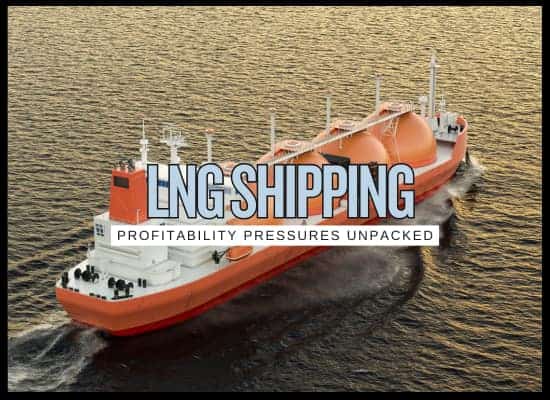
LNG shipping is under heavy pressure. Freight earnings have collapsed, new tonnage is flooding the market, and regulators are adding new cost layers. Yet, opportunities still exist for owners who position wisely. This report unpacks the most pressing profitability challenges, showing both upside and downside outlooks so stakeholders can weigh risks and strategies with clarity.
1️⃣ Collapsing Spot Rates
➕ Expand details
📉 Challenge Snapshot
LNG freight markets have entered one of their deepest slumps on record. Spot rates in the Atlantic and Pacific have fallen to levels that no longer cover OPEX, leaving many vessels operating at a loss. This is driven by a combination of oversupply in the orderbook, shorter ton-mile demand due to US-to-Europe flows, and weaker arbitrage opportunities to Asia.
⚙️ Market Drivers
- Fleet Growth: Record newbuild deliveries from Asian yards are adding excess capacity faster than trade volumes expand.
- Tonne-Mile Compression: US cargoes increasingly head to Europe instead of Asia, reducing sailing distances and tightening demand for tonnage.
- Weaker Arbitrage: Narrower LNG price spreads between basins are curbing long-haul arbitrage voyages that usually absorb carriers.
- Seasonality: Mild winters or delayed cold snaps reduce heating demand and LNG imports, keeping rates under pressure.
🛠️ Owner Strategies
- Secure Term Cover: Owners with multi-year charters are shielded from the spot downturn and can still generate stable revenue.
- Lay-up Options: Some owners are evaluating warm lay-up to reduce operating losses while waiting for rates to recover.
- Diversified Roles: Certain carriers are employed for floating storage, bridging short-term cargo mismatches to offset lost earnings.
- Efficiency Investments: Fuel-saving retrofits and better boil-off management help reduce breakeven and improve competitiveness.
🔮 Outlook Scenarios
- Positive: A colder winter, new regasification capacity, or unexpected supply shocks could tighten the market, pushing spot rates above breakeven for modern vessels.
- Negative: Continued fleet oversupply, ongoing short-haul trades, and tepid global demand could keep spot rates depressed well into next year.
📊 KPI Watchlist
Key metrics for shipowners to monitor include:
- Spot vs. term charter spread (measures relative risk and reward)
- Percentage of fleet idle or laid-up (signals market stress)
- Average daily earnings vs. breakeven OPEX (profitability gauge)
- Orderbook-to-demand ratio (forward-looking supply pressure)
2️⃣ Fleet Oversupply
➕ Expand details
📉 Challenge Snapshot
Elevated orderbooks from prior boom years are arriving into a softer demand backdrop and shorter average sailing distances. The surplus tightens competition for fixtures, pushes older or less efficient ships to the sidelines, and caps rate recovery even during seasonal bursts.
⚙️ Market Drivers
- Orderbook Bulge: Large blocks of 170–180k cbm newbuilds delivering in clusters from top Asian yards increase supply in step-changes.
- Contracted vs. Open Tonnage: A meaningful slice of newbuilds is not fully covered by long-term charters, adding pressure to the spot and short-term market.
- Tonne-Mile Compression: More Atlantic cargoes discharging in Europe reduce sailing days per lift, effectively raising available ship-days.
- Efficiency Spread: Modern DFDE/X-DF/ME-GI tonnage with strong fuel economics outcompetes older steam/early DFDE units, widening the earnings gap.
🛠️ Owner Strategies
- Term Coverage & COAs: Lock multi-year time charters or cargo offtake agreements to ring-fence utilization and debt service.
- Portfolio Pruning: Consider selling or recycling older/inefficient units to reduce OPEX and narrow the competitive set.
- Conversion & Role Diversification: Evaluate FSU/FSRU roles or seasonal floating storage to absorb idle time during shoulder periods.
- Spec Discipline: Defer optional newbuild slots and avoid speculative orders without visibility on future cargo or regas capacity.
🔮 Outlook Scenarios
- Positive: Slippage/cancellations in scheduled deliveries, faster ramp-up of new LNG export and regas projects, or stronger Asian pull lengthen voyages and absorb surplus tonnage.
- Negative: Deliveries remain on time, export project timelines slip, and European demand stays dominant, keeping voyages short and utilization soft.
🧭 Competitive Positioning
- Tech Advantage: High-efficiency, low-methane-slip engines and reliquefaction systems lower breakeven and improve charter appeal.
- Operational Readiness: Proven reliability, clean PSC history, and terminal compatibility lists win tie-breakers in oversupplied markets.
- Commercial Agility: Ability to pivot between spot, short-term TCs, storage, and triangulation increases employment odds.
📊 KPI Watchlist
- Orderbook as % of Fleet: Forward supply pressure indicator by delivery quarter.
- Open vs. Covered Newbuilds: Share of delivering tonnage without long-term charters.
- Utilization & Idle Days: Fleet-wide and by vintage/propulsion class.
- Scrap/Sale Activity: Evidence of capacity rationalization in older cohorts.
- Average Voyage Length: Changes in US–EU vs. transpacific flows that affect ship-days.
3️⃣ High Newbuild Costs
➕ Expand details
📉 Challenge Snapshot
The LNG orderbook boom has driven up newbuild prices to historic highs. Yards in Korea and China are fully booked, and financing conditions are tighter due to global interest rates. These dynamics strain project economics, especially for owners without charter-backed contracts.
⚙️ Market Drivers
- Steel & Equipment Costs: Inflation in steel, cryogenic materials, and engine technology raise baseline yard pricing.
- Yard Congestion: LNG slots are scarce, with most major yards committed through 2027, giving builders pricing power.
- Spec Complexity: Dual-fuel engines, reliquefaction systems, and methane slip reduction technologies add cost per hull.
- Financing Conditions: Higher global interest rates increase debt service costs, raising lifetime vessel breakeven.
🛠️ Owner Strategies
- Charter-Backed Orders: Secure long-term TCs or contracts of affreightment before committing to new tonnage.
- Leverage Export Projects: Align newbuilds with firm offtake agreements from LNG liquefaction or regasification projects.
- Explore Secondhand Market: Consider modern resale units that offer earlier delivery and lower exposure to inflationary pricing.
- Financing Innovation: Seek green loans or sustainability-linked financing that reward lower emissions profiles with margin reductions.
🔮 Outlook Scenarios
- Positive: If steel and equipment costs ease, and financing rates normalize, newbuild breakevens could soften. Owners with eco-optimized designs may also secure premium charter rates, offsetting capex.
- Negative: If cost inflation persists and LNG demand underperforms, owners paying top-of-market newbuild prices may struggle to achieve acceptable returns, particularly if reliant on the spot market.
💰 Capital Discipline
- Selective Ordering: Only order against committed demand rather than speculation.
- Partnership Models: Pooling or co-investment structures to share capex and employment risk.
- Lifecycle Planning: Account for 20–25 year horizon under changing regulatory regimes to avoid stranded assets.
📊 KPI Watchlist
- Newbuild Price Index: Quarterly shifts in LNG carrier pricing versus historical averages.
- Yard Slot Availability: Number of unbooked LNG berths at top Korean and Chinese yards.
- Weighted Average Cost of Capital (WACC): Rising or falling financing costs for owners.
- Term Charter Coverage: Share of newbuilds with long-term employment at delivery.
- Resale Market Activity: Prices of resale units as a proxy for near-term sentiment.
4️⃣ Carbon Pricing Exposure
➕ Expand details
📉 Challenge Snapshot
LNG carriers face rising costs as carbon emissions become monetized. EU ETS obligations now apply to half of extra-EU voyages and will reach 100 percent by 2026. FuelEU Maritime requires intensity reductions that will tighten over time. For LNG carriers, methane slip also complicates calculations, leaving owners exposed to both compliance and reputational risk.
⚙️ Market Drivers
- EU ETS Phase-In: 40 percent coverage in 2024 has risen to 70 percent in 2025 and will reach full coverage next year.
- FuelEU Maritime: Introduces greenhouse gas intensity targets that require investment in efficiency and alternative fuels.
- Methane Slip: Increasing regulatory attention on unburned methane means carriers with older engines may face higher effective costs.
- Carbon Pricing Spread: Differentials between EU ETS, UK ETS, and other regional markets create uneven exposure depending on voyage patterns.
🛠️ Owner Strategies
- Voyage Optimization: Reduce carbon exposure by optimizing routes and avoiding unnecessary ballast days.
- Technical Upgrades: Invest in reliquefaction, energy saving devices, and low methane slip engines.
- Charterer Pass-Through: Negotiate contracts that pass carbon cost through to charterers, particularly under long-term agreements.
- Carbon Hedging: Use ETS futures or offset schemes to manage exposure to price volatility.
🔮 Outlook Scenarios
- Positive: If carbon credit supply improves and LNG shipping is recognized for lower CO2 intensity compared to oil and coal, cost impact may be more manageable. Owners with eco-fleet investments can leverage green premiums from charterers.
- Negative: If carbon prices climb further and methane slip is penalized heavily, older LNG carriers could become uncompetitive and even stranded assets in some trades.
🌍 Strategic Considerations
- Regulatory Divergence: Different regional schemes may create complexity in compliance management.
- Financing Incentives: Access to green loans and sustainability-linked credit depends on strong emissions performance.
- Charterer Demands: Large energy majors are increasingly setting internal carbon costs, influencing chartering decisions.
📊 KPI Watchlist
- EU ETS Carbon Price: Euro per ton CO2 equivalent benchmark.
- Carbon Cost per Voyage: Calculated burden on typical US to EU round voyage.
- Fleet Coverage: Share of voyages subject to ETS and FuelEU rules.
- Investment Uptake: Number of carriers fitted with reliquefaction or low methane slip technologies.
- Contractual Pass-Through: Percentage of long-term charters including carbon cost clauses.
5️⃣ Methane Slip Scrutiny
➕ Expand details
📉 Challenge Snapshot
Methane is a potent greenhouse gas with far higher warming potential than CO2. Older low-pressure dual-fuel engines can release small but material amounts of unburned methane into the atmosphere. Regulators in the EU and IMO are moving to measure and penalize methane slip more explicitly. Charterers and financiers are also flagging methane emissions as a risk, which affects access to premium contracts and capital.
⚙️ Market Drivers
- Regulatory Tightening: The EU plans to include methane and nitrous oxide in greenhouse gas intensity rules by 2026.
- Engine Technology Gap: Modern high-pressure dual-fuel engines emit significantly less methane than older DFDE units.
- Investor Pressure: ESG funds and banks are asking for methane reporting before financing new projects.
- Charterer Preference: Energy majors are favoring tonnage with proven low methane slip performance.
🛠️ Owner Strategies
- Engine Upgrades: Evaluate retrofits, high-pressure fuel systems, or newbuild specifications with methane mitigation in mind.
- Operational Practices: Improve engine tuning and maintenance regimes to reduce slip rates.
- Transparency: Publish emissions data to satisfy charterers and financiers demanding disclosure.
- Fleet Segmentation: Assign older slip-prone units to shorter or less regulated trades while deploying modern tonnage on EU and ESG-sensitive routes.
🔮 Outlook Scenarios
- Positive: Owners investing in modern engines and transparency can secure green premiums, sustainability-linked financing, and priority with major charterers.
- Negative: If regulators impose strict penalties without clear abatement pathways, older LNG carriers may lose competitiveness quickly and risk early obsolescence.
🌍 Strategic Considerations
- Technology Path: Monitoring OEM advancements in low-slip engine designs and retrofit packages is essential.
- Policy Direction: Watch EU FuelEU Maritime adjustments and IMO lifecycle carbon factor discussions that will shape compliance requirements.
- Market Reputation: Owners seen as laggards on methane could lose long-term charterer trust and access to sustainable finance.
📊 KPI Watchlist
- Methane Slip Rate: Grams per kWh or percentage of fuel input by engine class.
- Fleet Composition: Share of fleet on high-pressure vs. low-pressure dual-fuel engines.
- Retrofit Uptake: Number of vessels modified with methane slip mitigation technology.
- Charter Premiums: Spread in earnings between low-slip and high-slip vessels.
- Regulatory Coverage: Voyages or cargoes subject to methane intensity reporting requirements.
6️⃣ Geopolitical Risk Premiums
➕ Expand details
📉 Challenge Snapshot
LNG carriers are exposed to geopolitical volatility in regions such as the Red Sea, the Gulf of Aden, and the Strait of Hormuz. War-risk premia for transiting high-risk zones have surged, often reaching 0.7 to 1 percent of hull value. Some charterers avoid exposed routes altogether, creating longer voyage distances, congestion in alternative passages, and unpredictable employment.
⚙️ Market Drivers
- Red Sea Tensions: Ongoing attacks and instability force many LNG carriers to reroute around the Cape of Good Hope.
- Insurance Cost Inflation: Underwriters have raised premiums sharply for vessels transiting war-risk regions.
- Port Delays: Security checks and naval escorts create inefficiencies and add to demurrage risk.
- Trade Diversions: Some cargoes are redirected to safer but longer routes, changing ton-mile demand dynamics.
🛠️ Owner Strategies
- Route Flexibility: Maintain agility in voyage planning and diversify load and discharge ports where possible.
- Insurance Negotiation: Engage multiple underwriters to manage cost escalation and secure competitive war-risk cover.
- Charter Clauses: Ensure war-risk and deviation clauses allow for pass-through of added costs to charterers.
- Fleet Deployment: Assign modern, well-insured ships to higher-risk trades while keeping older units on safer routes.
🔮 Outlook Scenarios
- Positive: If tensions ease, premiums could normalize, freeing owners from added cost burdens and restoring traditional trade routes. Longer voyages via detours could temporarily support ton-mile demand.
- Negative: Escalating regional conflicts or broader maritime insecurity could raise costs further, deter charterers, and sideline ships from lucrative trades altogether.
🌍 Strategic Considerations
- Global Coverage: Monitor developments in Red Sea, Gulf of Aden, Strait of Hormuz, and other chokepoints for rapid changes in exposure.
- Alliances: Leverage industry groups and naval coordination centers for real-time security updates and convoy opportunities.
- Voyage Economics: Incorporate war-risk surcharges, bunker costs from rerouting, and off-hire risks into profitability models.
📊 KPI Watchlist
- War-Risk Premium Levels: % of hull value applied to voyages through high-risk regions.
- Rerouting Incidence: Share of LNG voyages bypassing the Suez/Red Sea in favor of the Cape.
- Voyage Duration Changes: Additional days per voyage from detours and security delays.
- Insurance Claim Activity: Number of incidents or near misses impacting premiums and coverage terms.
- Demurrage & Delay Costs: Additional daily charges tied to port congestion or naval escorts.
7️⃣ Panama Canal Restrictions
➕ Expand details
📉 Challenge Snapshot
LNG carriers depend on the Panama Canal for US Gulf to Asia voyages. Low water levels and traffic prioritization have cut available transit slots, while draft limits restrict loading flexibility. These constraints increase uncertainty, raise slot auction costs, and force some vessels to reroute via the Cape of Good Hope or Suez, adding thousands of miles and weeks to voyage times.
⚙️ Market Drivers
- Climate Impact: Repeated droughts are reducing water availability, lowering lake levels that feed the locks.
- Slot Prioritization: Container ships often receive priority, leaving LNG carriers competing for limited auction slots.
- Draft Restrictions: Reduced allowable drafts limit cargo capacity, cutting lift volumes and revenues per voyage.
- Congestion Costs: Waiting times and slot auction fees inflate voyage economics.
🛠️ Owner Strategies
- Advance Booking: Secure canal slots months in advance where possible to reduce exposure to high auction prices.
- Flexible Chartering: Insert canal clauses that allow cost sharing or routing adjustments between owners and charterers.
- Operational Adjustments: Optimize loading to meet draft limits without excessive cargo loss.
- Alternative Routes: Weigh Cape or Suez alternatives when canal congestion makes diversions more economical.
🔮 Outlook Scenarios
- Positive: If rainfall improves and slot allocations are expanded, canal transits could normalize, lowering rerouting pressure and stabilizing voyage economics.
- Negative: Prolonged droughts and continued prioritization of other ship types could leave LNG carriers locked out or dependent on costly auctions, cutting profitability further.
🌍 Strategic Considerations
- Weather Dependence: Seasonal rainfall and climate variability directly affect water availability and canal throughput.
- Global Trade Flows: The US Gulf to Asia LNG trade is most exposed, making supply diversification an important risk hedge.
- Cost Allocation: Owners and charterers must clarify who bears auction, delay, and rerouting costs in charter parties.
📊 KPI Watchlist
- Panama Water Levels: Lake Gatun levels as a direct indicator of draft restrictions.
- Available LNG Slots: Number of LNG-designated transits per month versus demand.
- Slot Auction Prices: Average winning bid costs compared to baseline canal tolls.
- Rerouting Incidence: Share of LNG cargoes bypassing Panama in favor of Cape or Suez routes.
- Voyage Duration Impact: Additional days required for detours versus canal transits.
8️⃣ US Export Delays
➕ Expand details
📉 Challenge Snapshot
The US Gulf Coast has become the backbone of LNG supply to Europe and Asia. Yet, regulatory reviews, environmental challenges, and construction bottlenecks are slowing the pace of new export projects. Several high-profile terminals have faced multi-year delays. This constrains expected LNG flows, limits vessel employment opportunities, and undercuts assumptions behind the record orderbook.
⚙️ Market Drivers
- Permitting Delays: Regulatory reviews for environmental impact and safety have slowed final investment decisions.
- Construction Bottlenecks: Shortages in skilled labor and specialized equipment extend project timelines.
- Legal Challenges: Litigation from environmental groups has paused or rerouted several projects.
- Policy Shifts: Changes in US energy export policy add uncertainty to future growth assumptions.
🛠️ Owner Strategies
- Contract Alignment: Secure charters tied to existing export capacity rather than speculative projects.
- Diversification: Balance exposure between US Gulf, Middle East, and other emerging supply regions.
- Flexibility: Keep fleet deployment flexible to capture arbitrage opportunities that emerge when US flows are disrupted.
- Stakeholder Engagement: Monitor project permitting progress closely and adjust fleet planning in real time.
🔮 Outlook Scenarios
- Positive: If permitting accelerates and delayed projects come online, US LNG exports could expand quickly, adding substantial vessel demand and longer voyages to Asia.
- Negative: If projects remain stalled or are canceled, vessel oversupply could deepen as expected cargo volumes fail to materialize.
🌍 Strategic Considerations
- Ton-Mile Impact: US to Asia flows generate the longest voyages, so project delays disproportionately reduce global demand for shipping.
- Orderbook Risk: Many newbuild orders assumed aggressive US export growth. Any underperformance worsens oversupply.
- Policy Sensitivity: US elections and energy security debates could accelerate or restrict LNG approvals.
📊 KPI Watchlist
- US LNG Export Volumes: Monthly loadings from US Gulf terminals compared to capacity.
- Project FID Progress: Share of proposed projects reaching final investment decision.
- Construction Timeline Slippage: Average months of delay on projects under construction.
- Regulatory Decisions: Rate of approvals or rejections by US regulators.
- Destination Mix: Share of US cargoes moving to Europe versus Asia, which affects voyage length.
9️⃣ Boil-Off Gas (BOG) Losses
➕ Expand details
📉 Challenge Snapshot
LNG cargoes naturally evaporate during transit, known as boil-off gas. Typical BOG rates range from 0.1 to 0.15 percent of cargo volume per day, depending on tank design and age. Without efficient reliquefaction systems, losses compound over long voyages, reducing saleable cargo and raising voyage costs. Market conditions determine whether BOG is best used as fuel or reliquefied back into the tanks.
⚙️ Market Drivers
- Tonne-Mile Length: Longer voyages to Asia increase total BOG losses compared to short-haul US to Europe trades.
- Tank Technology: Modern membrane tanks with advanced insulation reduce daily boil-off compared to older Moss or early membrane designs.
- Engine Fuel Flexibility: Ability to consume BOG as fuel offsets some cargo loss but depends on fuel spread economics.
- Reliquefaction Investment: Capex-intensive reliquefaction systems reduce losses but raise operating costs and power demand.
🛠️ Owner Strategies
- Install Reliquefaction: Modernize fleet with reliquefaction to preserve cargo volumes and reduce loss exposure.
- Voyage Optimization: Match vessel assignments to voyage length, deploying high-efficiency tank systems on long-hauls.
- Fuel Spread Management: Use BOG as fuel when LNG prices are low relative to marine fuels, and reliquefy when LNG prices are high.
- Contract Negotiation: Clarify in charter parties whether BOG is for charterer’s or owner’s account to avoid disputes.
🔮 Outlook Scenarios
- Positive: Efficiency gains in insulation and reliquefaction reduce losses, while flexible fuel pricing makes BOG consumption cost-effective for propulsion.
- Negative: Rising LNG prices increase the opportunity cost of BOG losses, penalizing owners without advanced reliquefaction or modern containment systems.
🌍 Strategic Considerations
- Ageing Fleet: Older carriers with high boil-off rates are disadvantaged and may be relegated to short-haul or storage roles.
- Environmental Reporting: Methane slip and venting regulations increase scrutiny of how BOG is managed.
- Operational Balance: Power demand from reliquefaction must be weighed against fuel cost savings and cargo retention.
📊 KPI Watchlist
- Daily BOG Rate: Percentage of cargo lost per day across vessel types.
- Reliquefaction Coverage: Share of fleet equipped with reliquefaction systems.
- Fuel Spread: LNG price versus marine fuel oil as determinant for BOG usage.
- Voyage Length Mix: Average sailing distance per cargo, impacting cumulative BOG exposure.
- Charter Party Terms: Share of contracts with explicit BOG allocation between owner and charterer.
🔟 Shorter Voyage Distances
➕ Expand details
📉 Challenge Snapshot
LNG carriers earn based on ton-miles, not just cargo volume. The shift of US exports toward Europe instead of Asia has cut voyage times by thousands of nautical miles. Shorter trips increase vessel turnover and effective supply, flooding the market with available tonnage. This has contributed heavily to the collapse in spot rates and weakened overall market balance.
⚙️ Market Drivers
- Geopolitical Shifts: Europe’s push to replace Russian pipeline gas has pulled in more US cargoes, shortening the trade lane profile.
- Arbitrage Compression: Narrower Asia-Europe price spreads reduce incentives for long-haul cargoes to Asia.
- Terminal Capacity: New regasification terminals in Europe can accommodate higher import volumes quickly, reinforcing short-haul dynamics.
- Seasonal Factors: Winter demand surges in Europe draw tonnage away from Asia, reducing average voyage distances further.
🛠️ Owner Strategies
- Diversify Employment: Secure contracts in Asia-focused trades where voyage lengths remain higher.
- Storage Opportunities: Deploy vessels for floating storage to lengthen employment periods and reduce spot exposure.
- Fleet Positioning: Anticipate seasonal flows to pre-position tonnage where longer hauls are more likely.
- Efficiency Advantage: Leverage modern vessels with low fuel burn to stay competitive in shorter, lower-margin trades.
🔮 Outlook Scenarios
- Positive: Asian demand growth and new regasification terminals could pull more US cargoes eastward again, restoring long-haul ton-mile demand.
- Negative: If Europe continues to dominate US offtake and arbitrage spreads remain narrow, shorter voyages will persist, sustaining tonnage oversupply.
🌍 Strategic Considerations
- Orderbook Exposure: Large numbers of newbuilds were ordered assuming long-haul demand; persistent short-haul flows worsen oversupply risks.
- Revenue Per Ship: Shorter voyages reduce utilization revenue per hull, requiring owners to maximize efficiency gains.
- Regional Balances: European regas capacity growth versus Asian LNG growth is the critical driver of voyage profiles.
📊 KPI Watchlist
- Average Voyage Distance: US export voyages measured in nautical miles to Europe versus Asia.
- Destination Mix: Percentage of US cargoes landing in Europe compared to Asia.
- Ton-Mile Demand: Aggregate ton-miles generated by global LNG trade per quarter.
- Regas Capacity Growth: Commissioning pace of European versus Asian terminals.
- Spot Rate Correlation: Relationship between average voyage length and spot charter earnings.
1️⃣1️⃣ Gas Price Volatility
➕ Expand details
📉 Challenge Snapshot
Gas prices fluctuate based on weather, geopolitical shocks, storage levels, and supply dynamics. When prices diverge significantly between regions, LNG carriers benefit from long-haul arbitrage trades. When spreads narrow, trade flows contract, voyages shorten, and demand for shipping drops. Volatility also affects the economics of using boil-off gas as fuel versus reliquefying it for sale.
⚙️ Market Drivers
- Regional Price Spreads: The gap between Henry Hub, TTF, and JKM benchmarks drives arbitrage opportunities.
- Weather Patterns: Cold winters or hot summers spike demand, while mild weather reduces volatility.
- Storage Dynamics: High European gas storage reduces spot price spikes, lowering shipping demand.
- Supply Shocks: Geopolitical disruptions or plant outages can cause sudden demand for long-haul cargoes.
🛠️ Owner Strategies
- Charter Diversification: Balance exposure between spot and term markets to hedge volatility risk.
- BOG Flexibility: Adjust operational use of boil-off gas based on prevailing LNG price spreads.
- Storage Roles: Position vessels as floating storage when arbitrage opportunities are expected to reopen.
- Trading Partnerships: Work closely with charterers and traders to secure liftings linked to volatility-driven arbitrage moves.
🔮 Outlook Scenarios
- Positive: Heightened volatility with wider regional spreads could boost long-haul flows, supporting ton-mile demand and improving earnings for flexible carriers.
- Negative: Narrow or stable spreads reduce arbitrage opportunities, keeping voyages short and depressing freight rates despite steady LNG production.
🌍 Strategic Considerations
- Contract Structures: Index-linked charter agreements can help balance exposure to volatile gas markets.
- Financial Hedging: Owners may explore gas price hedges in cooperation with charterers to secure predictable returns.
- Fleet Utilization: Maintaining operational flexibility to switch between markets enhances resilience in volatile conditions.
📊 KPI Watchlist
- Regional Price Spreads: JKM-TTF and JKM-Henry Hub spreads as key arbitrage signals.
- Gas Storage Levels: European and Asian storage capacity utilization versus seasonal averages.
- Price Volatility Index: Frequency and magnitude of price swings across benchmarks.
- Arbitrage Voyage Count: Number of US Gulf to Asia versus US Gulf to Europe voyages per quarter.
- BOG Utilization: Share of voyages where boil-off gas is consumed as fuel versus reliquefied.
At the end of the day, profitability in LNG shipping is about more than market swings or regulatory shifts. It comes down to preparation, adaptability, and having the right strategy for each fleet and trade. We know that the challenges ahead are complex, but we’ve also seen how quickly opportunities can open when conditions align. By watching the right signals, keeping a disciplined approach to costs, and staying flexible in deployment, shipowners can turn today’s pressure points into tomorrow’s strengths.
We welcome your feedback, suggestions, corrections, and ideas for enhancements. Please click here to get in touch.