Lifeboats on Board: Ultimate Guide
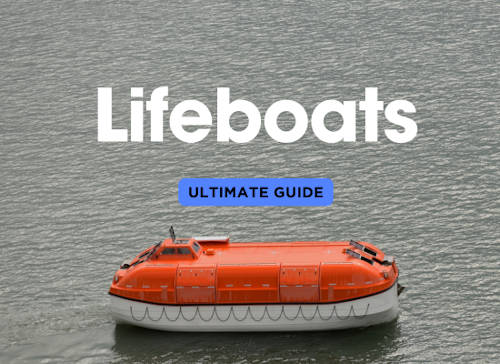
Lifeboats are the last line of defense when everything else goes wrong. Getting them right isn’t optional, SOLAS and the LSA Code spell out exactly what must be on board, where it sits, how it launches, and how crews drill. Here’s the clear, shipowner-ready breakdown.
Susa members can save 5–10% off direct pricing on lifeboat orders through leading suppliers like Mare Safety and more. Learn more
Regulations / Lifeboats / Power / Cost / Maintenance / Emergency Training
Regulations
| Vessel type | Lifeboats | Liferafts | Rescue boat |
|---|---|---|---|
| Passenger — international | On each side: enclosed lifeboats ≥50% of persons (together ≥100%). Some capacity may be substituted by liferafts, but never less than 37.5% lifeboats per side. | Additional rafts ≥25% of persons. Rafts served by launching appliances on both sides. | Rescue boat required. Ro-Ro passenger ships need a fast rescue boat. |
| Passenger — short international | Lifeboats ≥30% of persons (as practicable, on both sides). With rafts, total survival craft ≥100%. | Extra rafts ≥25% of persons. | Rescue boat required. |
| Cargo ship ≥85 m | Lifeboats on each side with aggregate capacity ≥100% of persons. Alternative: one free-fall lifeboat aft for 100% + liferafts as required. | Additional liferafts as per arrangement to ensure total capacity and side availability. | At least one rescue boat (a lifeboat may be accepted if it meets recovery criteria). |
| Bulk carriers | Free-fall lifeboat carriage mandated by SOLAS amendments in force since 2006 (see flag and class specifics). | Rafts per arrangement to maintain overall capacity and side readiness. | Rescue boat required. |
- Embarkation, launching and lighting arrangements must enable safe access and rapid deployment from designated stations.
- All survival craft required for total persons on board must be launchable within 30 minutes after the abandon-ship signal once mustered and lifejackets donned.
- Stowage: continuous readiness with two crew able to prepare in under 5 minutes. Rescue boats: launch in the shortest possible time.
- Every crew member participates monthly in abandon-ship and fire drills. Passenger ships conduct weekly passenger-ship drills; cargo ships follow monthly frequency.
- Weekly: visual readiness checks for survival craft and launching appliances; run lifeboat and rescue-boat engines ahead and astern.
- Annual: thorough examination and operational tests by authorized personnel under MSC.402(96). Five-year: proof-load test of on-load release gear per SOLAS/LSA test standards.
Lifeboat Breakdown
- Full canopy with weather, spray and fire protection; common on cargo and passenger ships.
- Capacity limited by LSA Code: not more than 150 persons per lifeboat.
- Propulsion: fuel to run fully loaded at ~6 knots for ≥24 hours (LSA performance standard).
- Stern ramp launch for rapid clearance and protection from fire/explosion exposure.
- Must make positive headway immediately after water entry and withstand high-G launch loads.
- Widely fitted on bulk carriers and tankers; check flag/class specifics for arrangement nuances.
- Rigid covers fore and aft plus foldable canopy provide weatherproof shelter when closed.
- Lighter, simpler embarkation; less protection than fully enclosed in extreme conditions.
- Seen on certain passenger/coastal service profiles where risk profile and routes justify.
- Generally not fitted on modern SOLAS ships; legacy units remain on some older vessels.
- Manual/limited propulsion and minimal weather protection; modernization strongly advised.
- Tasked to recover persons, marshal and tow liferafts; minimum 6-knot speed for ≥4 hours.
- Fast rescue boats add higher performance for Ro-Ro passenger ships and offshore roles.
| Type | Launch | Best placement | Strengths | Watch-outs |
|---|---|---|---|---|
| Totally Enclosed (TELB) | Davit launch | Passenger ships, cargo ships with side stations | Shelter, fire protection variants for tankers, broad capacity range | More complex davits and release gear; training and maintenance critical |
| Free-Fall (FFLB) | Stern ramp | Bulk carriers, tankers, offshore support | Rapid launch, clears hazards fast, strong in harsh weather and fire exposure | Requires specific stern geometry and crew training; certification height constraints |
| Partially Enclosed (PELB) | Davit launch | Short-sea and certain passenger services | Simpler embarkation, lighter weight, still provides shelter when closed | Less protection than TELB in severe weather and fire scenarios |
| Open (legacy) | Davit or manual | Older vessels only | Simple systems | Poor protection and propulsion; modernization recommended where still fitted |
Power
- Inboard diesel engines with ahead/astern propulsion and ability to disengage propeller for towing or idle checks.
- Fuel to drive a fully loaded boat ~6 knots for ≥24 hours (endurance standard).
- Engine/transmission enclosed in a fire-retardant casing; noise reduced so shouted orders are audible.
- Inboard diesel or approved outboard; ≥6 knots for ≥4 hours; able to tow largest liferaft ≥2 knots.
- Fast rescue boats add higher power/acceleration; capsize-stop and restart provisions apply.
- Fire-protected lifeboats; where toxic vapours are credible, self-contained air support systems.
- Confirm builder’s approvals for the specific hazard profile and spray system loads.
- Two independent ways to crank: manual start, or power start with two independent rechargeable energy sources (e.g., dual batteries). Starting aids to be provided where needed.
- Cold start proof: the engine + fuel must start at -15 °C within 2 minutes from start attempt (unless the flag approves a different temperature for constant warm-water trades).
- Out-of-water run: engine must run ≥5 minutes at idle with the boat out of the water (simulating normal stowage).
- Flood tolerance: engine must operate when the boat is flooded up to the crankshaft centreline.
- Charging arrangements: means to recharge engine-start, radio and searchlight batteries after use.
| Parameter | Your entry | Rule reference | Compliance note |
|---|---|---|---|
| Required speed (loaded) | ≥ 6 knots | LSA lifeboat propulsion | Record builder’s measured speed; verify after engine service. |
| Endurance at 6 knots | ≥ 24 hours | LSA lifeboat fuel endurance | Fuel must remain usable across expected ambient temperature range. |
| Fuel consumption at 6 knots | Document (L/h) from type approval / sea trial | Builder data | Size tank ≥ 24 × (consumption at 6 kn) + safety margin. |
| Towing duty (rescue boat) | ≥ 6 kn for 4 h; tow largest raft ≥ 2 kn | LSA rescue-boat performance | Confirm separate fuel calc for rescue boat if fitted. |
Cost
| Item | Typical capacity | Indicative price | Notes |
|---|---|---|---|
| Totally Enclosed Lifeboat (TELB) | 50–150 persons | ≈ US$26k–150k+ | Capacity, fire-protected spec, and approvals drive spread. |
| Free-fall Lifeboat (FFLB) | 10–90 persons | ≈ US$20k–80k+ | Launch height rating and hull length matter. |
| Fast Rescue Boat (FRB) package | 6–15 persons | ≈ US$20k–30k+ per set | Engine, trailerable cradle, and davit options change price. |
| Lifeboat davit system | Gravity or hydraulic | ≈ £11k–26k+ per set | Outreach, SWL, and maker approvals are key drivers. |
- Annual: examination and operational tests by an authorized provider per MSC.402(96).
- Five-year: thorough examination with on-load release test and proof load test per approvals and service manuals.
- Ad-hoc: parts replacement for release gear, winches, wires, batteries, seals, spray nozzles, and engine serviceables.
| Line | Formula | Value |
|---|---|---|
| CapEx: boats | boat × qty | — |
| CapEx: davits | davit × qty | — |
| Install and commissioning | install | — |
| Annual service × 10 years | annual × 10 | — |
| Five-year service × 2 | five-year × 2 | — |
| Ten-year TCO | sum of all lines | — |
Maintenance
| Interval | Tasks | Notes |
|---|---|---|
| Before sailing | Visual readiness of all survival craft, rescue boats and launching appliances. Hooks and on-load release gear properly and completely reset. | Required at all times. Record any deficiencies and corrective actions. |
| Weekly | Check condition and stowage, test engine ahead and astern, verify steering, check release controls interlocks, verify lights and batteries, inspect falls visible sections and lashing, verify instructions posted and legible. | Follow the on-board maintenance manual checklists. Log date, time, and person responsible. |
| Monthly | Inspect lifeboats, rescue boats, davits and release gear in accordance with maker checklists. Check food, water, first-aid, anti-seasickness supplies by expiry. Verify painter, drain plugs, bailing, fire protection and air support systems where fitted. | Record results and correct any defects. Replace expired consumables. |
| At drills | Lower and recover as per procedures. For free-fall boats use either a free-fall with required operating crew or lower by secondary means then embark and maneuver. Emphasize safe speed and communications. | Aim is crew familiarity and safety. Use maker procedures. |
| Annual | Thorough examination and operational tests by certified personnel. Includes winches, brakes, limit switches, hooks and release mechanisms, structural elements, sprinkler or air support systems where fitted, maneuvering and power systems. Review onboard records and checklists. | Provider issues a signed report and fitness-for-purpose statement with certification copies attached. |
| Five-year | Overhaul and load tests. On-load release gear proof-loaded and function tested. Davit and winch load test typically at 1.1× weight of craft, full complement and equipment as applicable. | Follow maker procedures under MSC.402(96). Renew or overhaul components as required. |
- Plan and brief the drill. Pause to explain difficult steps. Keep speed conservative until teams are proficient.
- For free-fall boats you may lower by secondary means without persons on board, then embark and maneuver in the water. This reduces injury risk during drills.
- After testing the release system, ensure hooks are properly and completely reset and verified before recovery. Final turning-in is performed without any persons on board.
Emergency Training
| Drill | Minimum frequency | Key notes |
|---|---|---|
| Abandon ship | Every crew member: at least monthly | If >25% of crew did not drill on board in the previous month, conduct drills within 24 hours after departure. |
| Fire drill | Every crew member: at least monthly | Combine with abandon-ship where practicable to test communications and command. |
| Lifeboat launch and manoeuvring | Each lifeboat: at least once every 3 months | Use safe-drill options for free-fall and on-load gear per IMO guidance. |
| Passenger muster (passenger ships) | Before departure or immediately on departure | All passengers must attend muster before the ship leaves or right after leaving berth. |
| Enclosed-space entry and rescue | At least once every 2 months | For designated personnel; keep checklists and gas-meter calibration records. |
- Start checks and launch sequence
- Boat handling and approach to rafts or persons in water
- Man-overboard recovery and towing procedures
- Dual-start demonstration and engine checks
- Battery and radio charging arrangements
- Spray, air-support and fire-protection systems where fitted
- Painters, gripes and steering checks
- Searchlight, signalling, and first-aid kit locations
- Survival stores inventory and expiry checks
- Log date, time, scenario, participating crew and equipment used.
- Attach checklists, photos if permitted, and corrective actions. Keep for the service life of equipment.
- Passenger ships: maintain proof that all passengers attended muster before or immediately after departure.
Additional References
International Maritime Organization (IMO) - Safety of Life at Sea (SOLAS) Convention
- URL: https://www.imo.org/en/OurWork/Safety/Pages/Default.aspx
- Description: The IMO's official page on the Safety of Life at Sea (SOLAS) Convention, which sets international regulations for lifeboats and other life-saving appliances on ships.
United States Coast Guard (USCG) - Lifesaving Equipment
- URL: https://www.dco.uscg.mil/Our-Organization/Assistant-Commandant-for-Prevention-Policy-CG-5P/Inspections-Compliance-CG-5PC-/Commercial-Vessel-Compliance/Lifesaving-and-Fire-Safety-Division/Lifesaving-Equipment/
- Description: The USCG's official page providing guidelines and regulations for lifesaving equipment, including lifeboats, on commercial vessels in the United States.
European Maritime Safety Agency (EMSA) - Lifesaving Appliances
- URL: https://www.emsa.europa.eu/main/safety/112-lifesaving-appliances.html
- Description: EMSA’s resource page on lifesaving appliances, including lifeboat regulations and safety guidelines applicable within the European Union.
Australian Maritime Safety Authority (AMSA) - Marine Orders Part 25: Equipment - Lifeboats and Rescue Boats
- URL: https://www.amsa.gov.au/vessels-operators/regulations-and-standards/marine-orders/marine-order-25-equipment-lifeboats-and-rescue-boats
- Description: AMSA’s official page detailing the marine orders related to lifeboats and rescue boats, outlining the safety standards and regulations in Australia.
Transport Canada - Lifesaving Equipment
- URL: https://tc.canada.ca/en/marine-transportation/marine-safety/lifesaving-equipment
- Description: Transport Canada’s page on lifesaving equipment, including lifeboats, with guidelines for compliance with Canadian regulations on commercial vessels.