Key Strategies to Cut Crew Costs Without Cutting Corners
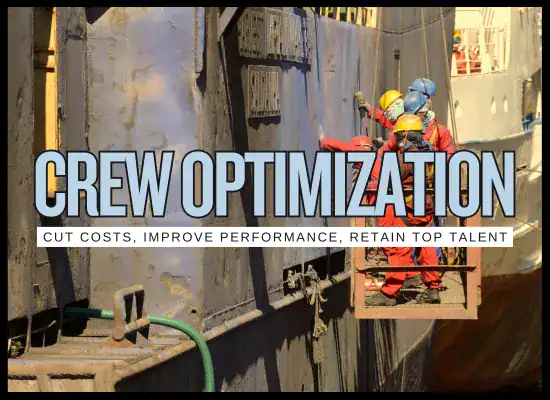
Crew costs remain one of the largest and most complex expenses for shipowners and fleet managers. But slashing headcount or cutting corners isn’t always the answer. It’s also increasingly risky in today’s regulatory and safety-conscious environment. The real opportunity lies in strategic efficiency, using smarter tools, better planning, and modern crew management techniques to reduce costs without sacrificing performance, compliance, or crew morale.
This report breaks down the proven strategies based on recent fleet case studies, evolving maritime tech, and real-world operations. Each one is designed to help you reduce your crew-related expenses while keeping your vessels safe, compliant, and competitive.
- Reduces man-hours spent on routine tasks like tank sounding, bilge checks, and engine condition logging.
- Supports smaller crew sizes by offloading predictable maintenance tasks to automated systems.
- Minimizes overtime costs associated with overnight machinery watch duties.
- Fleet data from major operators shows that implementing automation systems can reduce labor hours by 8–12% per voyage.
- Class-approved solutions now include automated monitoring of ballast tanks, bilge alarms, engine diagnostics, and exhaust scrubber status.
- Insurers and P&I Clubs increasingly favor automation due to reduced human error risks.
- Install remote monitoring for ballast tanks and bilge water levels using class-approved sensors.
- Use condition-based engine monitoring to reduce unnecessary manual checks.
- Set alert thresholds and integrate them with bridge control panels or ECR displays.
- Connect your automation data to a secure, shore-based operations dashboard.
- Work with vendors who provide documentation that meets IMO and IACS compliance standards.
- Reduces airfares and accommodation costs by choosing ports with better travel rates.
- Shortens downtime and repatriation delays by rotating crew at conveniently located hubs.
- Streamlines logistics by consolidating rotations at fewer, repeatable port points.
- Major European operator Wilson Shipping adopted Tilla Technologies in 2025 and reported **double-digit savings** on crew change costs, and improved scheduling accuracy leveraging regional hubs.
- Cruise logistics specialists like ATPI now emphasize data-driven planning with advance crew hub selection to avoid airfare spikes and visa complications.
- Industry sources rank locations such as Singapore, Rotterdam, Dubai, Busan and Houston as top regional crew hubs for 2025 based on connectivity, regulatory ease, and cost effectiveness.
- Select core ports, like Singapore, Rotterdam, Dubai, Busan or Houston that align with your route loops and have consistent travel/logistics infrastructure.
- Work with crew‑change platforms to forecast flight rates, visa needs, and hotel availability well ahead of rotation windows.
- Create multi‑port rotation plans to allow alternate pick‑up/drop‑off sites in case of delays or congestion.
- Build relationships with agents at those hubs to manage crew accommodations, transit, and immigration support more efficiently.
- Monitor airfare trends and avoid peak holiday seasons or high‑demand fares by scheduling rotations in advance.
- Booking flights 60–90 days in advance typically results in 15–30% lower airfare costs.
- Using data to choose lower-cost crew change ports can cut travel expenses significantly.
- Planning around visa lead times avoids costly delays and last-minute logistics fixes.
- ATPI Marine reported helping a cruise operator save over €500,000 in just four months by shifting crew changes to lower-cost airports and adjusting travel windows.
- Wilson Shipping and Stödig Ship Management reported measurable cost savings and better schedule reliability after switching to tech-enabled travel planning tools in 2025.
- Modern crew platforms now prioritize advanced planning windows and use port access algorithms to optimize handoffs and transit times.
- Initiate crew change planning at least 60–90 days in advance of contract completions.
- Identify alternate crew change ports with strong flight availability and lower seasonal price spikes.
- Use integrated travel platforms that combine ETA data, port agent coordination, visa tracking, and ticketing.
- Monitor fare trends and avoid booking during holidays or school breaks to reduce airfare volatility.
- Keep a preferred port and alternate port plan for each voyage to remain flexible in case of weather, congestion, or political disruptions.
- Reduces onboard supervisory staffing needs by centralizing oversight functions.
- Enables faster technical issue triage without waiting for onboard escalation.
- Lowers overtime and standby costs for superintendents at sea.
- Data shows Remote Monitoring Centers (RMCs) are emerging as standard practice, enabling shore teams to make real-time decisions for multiple vessels simultaneously.
- In 2025 fleet technology reports, 70% of digitized operators now connect engine diagnostics and condition alerts to shore-based dashboards.
- Class societies and insurers increasingly view remote supervision as a positive risk control measure due to lower human error exposure.
- Set up a secure Remote Monitoring Center (RMC) to receive telemetry from vessels in real time.
- Integrate engine diagnostics, navigation alarms, safety events, and equipment health data into an aggregated dashboard.
- Implement alert thresholds and escalation protocols so shore teams can act promptly when anomalies occur.
- Train shore-based technical and operations staff to oversee multiple vessels and to coordinate with onboard teams.
- Ensure communication systems (VSAT, GSM, AIS data links) are secure, redundant, and compliant with flag and class rules.
- Enables role coverage during peak activity without adding headcount.
- Allows smaller crew to manage more duties during crew absences or rotational gaps.
- Supports rapid response in emergencies or technical troubleshooting when key personnel are unavailable.
- In sectors like LNG shipping, some operators are cross‑training officers from oil or LPG tankers to perform multiple ship-specific duties, a practice growing in 2025 due to rising crew demand. However, caution is advised since certain qualifications take time to develop. (Gas vessel operators emphasize simulation-based cross‑training.)
- Forbes highlighted cross‑training as a top strategy to reduce labor costs across industries by avoiding over-specialization and keeping operations nimble and efficient.
- Identify overlapping duties across roles (e.g. safety drills, basic engineering checks, deck watch) and bundle them into multi-role training paths.
- Use simulator or virtual training modules for scenario-based practice in critical systems before live deployment.
- Pair junior crew with experienced multi-role seafarers for on-board upskilling and mentorship.
- Define clear competency matrices so each crew member qualifies before assuming new duties.
- Incorporate cross-training into crew rotation policies and performance evaluation to ensure adoption.
- A unified platform cuts admin time and reduces errors in crew rotation, payroll, and licensing.
- Predictive scheduling balances availability, rest periods, and certifications to minimize overtime.
- Mobile access enables crew to confirm shifts and upload documents directly, reducing travel delays.
- The maritime crew management software market is projected to reach **USD 680 million in 2024**, rising rapidly with global adoption in 2025. These tools assist over 300 shipping companies in centralized scheduling across jurisdictions.
- Specialized systems integrate scheduling, compliance, payroll, and analytics into a single dashboard, driving efficiency gains for modern operators.
- Platforms like AMOS Crew Management and OneOcean Crew Planning deliver multi-module support including documentation, shift planning, and HR info.
- Digital systems reduce operational costs by up to 30%, improve fleet visibility by nearly 45%, and boost compliance metrics by roughly 41%.
- Choose a platform that combines crew scheduling, certification tracking, payroll, and travel logistics in one system.
- Enable mobile access to let crew view assignments, submit documentation, and confirm shifts on the go.
- Set rules to enforce rest requirements, qualifications, and certifications automatically during roster generation.
- Use platform analytics to monitor overtime, rest compliance, travel costs, and crew availability.
- Train HR and operations staff ahead of go-live to ensure seamless adoption and accurate data entry.
- One in three seafarers report insufficient sleep, and widespread falsification of rest records undermines regulatory trust.
- Fatigue is a known causal factor in maritime incidents, including bridge collisions and machinery failures.
- Monitoring productivity and rest hours prevents inadvertent breaches of STCW/MLC rest rules and underpins safety culture.
- A Cardiff University study in mid‑2025 found that over 33% of cargo ship seafarers had not slept enough in the prior 48 hours and reported falsifying duty logs.
- Reports highlight that senior officers experience higher levels of anxiety and fatigue due to extended hours and lack of rest.
- Studies reveal crews often exceed ILO/MLC weekly work limits by wide margins, and almost 90% exceed rest-hour caps monthly.
- Deploy electronic work/rest logging systems linked to crew credentials and vessel schedules.
- Install wearable or biometric tools to assess sleep quality and alertness (e.g. wrist trackers or EEG-based systems).
- Use analytics dashboards to track trends in fatigue risk, non‑compliance, and productivity across voyages.
- Incorporate fatigue risk management policies into onboarding and performance reviews.
- Train leadership and crew on realistic duty/rest planning and encourage regular self-reporting of fatigue symptoms.
- Lower turnover cuts direct costs in recruiting, training, and onboarding.
- Crew satisfaction boosts safety, reduces incident risk, and avoids repatriation delays.
- Good welfare practices support ESG goals and improve company reputation among seafarers.
- A March 2025 report shows that improving crew welfare significantly increases retention, reducing operational disruptions and training-related spending.
- The Seafarers Happiness Index (Q1 2025) indicates persistent stress from poor connectivity, lack of shore leave, and low morale stressors directly linked to premature departures.
- Analysis from procurement groups finds that better nutrition and onboard engagement programs not only lift morale but also reduce food waste and fatigue-related mistakes.
- Industry initiatives in 2025 strongly emphasize embedding crew wellbeing into sustainable shipping frameworks.
- Provide reliable onboard internet via Starlink or enhanced VSAT to reduce isolation and support communication with family.
- Offer confidential access to telemedicine, mental health support, and wellness services.
- Maintain strong nutrition practices with fresh food sourcing, quality meals, and variety for long voyages.
- Build regular shore leave or rest port opportunities into crew rotation planning.
- Foster a respectful, inclusive work culture with clear anti-harassment policies and active crew engagement efforts.
- Reduces vessel idle time and avoids crew off‑signing solely for training.
- Enables flexible, self‑paced learning around watch schedules or downtime.
- Improves knowledge retention with simulation, videos, quizzes, and scenario‑based learning.
- The global crew training service market is expected to grow from USD 2.5 billion in 2023 to over USD 5.8 billion by 2032, driven by online and simulator‑based delivery.
- ClassNK Academy launched a 2025 e‑learning program covering shipbuilding, cybersecurity, and stability topics with mobile and desktop access.
- The ICS Academy now provides modular maritime training designed specifically for onboard access, updated for current regulatory standards.
- Corporate e‑learning studies show online training boosts performance by 15–25%, improves retention by up to 80%, and reduces study time by 40–60%.
- Deploy an LMS or e‑learning platform accessible via onboard Wi‑Fi or mobile devices.
- Choose courses tailored for maritime needs: STCW safety refreshers, cybersecurity, pollution prevention, and fuel transition training.
- Use interactive modules and assessments with digital tracking to verify completion and onboard certification.
- Integrate e‑learning records with your crew management system for real‑time certification updates.
- Allow flexible pacing so crew can complete training around watch schedules and downtime.
- Reduces last-minute hiring, which often comes with premium rates and costly travel.
- Improves crew utilization by identifying patterns of underuse or over-rotation.
- Anticipates crew fatigue and qualification expirations before they disrupt operations.
- Data from recent industry reports shows that companies using predictive analytics have reduced crew change costs by up to 20% and improved coverage reliability by over 30%.
- Modern systems flag gaps in crew coverage based on contract timelines, training expiration, rest hours, and global crew movement trends.
- Some platforms now integrate weather, port congestion, and visa delays into the prediction model to adjust crew planning in real time.
- Choose a crew management system that includes predictive analytics or allows for API integration with analytics tools.
- Feed the platform with accurate historical data on contracts, travel times, rest hours, and skills availability.
- Set custom forecasting rules, for example, alerts when certifications are 60 days from expiry or a rotation window is closing.
- Review rotation efficiency quarterly to refine the model and eliminate scheduling bottlenecks.
- Coordinate predictive insights with HR and travel logistics to lock in lower-cost travel and avoid urgent reassignments.
- Helps avoid excess labor costs by aligning crew size with real functional demand.
- Ensures minimum safe manning certificates are met, but not exceeded beyond necessity.
- Allows operators to scale manning based on operational complexity, voyage risk, and onboard tech capabilities.
- Short-sea and feeder operators have reported 8–15% reductions in total crew-related expenses after reassessing manning needs per vessel.
- Older ships may require more technical personnel, while newer vessels with advanced monitoring systems often operate efficiently with leaner crews.
- Insurers and classification societies increasingly support manning optimization if backed by proper risk assessments and compliance planning.
- Conduct a vessel-by-vessel review of existing manning levels versus actual operational demands.
- Consult with flag state authorities and classification societies to understand regulatory minimums and flexibility zones.
- Consider automation, voyage duration, cargo type, and routing complexity when adjusting manning plans.
- Update minimum safe manning documents if operational conditions and vessel roles have changed.
- Document any crew reduction rationale with supporting safety analysis to satisfy auditors, insurers, and port state control.
- Reduces long-term liabilities like benefit packages, repatriation costs, and idle time.
- Attracts high-caliber professionals who deliver measurable results in shorter assignments.
- Performance‑based incentives promote accountability and high standards even on short rotations.
- Market data shows that up to 87% of maritime employers plan to offer bonuses up to 50% of salary for technical and senior crew in 2025.
- Studies reveal that operators who integrate flexible contract models and incentive pay achieve better retention and reduce average crew-change costs.
- Turnover-cost studies emphasize that short-term hires with defined performance metrics reduce disruptions and onboarding rework.
- Offer completion bonuses tied to performance metrics like incident-free days and compliance reviews.
- Engage skilled crew for 3–6 month contracts with clear deliverables and structured onboarding.
- Use travel flexibility clauses to optimize changeover costs without compromising quality.
- Monitor performance regularly to trigger bonus payouts, reinforce predictable high standards.
- Benchmark incentive packages against industry standards to remain competitive and compliant.
Crew Cost Pressure Checker
Even the most experienced operators can overlook areas where crew-related expenses quietly pile up. From delayed crew changes to underutilized technology, small inefficiencies can snowball into major cost burdens over time. This quick self-assessment is designed to help shipowners and fleet managers identify hidden pressure points in their crewing model and uncover opportunities to save money without compromising safety or performance.
🧭 Crew Cost Pressure Self-Assessment
Check the boxes that apply to your current operations:
Cutting crew costs doesn’t mean cutting corners, it means sharpening your operations, investing in the right tools, and making smarter decisions across every voyage. As the maritime industry continues to evolve in 2025, the shipowners and managers who stay ahead of crew-related inefficiencies will gain the advantage. Whether you're adopting predictive scheduling, improving welfare programs, or right-sizing manning levels, these strategies offer a blueprint for saving money while strengthening safety, compliance, and crew satisfaction.
We welcome your feedback, suggestions, corrections, and ideas for enhancements. Please click here to get in touch.