How AI Will Impact 20 Key Maritime Careers
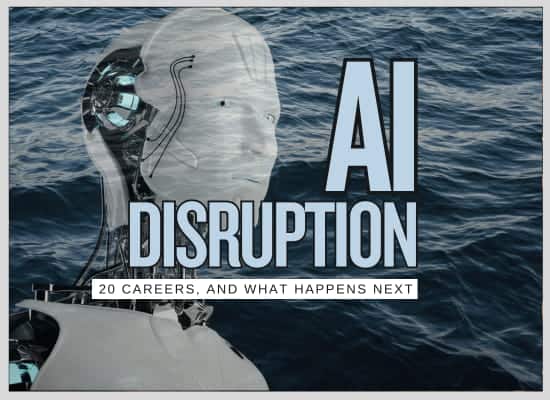
The maritime industry is on the cusp of a technological transformation, with artificial intelligence (AI) set to influence everything from navigation and engineering to compliance and logistics. While vessels continue to grow in complexity, so do the systems designed to operate them more efficiently—and often, autonomously. For seafarers and maritime professionals, understanding how AI might affect their roles isn’t just smart—it’s essential for career survival and growth.
This report examines 20 of the most common maritime careers and provides a dual-pathway forecast: one based on moderate AI growth and another based on rapid technological advancement. We also detail the training required for each role, current salary ranges, and guidance on where AI might assist, augment, or eventually automate the work in 5 and 25 year outlooks.

⚠️ Please note: Projecting the future impact of AI on maritime careers—especially 25 years out—is highly speculative and influenced by technological, regulatory, and geopolitical variables that are still unfolding. These forecasts should be viewed as informed possibilities and far from certainties.
We welcome your feedback, suggestions, corrections, and ideas for enhancements. Please click here to get in touch.
⚓ Key Considerations
- AI is already influencing critical shipboard systems like navigation, engine diagnostics, and cargo logistics.
- Roles that rely on routine manual tasks or standardized decision-making are most vulnerable to automation.
- Positions involving judgment, regulation, legal interpretation, or interpersonal coordination are likely to evolve rather than disappear.
- The next 5 years will see AI as a tool, while the next 25 may redefine how we crew ships—or whether we crew them at all.
The Captain, or Master, holds ultimate command of a vessel, responsible for its safe operation, crew management, legal compliance, and voyage execution. As the highest-ranking officer aboard, this role demands a blend of leadership, navigation expertise, and crisis decision-making.
🏦 Salary Range:- Global Average: $10,000 – $20,000/month (depending on vessel type, region, and experience)
- Top Tier (e.g., LNG, ULCS): $20,000+/month
- STCW-compliant Master’s license (Unlimited or Limited)
- Years of experience as Chief Mate
- Bridge Resource Management (BRM) and leadership courses
- 🟡 Moderate AI Growth: Captains will increasingly rely on AI for voyage planning, predictive maintenance alerts, and advanced situational awareness systems, but final decisions remain human-led.
- 🔴 Rapid AI Growth: Some ultra-modern fleets may adopt AI-assisted bridge operations, where Captains act as supervisors of semi-autonomous systems rather than direct navigators.
- 🟡 Moderate AI Growth: The role evolves into a shore-based command position for remote oversight of multiple vessels. Physical onboard presence still preferred for high-risk routes.
- 🔴 Rapid AI Growth: Fully autonomous ships reduce need for onboard Captains on select trade lanes. Role shifts to fleet-wide oversight or incident response commander from land-based centers.
The Chief Mate is second-in-command after the Captain and oversees the vessel’s cargo operations, deck crew, and safety systems. Often considered the vessel’s operational manager, this role balances logistics planning, maintenance oversight, and emergency readiness.
🏦 Salary Range:- Global Average: $7,500 – $14,000/month
- Top Tier (e.g., LNG, heavy-lift): $15,000+/month
- STCW-compliant Chief Mate license (Unlimited)
- Experience as Second or Third Mate
- Advanced training in cargo handling and ship stability
- 🟡 Moderate AI Growth: Chief Mates will benefit from AI-powered cargo loading software, predictive maintenance tools, and digital checklists for safety drills, enhancing efficiency without replacing decision-making.
- 🔴 Rapid AI Growth: AI systems begin to automate more routine safety inspections and ballast calculations. Role shifts toward monitoring and validating AI-generated logistics plans.
- 🟡 Moderate AI Growth: The role becomes more hybrid, possibly transitioning to shore-based cargo coordinators for semi-autonomous vessels, while some human presence remains essential onboard.
- 🔴 Rapid AI Growth: End-to-end AI systems manage cargo, ballast, and deck ops remotely. The Chief Mate role evolves into an AI logistics controller, potentially managing multiple vessels from land-based hubs.
The Second Mate serves as the vessel's navigation officer, responsible for voyage planning, chart corrections, radar operations, and keeping watch on the bridge. This role is deeply rooted in precision and situational awareness, with significant overlap in collision avoidance and position fixing.
🏦 Salary Range:- Global Average: $5,000 – $9,000/month
- Top Tier (specialized or LNG vessels): Up to $10,000/month
- STCW-compliant Officer in Charge of a Navigational Watch (OICNW)
- ECDIS (Electronic Chart Display and Information System) certification
- Radar/ARPA training and BRM (Bridge Resource Management)
- 🟡 Moderate AI Growth: Navigation tasks will be heavily supported by AI-driven charting, weather routing, and real-time collision avoidance. The Second Mate’s focus shifts toward validation of AI outputs rather than manual plotting.
- 🔴 Rapid AI Growth: Smart bridge systems take over most watchkeeping functions, and automated routing platforms require only minimal human input. Second Mates begin managing digital systems more than physical ones.
- 🟡 Moderate AI Growth: The Second Mate may still sail onboard as a systems monitor, especially on complex or long-haul routes. Skill sets become tech-heavy with ongoing retraining in marine AI oversight.
- 🔴 Rapid AI Growth: Full navigation autonomy renders the traditional Second Mate role obsolete on certain vessels. Survivors of the shift become AI navigational auditors or remote support officers on land.
The Third Mate is typically the safety officer onboard and is responsible for maintaining life-saving appliances, firefighting equipment, and conducting safety drills. This officer also stands navigational watch and assists with voyage monitoring and communications during their watch period.
🏦 Salary Range:- Global Average: $4,000 – $7,000/month
- Top Tier: Up to $8,000/month on larger or specialized vessels
- STCW Officer of the Watch (OOW) certification
- Training in lifesaving appliances (LSA) and firefighting systems
- Radar, ARPA, ECDIS, and BRM certification
- 🟡 Moderate AI Growth: AI will assist in monitoring safety equipment and alerting for maintenance intervals. Bridge watchkeeping begins shifting toward oversight of automated surveillance and alarm systems.
- 🔴 Rapid AI Growth: Smart systems take over routine safety inspections and automated drills. Third Mates serve primarily as AI safety system operators, reducing manual checks and physical walkthroughs.
- 🟡 Moderate AI Growth: The role remains aboard many vessels but becomes more tech-centric, requiring knowledge of AI-powered safety platforms and emergency protocol verification.
- 🔴 Rapid AI Growth: On autonomous ships, safety operations are remotely controlled. Third Mate duties evolve into shore-based compliance monitoring and emergency override specialists.
The Deck Cadet is a trainee officer undergoing sea time and practical instruction to become a licensed deck officer. This entry-level position involves assisting with navigation, cargo handling, safety routines, and bridge watches under supervision.
🏦 Salary Range:- Global Average (Training Stipend): $500 – $1,200/month
- Some European Programs: Unpaid or partially subsidized cadetship
- Enrolled in an accredited maritime academy or training institution
- Working toward STCW OICNW certification
- Required sea time: typically 12 months onboard
- 🟡 Moderate AI Growth: Cadets will train on vessels with AI-assisted systems, learning digital voyage planning tools, smart bridge interfaces, and remote safety platforms alongside traditional seamanship.
- 🔴 Rapid AI Growth: Traditional seamanship may be de-emphasized in favor of digital competency. Training shifts to AI system management and cross-disciplinary technical knowledge.
- 🟡 Moderate AI Growth: Deck cadets will still be trained onboard, but the curriculum will emphasize interfacing with autonomous navigation systems, AI alerts, and remote coordination protocols.
- 🔴 Rapid AI Growth: Sea time may be partially simulated via AI-powered virtual training environments. Cadetships evolve to focus on tech fluency and managing unmanned or semi-crewed systems from shore.
The Boatswain, or Bosun, is the senior-most non-officer deck crew member, responsible for supervising able seamen and ordinary seamen. The Bosun manages maintenance tasks, mooring operations, deck equipment handling, and often acts as the link between deck officers and crew.
🏦 Salary Range:- Global Average: $3,000 – $5,500/month
- Top Tier (specialized or offshore vessels): Up to $6,500/month
- Experience as Able Seaman (AB)
- STCW Basic Safety Training
- Proficiency in mooring, rigging, and cargo gear operation
- 🟡 Moderate AI Growth: AI will assist in task scheduling, maintenance planning, and damage detection (e.g., hull, deck gear). The Bosun's role remains largely hands-on but increasingly coordinates with digital systems.
- 🔴 Rapid AI Growth: Smart maintenance platforms and autonomous drones may reduce manual inspection work. The Bosun’s tasks shift toward overseeing tech-assisted operations and ensuring safe interaction between humans and machines.
- 🟡 Moderate AI Growth: Bosuns remain vital for high-contact, physical operations, especially on older ships. However, their role integrates more with digital maintenance tools and AR-assisted equipment checks.
- 🔴 Rapid AI Growth: On next-gen vessels, many traditional deck tasks are automated or performed by robotics. The Bosun role becomes more supervisory or may disappear entirely on fully autonomous ships with no manual deck operations.
The Able Seaman is a skilled deck rating responsible for manual operations including line handling, watchkeeping, cargo lashing, painting, and maintenance. ABs also assist with anchoring, lifeboat operations, and general seamanship tasks under the supervision of the Bosun or officers.
🏦 Salary Range:- Global Average: $2,500 – $4,500/month
- Top Tier (offshore, LNG, heavy lift): Up to $5,500/month
- STCW Basic Safety Training
- AB Certificate (requires sea service and assessments)
- Proficiency in survival craft and rescue boats (PSC)
- 🟡 Moderate AI Growth: AI may assist with deck task tracking and safety checks, but most physical duties remain manual. ABs begin to interact with predictive maintenance software and smart safety systems.
- 🔴 Rapid AI Growth: Robotic hull cleaners, line handling systems, and drone inspections begin to replace some AB tasks. ABs are repositioned into more tech-assisted operational roles onboard.
- 🟡 Moderate AI Growth: ABs remain part of hybrid crews, particularly on vessels that require human intervention for mooring, emergencies, or older ship systems. Upskilling in tech platforms becomes essential.
- 🔴 Rapid AI Growth: Fully automated deck operations and shore-controlled systems diminish the need for ABs on next-gen vessels. The role may phase out on highly autonomous ships but persist on conventional tonnage.
The Ordinary Seaman is an entry-level deck position responsible for basic maintenance, cleaning, lookout duty, and assisting ABs and officers with general ship operations. It serves as the foundational role for seafarers working toward AB certification and career advancement at sea.
🏦 Salary Range:- Global Average: $1,200 – $2,800/month
- Top Tier (union contracts or specialized vessels): Up to $3,200/month
- STCW Basic Safety Training
- Seafarer medical certificate and valid passport
- No formal license required, but sea time is tracked for AB upgrade
- 🟡 Moderate AI Growth: Routine duties like cleaning, watchstanding, and line handling remain largely manual. OS roles continue to offer hands-on learning, with added exposure to digital equipment and basic smart systems.
- 🔴 Rapid AI Growth: Autonomous maintenance systems and robotic assistants begin to limit manual labor needs. OS trainees may be required to learn digital shipboard systems earlier in their training paths.
- 🟡 Moderate AI Growth: The OS role still exists on many vessels as an introductory position, though increasingly blended with tech-literacy requirements and semi-automated deck workflows.
- 🔴 Rapid AI Growth: Fully autonomous ships reduce demand for OS-level crew. The role transitions into virtual training or remote support apprenticeships for land-based vessel operations or hybrid ship systems.
The Chief Engineer is the senior-most officer in the engine department, responsible for all mechanical, electrical, and propulsion systems on the vessel. This role oversees engine room operations, supervises technical crew, ensures machinery compliance, and coordinates maintenance and repair schedules.
🏦 Salary Range:- Global Average: $9,000 – $16,000/month
- Top Tier (LNG, offshore, large commercial): $18,000+/month
- STCW Chief Engineer license (Unlimited)
- Years of sea service as Second Engineer
- Advanced engine room and propulsion system courses
- 🟡 Moderate AI Growth: AI will assist with machinery diagnostics, predictive maintenance, and real-time monitoring of engine parameters. Chief Engineers shift toward systems oversight and decision validation rather than hands-on fault diagnosis.
- 🔴 Rapid AI Growth: Engine rooms become increasingly automated, with AI handling routine checks and generating repair schedules. Chief Engineers manage AI-driven alerts and oversee fewer human technicians onboard.
- 🟡 Moderate AI Growth: Role remains vital on many vessels, especially those with hybrid propulsion systems. Chief Engineers become hybrid tech managers with significant AI interface training.
- 🔴 Rapid AI Growth: Fully automated machinery spaces reduce onboard engineering crew. The Chief Engineer transitions into a remote fleet engineer or land-based technical director for autonomous vessel oversight.
The Second Engineer is the Chief Engineer’s primary assistant and typically in charge of daily engine room operations, machinery upkeep, and watchkeeping schedules. This role manages maintenance routines, supervises junior engineers, and ensures smooth operation of propulsion and auxiliary systems.
🏦 Salary Range:- Global Average: $7,000 – $12,000/month
- Top Tier (LNG, offshore): $13,000 – $15,000/month
- STCW Second Engineer license (Unlimited)
- Experience as Third Engineer or sufficient sea time
- Specialized training in fuel systems, automation, and safety protocols
- 🟡 Moderate AI Growth: Second Engineers will use AI systems to monitor machinery health, log data, and optimize fuel use. Day-to-day routines remain manual but increasingly guided by smart analytics.
- 🔴 Rapid AI Growth: Autonomous diagnostics and repair planning begin to replace basic engine checks. Second Engineers focus more on system validation and exception handling, with reduced physical intervention.
- 🟡 Moderate AI Growth: The role adapts into a dual technical-and-digital oversight position, managing AI-monitored systems with fewer hands-on tasks. Continued relevance on non-autonomous fleets.
- 🔴 Rapid AI Growth: With AI managing most maintenance and repairs, the Second Engineer becomes a remote technical officer or onboard redundancy. On highly automated ships, the position may merge with other engineering roles or disappear altogether.
The Third Engineer is typically responsible for monitoring fuel systems, pumps, and auxiliary machinery. Often assigned engine room watch duties, this role supports the Second Engineer and plays a key part in day-to-day technical operations including inspections, fluid checks, and machinery logging.
🏦 Salary Range:- Global Average: $4,500 – $8,000/month
- Top Tier (offshore or LNG vessels): Up to $9,000/month
- STCW Third Engineer license
- Completion of sea time as Engine Cadet or Fourth Engineer
- Training in fuel handling, engine watchkeeping, and emergency protocols
- 🟡 Moderate AI Growth: Third Engineers will rely more on AI for fluid monitoring, pressure readings, and scheduled maintenance alerts. Manual inspections remain but are increasingly assisted by digital dashboards.
- 🔴 Rapid AI Growth: AI-based condition monitoring reduces need for frequent manual checks. Third Engineers shift toward overseeing predictive systems and troubleshooting algorithm-flagged anomalies.
- 🟡 Moderate AI Growth: Still present on many vessels, but heavily focused on interpreting AI outputs, performing high-skill repairs, and coordinating with shore-based tech teams.
- 🔴 Rapid AI Growth: Role may be absorbed into centralized engineering management systems. Duties handled remotely or by AI-controlled systems, leading to potential phase-out of onboard Third Engineers on autonomous ships.
The Engine Cadet is a trainee engineer gaining practical sea experience required for licensing. Assigned to observe and assist in engine room operations, cadets learn systems such as propulsion, auxiliary machinery, lubrication, and safety routines under supervision of senior engineers.
🏦 Salary Range:- Global Average (Training Stipend): $500 – $1,200/month
- Some Programs: Unpaid cadetships or partial sponsorships
- Enrollment in maritime academy or marine engineering program
- Completion of STCW Basic Safety Training
- Sea time requirements for engineering license (usually 6–12 months)
- 🟡 Moderate AI Growth: Cadets will increasingly train on ships equipped with AI-monitored systems, gaining exposure to smart diagnostics, digital engine logs, and virtual training modules alongside traditional mechanical operations.
- 🔴 Rapid AI Growth: Hands-on mechanical learning may be reduced in favor of digital system management. Training programs pivot to emphasize AI oversight and data interpretation over manual troubleshooting.
- 🟡 Moderate AI Growth: Engine Cadets continue to gain sea time but will require hybrid knowledge of both mechanical and AI-integrated systems. Competency in digital platforms becomes core to licensure.
- 🔴 Rapid AI Growth: Training increasingly shifts to advanced simulators and remote system emulation. Engine Cadet sea time may evolve into supervised AI system interaction, with many cadets preparing for shore-based tech coordination roles.
The Oiler is a skilled engine room rating responsible for lubricating, monitoring, and maintaining machinery under the direction of licensed engineers. Tasks include checking oil levels, inspecting pumps, cleaning mechanical components, and assisting with machinery repairs and routine engine watch.
🏦 Salary Range:- Global Average: $2,200 – $3,800/month
- Top Tier (offshore or LNG vessels): Up to $4,500/month
- STCW Basic Safety Training
- Engine Room Watch Rating Certificate
- Hands-on experience as Wiper or entry-level engine room personnel
- 🟡 Moderate AI Growth: Oilers begin working with AI-assisted monitoring tools and digital logging systems that alert engineers to lubrication needs or potential issues. Manual duties continue, but efficiency increases.
- 🔴 Rapid AI Growth: Smart sensors and auto-lubrication systems reduce manual checks. Oilers shift toward assisting with AI-driven alerts and overseeing automated maintenance sequences.
- 🟡 Moderate AI Growth: The Oiler role still exists on many vessels, especially older tonnage, but is increasingly focused on coordinating with automation systems and performing specialized interventions.
- 🔴 Rapid AI Growth: Full automation of engine room lubrication and monitoring diminishes need for Oilers. Role may be phased out on autonomous vessels or repurposed as remote maintenance technician support.
The Wiper is an entry-level engine room position, assisting with cleaning, basic maintenance, and supporting engine department personnel. This foundational role provides early exposure to shipboard systems and machinery while preparing the individual for advancement to Oiler or Engine Cadet roles.
🏦 Salary Range:- Global Average: $1,000 – $2,000/month
- Top Tier (union contracts or offshore): Up to $2,500/month
- STCW Basic Safety Training
- Seafarer Medical and Fitness Certificate
- No formal license required; on-the-job training emphasized
- 🟡 Moderate AI Growth: Wipers continue performing physical tasks like cleaning, fluid checks, and assisting with minor duties. Exposure to digital logs and safety alerts begins early in their experience.
- 🔴 Rapid AI Growth: Automation of basic maintenance, waste management, and cleanliness monitoring reduces demand for traditional wiper tasks. The role shifts toward tech-assisted support and digital logging.
- 🟡 Moderate AI Growth: Wipers remain essential for general upkeep on traditional vessels, but future iterations of the role will require familiarity with automated cleaning systems and smart engine room tech.
- 🔴 Rapid AI Growth: With full automation of engine room sanitation and auxiliary systems, the Wiper position is largely phased out on modern autonomous vessels. Entry-level training may be restructured into remote or hybrid roles.
The Electro-Technical Officer (ETO) or Marine Electrician is responsible for the operation, maintenance, and repair of all electrical and electronic systems aboard the vessel, including power distribution, automation systems, communication devices, and navigational electronics.
🏦 Salary Range:- Global Average: $6,000 – $10,000/month
- Top Tier (cruise, offshore, LNG): $12,000+/month
- STCW-compliant Electro-Technical Officer Certificate
- Background in marine electronics or electrical engineering
- Training in automation systems, power management, and PLC programming
- 🟡 Moderate AI Growth: AI will assist in diagnostics and predictive fault detection across shipboard electrical systems. ETOs increasingly work with smart monitoring systems and digital troubleshooting dashboards.
- 🔴 Rapid AI Growth: AI systems begin self-diagnosing and initiating automatic system resets or routing failures to backups. ETOs oversee exception management rather than day-to-day electrical fixes.
- 🟡 Moderate AI Growth: ETOs remain critical for managing increasingly complex AI-integrated systems, serving as cyber-physical systems specialists aboard high-tech vessels.
- 🔴 Rapid AI Growth: Advanced AI and machine learning manage most electrical and electronics functions autonomously. The ETO role evolves into a remote systems engineer or disappears entirely from autonomous fleets, replaced by shore-based AI specialists.
The Port Agent serves as the local representative for shipowners, charterers, or operators while a vessel is in port. They coordinate berth assignments, customs clearance, refueling, provisioning, crew changes, and all interactions between the ship and port authorities.
🏦 Salary Range:- Global Average: $3,000 – $6,500/month
- Top Tier (busy global ports or agency management roles): $7,500+/month
- Background in maritime logistics, port operations, or shipping agency management
- Experience navigating port regulations and documentation systems
- No formal license required but commercial maritime education is common
- 🟡 Moderate AI Growth: Port Agents will use AI-powered systems for scheduling, document handling, customs automation, and real-time vessel tracking. Human coordination still required for complex or time-sensitive port logistics.
- 🔴 Rapid AI Growth: Smart port platforms and blockchain-enabled port clearance processes automate many administrative duties. The Port Agent shifts into a strategic oversight role or handles only exceptional cases.
- 🟡 Moderate AI Growth: Role remains necessary in complex, high-traffic ports and developing regions where automation is partial. AI enhances—not replaces—human coordination and negotiation duties.
- 🔴 Rapid AI Growth: Fully integrated smart ports and autonomous vessel-port communication systems reduce the need for traditional port agents. The role transforms into a remote port operations analyst or disappears in streamlined digital ports.
A Ship Pilot is a navigation specialist with deep knowledge of specific port waters. Pilots board incoming or outgoing ships to guide them through congested or hazardous areas like harbors, river mouths, and channels. They are critical for safety, regulatory compliance, and efficient port entry and exit.
🏦 Salary Range:- Global Average: $8,000 – $16,000/month
- Top Tier (major global ports): $18,000 – $25,000+/month
- Extensive sea time as a deck officer or captain
- Pilotage license issued by local maritime authority
- Port-specific knowledge, simulator training, and ongoing assessments
- 🟡 Moderate AI Growth: Pilots will use AI-enhanced tools such as augmented reality navigation, tide modeling, and real-time traffic coordination to improve safety and efficiency.
- 🔴 Rapid AI Growth: Remote pilotage technologies begin to emerge in select ports, allowing pilots to guide vessels virtually using real-time sensors and simulation data, reducing the need to physically board ships.
- 🟡 Moderate AI Growth: Ship Pilots remain essential in complex ports and difficult waterways, though heavily assisted by autonomous docking systems and digital charts.
- 🔴 Rapid AI Growth: Advanced autonomy, remote pilot stations, and precision AI docking replace traditional pilotage in many locations. The role shifts to centralized control rooms monitoring multiple ships across regions.
A Marine Surveyor inspects ships, cargo, and marine infrastructure to ensure compliance with international safety, environmental, and classification standards. Surveyors may work for flag states, classification societies, insurance firms, or private clients to assess seaworthiness, investigate incidents, or verify repairs and modifications.
🏦 Salary Range:- Global Average: $5,500 – $9,000/month
- Top Tier (senior or specialized surveyors): $10,000 – $13,000+/month
- Marine engineering or naval architecture background preferred
- Sea time as a licensed officer is often required
- Classification society or flag state approval and ongoing certification courses
- 🟡 Moderate AI Growth: AI will assist in report generation, photographic damage recognition, and automated hull integrity checks. Surveyors will use drones, ROVs, and AI-enhanced tools to speed up inspections without compromising detail.
- 🔴 Rapid AI Growth: Remote AI-inspection platforms and automated compliance software begin to take over routine hull and cargo inspections. Surveyors focus more on exception analysis and certification review rather than direct observation.
- 🟡 Moderate AI Growth: The Marine Surveyor role remains vital, especially for complex evaluations and post-incident assessments. AI becomes a force multiplier, but not a replacement.
- 🔴 Rapid AI Growth: Most routine surveys are conducted by autonomous drones and AI analysis engines. The role transitions into a regulatory auditor or remote certification reviewer, verifying AI outputs and maintaining oversight from shore-based facilities.
A Maritime Lawyer specializes in legal matters related to shipping, marine insurance, environmental compliance, collisions, cargo claims, and maritime labor law. They represent shipowners, operators, insurers, ports, and governments in both civil and regulatory proceedings.
🏦 Salary Range:- Global Average: $6,000 – $12,000/month
- Top Tier (international maritime firms): $15,000 – $25,000+/month
- Law degree (JD, LLB, or equivalent) with maritime law specialization
- Bar certification in relevant jurisdiction
- Additional maritime law diplomas (e.g., LL.M. in Admiralty Law) preferred
- 🟡 Moderate AI Growth: AI tools assist with case research, contract review, compliance monitoring, and document generation. Lawyers focus more on strategy, interpretation, and negotiation.
- 🔴 Rapid AI Growth: AI legal assistants begin drafting full contracts and legal briefs, performing predictive analysis of case outcomes. Maritime lawyers shift toward complex litigation and oversight of AI-generated legal outputs.
- 🟡 Moderate AI Growth: Maritime lawyers remain indispensable for interpreting international law, handling multi-jurisdictional disputes, and advising on emerging technologies like autonomous vessels and carbon regulations.
- 🔴 Rapid AI Growth: Routine legal tasks become fully automated. The role shifts toward managing legal AI systems, overseeing international compliance frameworks, and specializing in AI liability and maritime ethics law.
The Steward or Chief Cook is responsible for preparing meals, managing the galley, and maintaining cleanliness in food preparation and crew dining areas. On many vessels, the steward also manages inventory, dietary planning, and basic hospitality tasks for officers and crew.
🏦 Salary Range:- Global Average: $2,500 – $4,500/month
- Top Tier (offshore or high-crew-count vessels): Up to $6,000/month
- STCW Basic Safety Training
- Cook's Certificate or national food handling certifications
- Training in food hygiene, nutrition, and galley management
- 🟡 Moderate AI Growth: Meal planning and inventory tracking systems assist stewards in optimizing food prep and reducing waste. Manual cooking and cleaning still dominate the day-to-day role.
- 🔴 Rapid AI Growth: AI-driven galley automation, including robotic prep tools and smart appliances, begin supporting or partially replacing certain tasks. The steward focuses more on system oversight and customization of menus.
- 🟡 Moderate AI Growth: Stewards remain essential for morale and nutrition management, especially on long voyages. The role becomes more tech-integrated with automation assisting but not replacing human cooks.
- 🔴 Rapid AI Growth: Fully automated galleys with robotic chefs and digital meal ordering systems reduce the need for onboard cooks. The role transitions into an offshore catering technician or disappears on fully autonomous vessels.
Navigating the Next Era of Maritime Work
As artificial intelligence continues to shape the future of global shipping, the maritime workforce stands at a pivotal crossroads. From deck officers to engine room technicians and shore-based specialists, every career path explored in this report will experience some level of transformation over the next 5 to 25 years.
While AI promises increased efficiency, safety, and operational precision, it also brings the risk of job displacement—particularly for roles built on routine physical or procedural tasks. On the other hand, new opportunities will emerge for those willing to adapt, reskill, and engage with the technologies driving maritime evolution.
Key Points:
- AI will assist, not immediately replace, most onboard roles in the next 5 years, acting as a tool for smarter decision-making and system optimization.
- By 2050, many traditional roles may be consolidated, relocated, or redefined—especially in fleets adopting full or partial autonomy.
- The highest-risk roles are those based on manual labor and standard procedures (e.g., Wiper, Oiler, OS), while the most adaptable roles involve oversight, compliance, and tech integration (e.g., ETO, Chief Engineer, Marine Surveyor).
- New hybrid positions will emerge, blending technical maritime knowledge with AI systems management, remote operations, and data analytics.
- Seafarer training must evolve rapidly, integrating digital skills, remote systems management, and AI collaboration into certification programs.
The future of maritime careers won’t be determined by automation alone—but by how the industry chooses to balance innovation with human capability. Those who prepare now will not only remain relevant, but lead in shaping the next generation of shipping.