From Ports to People: How India Plans to Be a Global Shipping Power by 2047
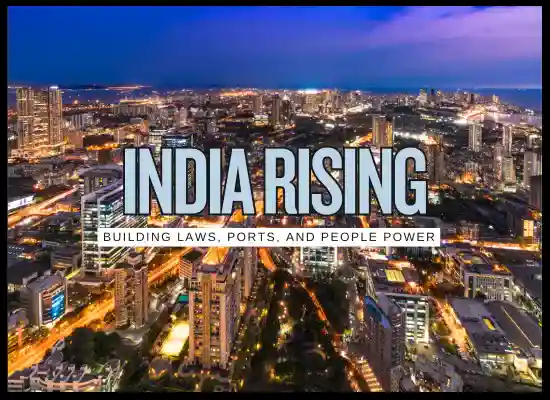
India has set its sights on nothing less than a maritime transformation. With new legislation, modernized ports, and a bold roadmap stretching to 2047, the 100th anniversary of its independence, the country is positioning itself to become one of the world’s leading shipping powers. This isn’t just about cranes and cargo; it’s about reshaping how trade flows through South Asia, connecting people, industries, and global supply chains in a way that could redefine the balance of maritime power for decades to come.
India’s Maritime Timeline to 2047
A quick view of how new laws, mega ports, and capacity targets line up with the 2047 horizon.
- Indian Ports Bill modernizes the 1908 framework and enables integrated planning across states.
- Merchant Shipping Bill updates ship ownership, registration, safety, and enforcement.
- Carriage of Goods by Sea Act refreshes liability rules and supports digital documentation.
- Vadhavan deep water port moves from approvals into construction with first phase capacity planned at scale.
- Galathea Bay transshipment hub advances as a notified major port with phase one targeted within this window.
- MIV 2030 targets raise throughput and efficiency across major gateways and corridors.
- Deeper draft and crane upgrades to handle 24k TEU class vessels at key hubs.
- Green hydrogen pilots at select ports and wider shore power adoption.
- End to end digital workflows for cargo, customs, and bills of lading.
- Rail road pipeline links mature around new hubs to pull inland cargo to coastal gateways.
- Second phase expansions at Vadhavan and allied hubs lift container capacity again.
- Training pipelines add mariners and port professionals for steady operations.
- Total port capacity approaches the 10,000 MTPA goal across sea and river systems.
- Multiple deep draft mega ports anchor mainline services and transshipment flows.
- Port energy mix shifts further to low carbon with maturing bunkering and shore power.
📜 Legislation
India has overhauled its maritime statutes to modernize governance, align with IMO norms, and clear the path to 2047 targets. These three pillars work together: ports policy, shipping law, and cargo liability.
- Replaces the 1908 Act with a modern planning framework.
- Integrates center–state roles and project approvals.
- Emphasizes efficiency benchmarks and service quality.
- Updates ship registration, safety, survey, and enforcement.
- Aligns with SOLAS/MARPOL and other IMO conventions.
- Creates clearer compliance pathways for operators.
- Modernizes bills of lading and liability allocation.
- Supports electronic documentation and end-to-end workflows.
- Reduces disputes and speeds up claims handling.
The three laws are designed to work as a stack: ports policy accelerates capacity, shipping law ensures safe/efficient vessel operations, and cargo law de-risks trade documentation. Together they shorten project cycles, improve schedule integrity, and make Indian hubs more bankable for mainline calls.
🏗️ Infrastructure
India is building deep-water capacity, transshipment capability, and end-to-end logistics to attract mainline services and keep value onshore.
- 20m+ draft and long berths sized for 24k TEU vessels.
- Phased container capacity with rail-road hinterland links.
- Designed to anchor direct mainline calls on key trades.
- Strategic position on east–west lanes in the Andamans.
- Built to capture cargo now routed via Colombo and Singapore.
- Focus on quick turns, high crane density, and deep approach.
- Sagarmala and Bharatmala connect ports to inland demand.
- Port Community Systems and e-workflows cut dwell and paperwork.
- Shore power and alt-fuel pilots prepare for low-carbon ops.
Vadhavan captures mainline scale, Galathea Bay secures transshipment, and logistics corridors stitch the network together. The combined effect is more reliable schedules, lower per-box costs, and stronger onshore value retention.
💹 Economics
Economic strategy is central to India’s 2047 plan, from tariff policies to investment flows and transshipment revenue capture.
- Focused tariff adjustments to make Indian ports competitive.
- Shift cargo away from foreign hubs by lowering handling costs.
- Leverage FTAs to boost container throughput.
- PPP models attract global capital for mega-port projects.
- Sovereign funds and banks back long-horizon infrastructure.
- Green bonds tapped for decarbonization investments.
- Currently much of India-bound cargo is handled abroad.
- New hubs aim to capture this lost revenue stream.
- Every 1M TEUs retained = significant foreign exchange savings.
Tariff alignment lowers costs, investment channels build the hardware, and transshipment capture brings new revenue onshore. The combined effect is a stronger balance of payments position and more resilient supply chains.
👥 People
Human capital remains India’s strongest maritime asset. From seafarers to port managers, the 2047 vision depends on scaling skills, safety, and global leadership in maritime talent.
- India supplies ~12% of the world’s officers today.
- Training academies expanding intake to meet fleet growth.
- Focus on STCW compliance and modern simulators.
- Institutes like IMU scaling programs in engineering and logistics.
- Digital learning modules for port ops and safety.
- Partnerships with global academies to raise standards.
- Enhanced insurance and EAP support for seafarers.
- Shore leave and welfare facilities improved at major ports.
- Mental health and fatigue management programs prioritized.
Talent supply is India’s long-term edge. Scaling officer pipelines, aligning education with digital/green skills, and improving welfare are critical to sustain credibility as a global hub.
India’s 2047 maritime vision is ambitious, but it’s also grounded in clear steps, modern legislation, world-class infrastructure, smart economics, and a strong people pipeline. Each piece reinforces the others, creating a framework where India can shift from being a feeder nation to a true global shipping hub.
As we look ahead, we’ve seen how the groundwork being laid today is designed to pay dividends for decades. We believe the story of India’s rise at sea is not just about ports and ships, but about reshaping trade flows and positioning the country at the center of global commerce.