Europe Cruise Trends That Could Outperform the Broader Market This Year
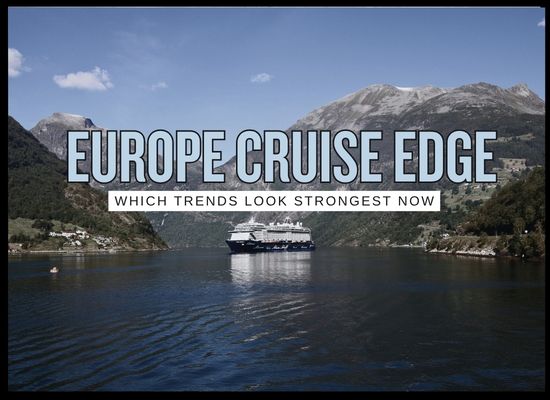
Europe cruise demand is holding up better than many casual observers assume, but the areas most likely to outperform are not simply “Europe in general.” The strongest pockets this year appear to be port-intensive Mediterranean sailings, premium and luxury Europe demand, Northern Europe and Iceland-style itineraries that offer more differentiation, and shoulder-season Europe programs that benefit from lower airfares and reduced peak congestion. Travel Weekly reported in February that luxury and Europe cruises were among the strongest early Wave performers, with Holland America saying its 2026 Europe bookings were up more than one-third year over year early in the season, while analysts pointed to lower airfares and stronger higher-end spending as important supports. Norwegian has also built its 2026 Europe season around seven-day itineraries with limited or no sea days plus 22 overnight stays, which is a strong signal that lines see port density and destination immersion as a selling advantage rather than a niche add-on. Royal Caribbean’s summer 2026 Europe deployment also stays substantial, spanning more than 60 destinations from Athens, Barcelona, Rome, Ravenna, and Southampton.
Europe is still broad but the winners inside it are becoming easier to spot
The strongest European cruise trends this year look less like generic regional strength and more like a set of more specific outperformer lanes built around immersion, premium spend, smarter timing, and differentiated geography.
Current signals
Europe trends most likely to outperform
This ranking focuses on themes inside Europe that look better positioned than the broader regional average based on current 2026 deployment and demand signals.
| # | Trend lane | Potential to outperform | Current 2026 evidence | Travelers notice | Pressure tags | Strategic read |
|---|---|---|---|---|---|---|
1 |
Port-intensive Mediterranean itineraries
The strongest theme inside Europe may be density of experience rather than pure geography.
|
In a market where travelers want more value from limited time, sailings that maximize time ashore can feel stronger than sea-day-heavy programs. | Norwegian’s 2026 Europe season emphasizes more seven-day itineraries with limited or no sea days, open-jaw sailings between Barcelona and Lisbon, late departures in Palma and Ibiza, and 22 overnight stays across the region. | Guests get a schedule that feels more like a moving city-and-coast trip than a classic cruise loop with long stretches at sea. | Immersion Port density Value perception | Europe can outperform when it behaves more like a high-efficiency land-tour substitute and less like a conventional cruise pattern. |
2 |
Premium and luxury Europe demand
Higher-end travelers appear to be supporting Europe especially well.
|
Premium and luxury guests are often better able to absorb airfare and total-trip costs, which helps Europe hold up well when broader consumer pressure rises. | Travel Weekly reported that luxury and Europe cruises were both riding high early in 2026 Wave season, with analysts saying Europe had stronger pricing power than the Caribbean and that wealthier consumers were still spending. | Travelers see firmer fares, stronger demand for premium product, and less dependence on heavy discounting relative to more price-sensitive vacation lanes. | Pricing power Affluent demand Yield resilience | The broader Europe market may be mixed at times, but the higher-end slice looks better insulated and more likely to outperform. |
3 |
Northern Europe Iceland and destination-rich cooler-weather programs
Distinctive geography still matters when many Mediterranean products can start to blur together.
|
Northern Europe, Iceland, and related itineraries offer a more differentiated scenery-and-culture pitch that can feel less interchangeable than standard warm-water Europe loops. | Royal Caribbean’s 2026 Europe deployment includes Northern Europe sailings from Southampton as well as Mediterranean product, while Norwegian’s longer Europe voyages include overnight stays in Reykjavik and Copenhagen. Europe deployment materials across brands continue to keep cooler-weather and northern options visible rather than marginal. | Guests get a more distinctive visual and itinerary identity, which can support stronger shareability, stronger premium feel, and more destination-led decision making. | Differentiation Premium appeal Less interchangeable | This lane may outperform because it feels less crowded conceptually, even if absolute volume is smaller than mainstream Mediterranean deployment. |
4 |
Shoulder-season Europe
Timing is quietly becoming part of the outperformer story.
|
Shoulder timing can improve airfare value, reduce peak congestion, and soften the impact of new port-cost pressures in the hottest headline destinations. | Travel Weekly specifically cited lower airfares as a support for Europe demand in early 2026. Greece’s passenger fee schedule also drops sharply outside peak months, with Mykonos and Santorini at €20 in June through September but €12 in April, May, and October and €4 in winter. | Travelers may see better overall trip value, easier port days, and less friction in famous destinations than during peak midsummer. | Better value Lower congestion Fee advantage | Some of Europe’s best-performing product may come from calendar positioning rather than from a specific ship or brand. |
5 |
Open-jaw and overnight-heavy itineraries
These programs create a more land-trip-like value proposition without giving up the ship.
|
Open-jaw routes and overnight calls increase perceived trip depth, which can help Europe outperform in a year when travelers want more from long-haul vacation spend. | Norwegian Dawn’s 2026 Europe program includes open-jaw sailings between Barcelona and Lisbon with no sea days, while Norwegian’s broader Europe season includes 22 overnights in ports such as Reykjavik, Copenhagen, and Istanbul. | Guests notice less repetition, more time ashore, and a trip structure that feels richer than a simple roundtrip loop. | Trip depth Higher value feel Long-haul justification | This is one of the cleaner ways Europe can defend itself against the argument that it is too expensive or too crowded. |
6 |
Younger-skewing Europe cruise product
Not the broadest trend, but a potentially important outperformer pocket.
|
Europe products that feel more social, flexible, and shorter can capture travelers who might not have considered traditional Europe cruising a fit. | Euronews reported in February that Europe cruising was attracting a younger demographic in 2026, pointing to adults-only Virgin Voyages as well as Norwegian and MSC tailoring shorter European itineraries to younger travelers looking for cultural depth without long-haul land complexity. | Travelers see a more contemporary social vibe, less formal framing, and itinerary structures that fit shorter vacation windows. | Younger demand Fresh audience Product refresh | This may outperform not because it becomes Europe’s largest segment, but because it expands the addressable audience in a useful way. |
What is holding these lanes up
The stronger Europe trends share a few important characteristics.
They justify the airfare
Europe performs best when the cruise product feels deep enough to justify the extra transport effort. Port density, overnights, and open-jaw structure all help on that front.
They feel less replaceable
Northern Europe, Iceland, and premium Mediterranean products stand out partly because they are harder to swap mentally with a cheaper alternative.
They soften the crowding problem
Shoulder-season timing, smarter port mixes, and more flexible itinerary design help Europe keep its appeal even as some famous ports get costlier or more congested.
They fit current traveler behavior
Guests are rewarding products that feel immersive, efficient, and clearly worth the time. Europe does better when it leans into those strengths rather than relying on geography alone.
Europe cruise outperformance tool
Adjust the sliders to test what kind of Europe cruise product looks best positioned to outperform. The model blends immersion, premium spend, airfare relief, shoulder timing, and destination differentiation.
Higher values favor limited sea days, overnights, and stronger time ashore.
Higher values favor wealthier travelers and stronger pricing resilience.
Higher values favor easier overall trip economics and stronger value perception.
Higher values favor April, May, October, and other less crowded timing windows.
Higher values favor routes that feel harder to substitute, such as Northern Europe and Iceland.
We welcome your feedback, suggestions, corrections, and ideas for enhancements. Please click here to get in touch.