Spot Ship: Redefining Maritime Intelligence Through Smart Automation
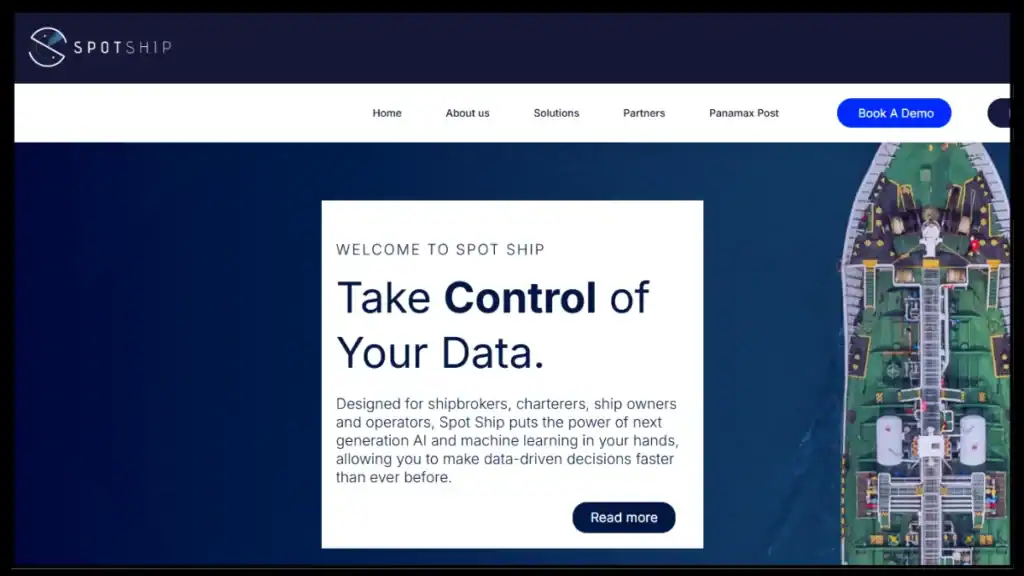
Today, on Ship Universe we spotlight the company, Spot Ship. In a global industry where speed, precision, and information access can mean the difference between profit and loss, Spot Ship offers a smarter way to manage vessel and cargo matching. Designed specifically for shipbrokers, charterers, and operators, Spot Ship is not just another platform, it’s a purpose built tool that transforms how maritime professionals work with data.
Built by Brokers, Not Outsiders
One of Spot Ship’s core strengths is its origin. Unlike generic software platforms trying to enter the maritime space, Spot Ship was created by people who’ve actually worked as shipbrokers. The result is a platform that speaks the language of the industry, understands its challenges, and offers practical tools rather than theoretical solutions.
This broker-led approach ensures that everything in the system, from how emails are parsed to how cargo-vessel matches are displayed, is built for speed, clarity, and real-world utility.
Turning Raw Emails into Smart Actions
At the heart of Spot Ship’s system is its highly accurate natural language processing engine. While most brokers are still manually scanning thousands of emails a week, Spot Ship automates this process with over 95% parsing accuracy, pulling out vessel positions, cargo specs, and availability data in seconds.
This level of precision allows maritime professionals to act faster, with better information, and with far less manual input. It removes much of the daily administrative burden and opens up more time for high-value strategic work.
Smarter Matching, Less Guesswork
Instead of simply showing what ships are available, Spot Ship actively helps users identify which vessels are best suited for a particular cargo. It does this by factoring in real-time AIS data, vessel speeds, current ballast positions, and distance from load ports.
This approach minimizes idle time and unnecessary ballast movements. The benefit isn’t just operational efficiency, it’s financial and environmental. By reducing wasted fuel and better aligning vessel supply with demand, Spot Ship supports both profitability and sustainability goals.
A Platform That Grows with You
Spot Ship is not a static tool. The team regularly updates the platform based on real user feedback. If brokers ask for a new feature or workflow adjustment, it’s often added within days, not months.
This agility stands in sharp contrast to larger enterprise platforms, where user feedback is often buried under layers of bureaucracy. At Spot Ship, customer needs drive development—and the result is a tool that evolves in step with the people using it.
Connected to the Ecosystem
Spot Ship is also quietly powering major platforms in the industry. Its parsing technology, for example, supports Sedna’s email workflows and has been integrated into systems run by leading maritime tech firms. This shows a broader confidence in Spot Ship’s core technology and extends its impact well beyond its own dashboard.
Clear Support and Personal Guidance
Every customer is paired with both a technical lead and an account manager, real people who know the product inside and out. Whether onboarding a new team or tweaking a data feed, Spot Ship’s support is hands-on and responsive.
This level of service is rare in maritime tech, and it reflects the company’s focus on relationships, not just transactions.
Spot Ship represents a larger shift in maritime operations, a move away from inbox-driven chaos and toward structured, smart, and automated workflows. It enables brokers to make faster decisions, reduce ballast time, and stay competitive in a market where timing and efficiency are everything.