Scienco InTank™ BWTS Review: Filterless Ballast Compliance that protects your schedule
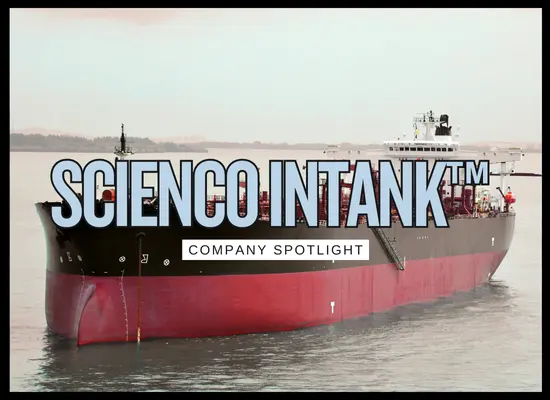
Scienco® InTank™ is pitched as a “compliance without compromise” ballast water treatment option for owners who hate filters, port-time surprises and marginal retrofit space. It treats ballast water in the tank during voyage using sodium hypochlorite dosing and in-tank recirculation, so you ballast and deballast normally in port while still hitting USCG and IMO (Revised G8) requirements.
- In-voyage treatment, normal port operations: InTank treats ballast water in the tanks while the vessel is at sea, using a circulation loop and sodium hypochlorite dosing. You ballast and deballast as usual in port, without extra treatment steps competing with cargo operations.
- No filters to clog or backflush: The system is filterless, which removes a major operational pain point in challenging waters. There is no filter backflushing, fewer moving parts and less sensitivity to sediment or high solids during intake.
- USCG and IMO Revised G8 type approved: InTank holds both US Coast Guard and IMO (BWMS Code / Revised G8) type approvals, with capacities up to very large flows. That gives technical and compliance teams a single system that meets the main regulatory regimes.
- Lower power demand in port: Because treatment happens in-tank during voyage, power demand in port is minimal compared with inline treatment systems. This matters when shore power, reefer loads and cranes are already close to your available margin.
- Retrofit flexibility for older tonnage: With treatment hardware separated from ballast lines and no large filters in line, there can be more freedom to place modules where space and structure allow. That can simplify retrofits on older ships and heavy-lift or offshore units with complex ballast layouts.
- Robust CT-based treatment logic: The system uses a concentration–time (CT) approach, monitoring TRO in the tank and allowing re-dosing as needed to hit target values. This helps maintain performance even when ballast water quality and oxidant demand vary between ports.
- Options for shared or portable use: With InTankFITT containerised variants, the same core technology can be deployed as a portable system shared between project vessels, barges or other units that ballast infrequently, which can be more economical than one fixed BWTS per hull.
- Backed by a water-treatment OEM: InTank sits inside Scienco/FAST, a BioMicrobics subsidiary that has long experience with marine sanitation and water treatment systems, so support and spares are tied into an existing global water-technology organisation.
- Learn more from the source: For technical documentation, reference lists and animations of how the system works, owners can go directly to the InTank BWTS product pages. InTank BWTS overview .
-
InTank BWTS adds to Scienco/FAST’s marine capabilities The Maritime ExecutiveCorporate feature explaining how InTank’s in-tank, filterless process treats and neutralises ballast water during voyage and why Scienco/FAST added it to their marine portfolio. Read the article .
-
Q&A: Ballast Water Management Market Matures MarineLinkInterview piece where Scienco/FAST discusses InTank adoption, particularly on semi-submersibles and project vessels that value in-tank treatment and controlled regrowth. See the Q&A .
-
BWMS Webinar: Inside the InTank Solution Maritime Professional / MarineLinkWebinar listing focused on the InTank approach to treating and neutralising ballast water in-tank during voyage, pitched at owners and yards comparing options. Ballast water treatment news page .
-
InTank: a BWTS solution for semi-submersibles HeavyLift & Project ForwardingSector-focused article describing how a filterless, in-tank BWTS like InTank can fit the ballasting profile and operational constraints of semi-submersible heavy-lift vessels. Read the case-style piece .
-
Product listings and technical directories MarShip / Environmental-Expert / NauticExpoMultiple product and technical directories carry InTank listings, emphasising its filter-free, in-voyage treatment, IMO & USCG type approval and suitability across tanker, bulker, heavy-lift and semi-sub fleets. MarShip product page | Environmental-Expert listing | NauticExpo overview .
| Category | Calculated value |
|---|---|
| Inline BWTS delay days per year (fleet) | 0.0 days |
| InTank delay days per year (fleet) | 0.0 days |
| Delay days avoided per year (fleet) | 0.0 days |
| Value of avoided delay days (fleet) | $0 |
| Annualised extra InTank capex / opex | $0 |
| Net annual benefit (value – extra cost) | $0 |
| Net benefit per vessel in scope | $0 |
For owners, the Scienco InTank story is less about chasing a “clever” piece of kit and more about deciding how much ballast-water-driven disruption you are willing to tolerate between drydockings. If your logbooks show recurring port delays, filter alarms or inspection anxiety around ballast, the in-tank, filterless model gives you a different way to think about compliance: treat during voyage, neutralise before discharge, and arrive with ballast already under control. The mentions panel and downtime planner are there to help you sense-check whether that shift is worth exploring on your own fleet segment, using your actual day rates, incident history and retrofit constraints.
We welcome your feedback, suggestions, corrections, and ideas for enhancements. Please click here to get in touch.