Norsepower Review: Lower Fuel Bills and Emissions on the Same Routes
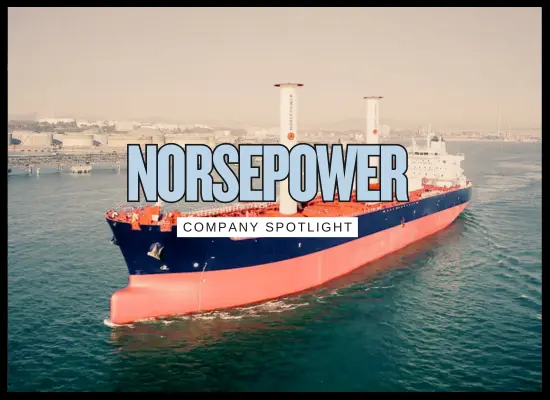
Norsepower is one of the more visible attempts to make wind-assist a normal line item on a fuel and emissions plan, not a nostalgia project. From its base in Helsinki, the company installs tall rotor sails on tankers, bulkers, ferries and RoRos so that whenever conditions allow, the wind does part of the propulsion work and the engines can throttle back. For owners, the promise is simple: lower fuel bills and emissions on the same routes, using hardware that can bolt onto existing tonnage rather than waiting for a brand new hull and fuel system.
- Letting the wind carry part of the propulsion load: Norsepower Rotor Sails generate forward thrust whenever there is usable wind, allowing main engines to run at lower load for the same speed and route. Case studies in the public domain report meaningful fuel and CO₂ reductions on tankers, bulk carriers and ferries when conditions are favourable.
- Cutting fuel bills without changing the primary fuel: Because Rotor Sails are a wind-assist technology rather than a new fuel, owners can continue to burn conventional or alternative fuels while reducing the volume consumed. That turns every tonne of saved fuel into a direct OPEX reduction and a smaller exposure to future fuel price spikes.
- Improving CII ratings and emissions profiles: Lower fuel consumption per transport work directly improves a vessel’s carbon intensity indicators. For owners with borderline CII scores on specific trades, wind assist can create headroom that reduces the need for continuous slow steaming or cargo compromises.
- Reducing future EU ETS and carbon cost exposure: If a portion of CO₂ emissions per voyage is avoided through Rotor Sail thrust, the owner’s future spend on allowances and internal carbon prices falls as well. The higher carbon pricing goes over the coming years, the more each percentage point of fuel saving is worth.
- Retrofit instead of full newbuild dependency: Norsepower systems are designed to be retrofitted on existing vessels where deck space, stability and structural considerations allow it. That means owners can test wind assist on current ships in the water, instead of waiting for a newbuild slot and complex alternative fuel infrastructure.
- Sharpening the commercial story toward charterers: Wind-assist hardware is something charterers can see and understand, backed by logged performance data over time. For some trades and customers, demonstrating lower emissions per tonne-mile can support long-term contracts or preferred-vendor discussions.
- Stacking with other efficiency measures: Rotor Sails can be combined with hull optimisation, weather routing, speed management and alternative fuels. The savings stack, so improvements from Norsepower are additive on top of other efficiency levers in an owner’s programme.
- Leaning on a maturing reference list: Norsepower has installations and announced projects across multiple ship types, giving owners a growing pool of public references and operational experience to benchmark against when building an internal business case.
-
Rotor Sails on methanol-fuelled VLCC pair Splash247Splash247 reports that Norsepower has won the contract to install Rotor Sails on two Japanese methanol-fuelled VLCCs, described as a world-first wind-assist deployment at this size class. Read the coverage: Norsepower wins contract to install rotor sails on two Japanese VLCCs .
-
WAPS measure and monitor system launch Ship-TechnologyShip-Technology covers Norsepower’s launch of a Wind-Assisted Propulsion System (WAPS) measure and monitor package, which continuously tracks wind-propulsion performance so owners can verify savings and reliability in service. Read the article: Norsepower launches WAPS measure and monitor system .
-
Accelerating serial Rotor Sail production Seatrade MaritimeSeatrade Maritime reports on Norsepower’s MoU under the CHIC framework, where partners plan to accelerate serial production, sales, installation and service of Rotor Sails in the region, signalling a push from one-off projects to a more industrialised rollout. Read the story: Norsepower to accelerate Rotor Sail production under CHIC MoU .
-
Six eco-friendly chemical tanker newbuilds Offshore EnergyOffshore Energy notes that Norsepower is set to supply Rotor Sails for six eco-friendly chemical tanker newbuilds, underlining how wind-assist is being baked into newbuilding specs rather than limited to isolated retrofits. Read more: Norsepower to deliver rotor sails for six eco-friendly chemical tanker newbuilds .
-
Stena Line NewMax ferry Rotor Sails Offshore EnergyAnother Offshore Energy piece highlights Stena Line’s choice of Norsepower Rotor Sails for the methanol-ready NewMax ferry Stena Connecta, with two 28×4m rotors projected to deliver up to around 9 % fuel savings on the planned trade route. Read the article: Stena Line picks Norsepower rotor sails for brand new methanol-ready NewMax ferry .
-
CEO interview: bringing sails back to shipping Xinde Marine NewsIn an interview with Xinde Marine News, Norsepower’s CEO discusses the company’s R&D efforts and how Rotor Sails are positioned as a data-backed product rather than a nostalgia project, stressing full intelligence around performance across ship types. Read the interview: Exclusive Interview with Norsepower CEO: Bringing Sails Back to Shipping .
-
Wind sails on supertankers from 2028 ShipUniverseShipUniverse analyses Idemitsu Tanker’s decision to order two methanol-ready VLCCs in Japan that will each carry a pair of Norsepower Rotor Sails from delivery at the end of 2028, marking the first time VLCCs will be equipped with this technology and exploring the fuel, CII and pricing angles for owners. Read the ShipUniverse coverage: Wind Sails to be Deployed on Supertankers in 2028: Idemitsu Bets On Norsepower VLCC Pair .
| Category | Calculated value |
|---|---|
| Total fuel consumed per year (fleet, baseline) | 0 mt |
| Fuel saved per year (fleet) | 0 mt |
| Baseline fuel spend per year (fleet) | $0 |
| CO₂ avoided per year (fleet) | 0 tCO₂ |
| CO₂ under EU ETS scope (baseline, fleet) | 0 tCO₂ |
| Value of fuel saved | $0 |
| Value of ETS / carbon cost avoided | $0 |
| Annualised Rotor Sail cost (CAPEX + OPEX, fleet) | $0 |
| Total annual benefit (fuel + ETS savings) | $0 |
| Net benefit after annualised cost | $0 |
Norsepower sits in that rare space where there is already a public track record of hardware in the water, from Viking Grace and Maersk Pelican through to RoRos like SC Connector and larger deep-sea projects, so the Rotor Sail story is less “lab concept” and more “how big is the saving on our routes, at our fuel and carbon prices.” The planner here is just a way to translate that into your own numbers: tonnes of fuel and CO₂ avoided, ETS cost reduced and a simple comparison against annualised CAPEX and OPEX, so you can see whether wind-assist earns its place alongside hull, routing and engine upgrades in your decarbonisation stack.