Canal Passage: Insider Tips to Increase Speed and Savings
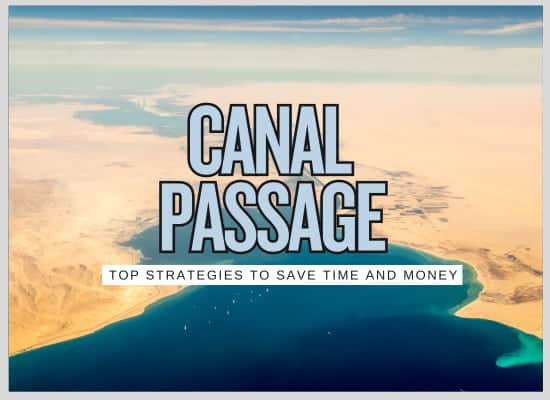
Navigating the world’s major canals isn’t just about paying the toll and waiting your turn, it’s a high-stakes dance of timing, precision, and smart preparation. With congested lanes like the Panama Canal trimming slots, and geopolitical disruptions making the Suez unpredictable, every hour counts and every dollar saved in fuel or penalties adds up fast.
These tactics go beyond common-sense advice. They’re used by real fleet operators, validated in 2024 reports, and in some cases, even mandated by canal authorities. Whether you manage a single vessel or an entire fleet, each one offers a practical edge in an increasingly competitive space.
📣 Make sure to check out our new Canal Cost Calculator
We welcome your feedback, suggestions, corrections, and ideas for enhancements. Please click here to get in touch.

Booking your canal transit slot early — especially through the Panama or Suez Canal — is one of the most effective ways to avoid costly delays. With demand often exceeding capacity, especially in droughts or high-traffic seasons, unreserved ships can wait days at anchor, burning fuel and racking up costs.
📌 Importance:- Panama now allows only ~24 transits/day due to water restrictions — down from 36+.
- High-value auction slots can exceed $500,000 for last-minute priority passage.
- Slot scarcity is increasing due to climate impacts and growing trade volume.
- Use the Panama Canal Authority’s Maritime Service Portal to reserve slots early.
- Coordinate with your shipping agent to ensure documents are submitted promptly.
- Monitor traffic forecasts from the Suez Canal Authority and other official sources.
- Booking ahead can cut wait times from 2–6 days to less than 12 hours in high-traffic periods.
- Eliminates the need to participate in costly slot auctions (unless priority is needed).
- More predictable scheduling across entire voyage — better ETA accuracy and crew planning.
- Panama Maritime Service Portal – Slot booking and vessel queue management.
- Canal Slot Auction Calendars – Updated regularly for premium slot availability.
- 3rd-party canal advisors – Offer optimized slot timing services for bulk or LNG fleets.
Bottom line: If you’re not booking canal slots in advance, you’re leaving time and money on the table. Just one missed slot can ripple through your schedule — and eat into fuel margins, charter agreements, and crew rotations.
High-traffic canals like Panama and Suez require precise navigation under tight conditions — and pilotage is mandatory. While canal-provided pilots guide the vessel, onboard Pilot Navigation Systems dramatically enhance transit accuracy by providing real-time positioning data and reducing the chance of costly delays or incidents.
📌 Importance:- Panama Canal Authority mandates permanently installed RTK-capable navigation systems for many vessels, including LNG carriers and neo-Panamax ships.
- Systems provide centimeter-level precision using Real-Time Kinematic (RTK) GPS corrections, critical for narrow lock navigation.
- Enhances safety, compliance, and transit smoothness — especially during low visibility or tight maneuvers.
- Install Trimble, Navicom, or other approved integrated navigation systems that meet Panama Canal’s V-PASS specs.
- Test and calibrate before arrival — authorities may inspect or validate data feeds.
- Coordinate with your pilot boarding team to ensure synchronization between onboard data and canal systems.
- Reduces minor course corrections and maneuvering delays — especially at locks and curves.
- Helps avoid costly incidents like lock wall strikes or fender contact fees.
- Improves pilot trust and often speeds up clearance procedures.
- Trimble Marine Pilot System – RTK-accurate platform integrated into canal transit workflows.
- Panama Canal V-PASS Guidelines – Technical specs for vessel positioning and pilot system compliance.
- Canal-compliant GPS vendors – Offer certified hardware and support for required ship classes.
Bottom line: These systems don’t replace canal pilots — they empower them. With precise RTK data, you reduce the chance of transit delays, accidents, and unnecessary holding time. For certain vessel classes, they’re not just smart — they’re mandatory.
Many canal authorities offer tiered pricing, rebates, or incentive programs for frequent users or vessels that meet specific efficiency or environmental benchmarks. Understanding these programs — and planning transits accordingly — can unlock substantial savings for operators with regular canal usage.
📌 Importance:- Panama Canal offers a Frequent User Loyalty Program with rebates for operators transiting more than 15 times annually.
- Suez Canal Authority publishes detailed fee schedules based on vessel type, tonnage, and cargo — with occasional discount circulars.
- Environmental compliance (e.g., low-emission ships) can lead to lower dues in some programs.
- Track annual transits and register with Panama’s loyalty program to receive quarterly rebates.
- Consult official circulars from the Suez Canal Authority for any temporary or route-based discounts.
- Evaluate canal fee calculators or third-party agents to optimize transit timing based on rate tiers.
- Rebates can exceed tens of thousands of dollars annually for qualifying operators.
- Small adjustments in vessel arrival time or cargo class declarations can reduce fee categories.
- Environmental discounts may overlap with fleet ESG goals, reducing both costs and emissions scores.
- Panama Canal Loyalty Program Portal – Enroll and manage rebates based on transit frequency.
- Suez Canal Circulars (Navigation) – Updated documents showing current fees, exemptions, and incentives.
- Canal Fee Simulators – Third-party platforms to calculate expected dues by vessel type and route.
Bottom line: Most operators overlook these programs — but if you’re running multiple transits a year, the rebates and structured discounts can significantly cut costs. Review the fine print once, and your accountants will thank you every quarter.
When major canals are congested, closed, or geopolitically unstable, savvy operators don’t wait — they reroute. Diversifying your routing strategy to include alternatives like the Cape of Good Hope, the Magellan Strait, or intermodal handoffs can keep cargo moving, reduce idle time, and sometimes even cut costs, depending on fuel prices and charter structures.
📌 Importance:- The Red Sea crisis and Panama droughts have forced hundreds of vessels to reroute in the past 12 months.
- Delays at major canals can cause ripple effects across entire trade lanes and supply chains.
- Flexibility in routing is now seen as a competitive advantage — not a last resort.
- Build alternate routing plans into voyage software or chartering strategy.
- Evaluate fuel burn vs. time for options like the Cape of Good Hope (adds ~10 days but avoids fees).
- Consider intermodal alternatives — e.g., offloading to rail at Mediterranean hubs to bypass canal risks.
- While alternate routes are longer, they may avoid six-figure slot auction fees or multi-day anchor waits.
- Shippers may prefer predictability over absolute speed when planning downstream logistics.
- Rerouting during geopolitical or environmental disruptions can help retain client trust and charter compliance.
- Voyage Estimation Software (e.g., Dataloy, Veson) – Compare time/fuel/costs of alternate routing options.
- Global Risk Dashboards – Track political, weather, and canal status disruptions in real time.
- Historical Cost Models – Use past fuel and delay data to assess when diversions are justified.
Bottom line: The fastest route isn’t always the best. With canal congestion and instability rising, route diversification should be part of every operator’s contingency toolkit — not just a reactive decision.
Transit efficiency through canals can change by the hour — due to weather, slot backlog, or geopolitical alerts. Using real-time monitoring and forecasting tools allows operators to dynamically adjust ETAs, reroute if needed, and avoid costly surprises. This isn’t just nice-to-have tech — it’s quickly becoming standard across efficient fleets.
📌 Importance:- Panama and Suez delays can develop overnight due to weather, pilot shortages, or vessel traffic surges.
- Access to up-to-the-minute queue data, vessel traffic, and wind/tide conditions supports smarter transit planning.
- Geopolitical forecasting tools help reroute early — before insurance premiums spike or clients demand answers.
- Install real-time AIS dashboards to track canal congestion and vessel ETA flow (e.g., Spire, MarineTraffic Pro).
- Layer in weather forecasting models (e.g., Windy, PredictWind) to monitor wind speed and tide levels near locks or straits.
- Use intelligence platforms that track regional risk (e.g., Dryad Global, Ambrey) for emerging threats and disruptions.
- Enables early decision-making to reroute, delay, or speed up without guesswork.
- Can reduce canal wait time, fuel burn during idle periods, and demurrage risk.
- Improves communication with charterers and receivers — fewer surprises, smoother coordination.
- MarineTraffic Live Port Congestion Map – See real-time queue length and anchorage data.
- Spire Maritime – Offers AIS + weather layers with predictive ETA analytics.
- Dryad Global Intelligence Platform – Risk alerts covering Red Sea, canal security, and piracy zones.
Bottom line: Don’t wait for a jammed canal or surprise weather to wreck your schedule. Real-time tools pay for themselves by turning reactive decisions into proactive planning — a key edge in today’s volatile shipping landscape.
Every major canal has its own detailed transit regulations — from mooring arrangements to ballast water protocols and tug usage. Failure to comply can result in heavy fines, delayed passage, or denial of entry. Staying ahead of regulation changes not only ensures smooth transit but also reduces liability exposure for shipowners and managers.
📌 Importance:- The Panama Canal has specific mooring line requirements, crew readiness standards, and minimum visibility rules.
- Suez Canal mandates certificates for hull cleanliness, engine readiness, and canal toll pre-payment.
- New environmental and safety regulations are frequently introduced without long lead times.
- Use pre-transit checklists tailored for each canal (many are published by pilot agencies and authorities).
- Ensure documentation is submitted electronically in advance, especially for toll calculations and declarations.
- Keep your crew trained on protocol — e.g., rapid mooring operations, bridge team coordination, and pilot handover practices.
- Non-compliance can delay transit by 1–3 days and result in fines of $10,000+ depending on the issue.
- Well-prepared vessels are often cleared faster and avoid unexpected anchorage holds.
- Helps maintain strong working relationships with local authorities and pilot organizations.
- Panama Canal Regulations Guide – Detailed operational rules from ACP (updated annually).
- Suez Canal Authority Circulars – Regularly published rule updates, inspection forms, and exemptions.
- Class Society Compliance Portals – DNV, ABS, and others provide checklists by transit zone.
Bottom line: Canal compliance is not just a box to check — it's a moving target. Stay current, stay prepared, and your vessel will move when others get held back. One regulation slip-up can cost you days and thousands in lost time.
Environmental efficiency isn’t just a regulatory checkbox — it can also be a cost-saving lever. By adopting practices like slow steaming and ensuring a clean emissions profile, operators can lower fuel burn, extend equipment life, and even qualify for canal fee reductions tied to green performance.
📌 Importance:- Slow steaming (reducing speed by 10–15%) can cut fuel consumption by 20–30% — especially useful in canal approach zones.
- Some canals (e.g., Panama) are exploring or implementing emissions-based toll modifiers under ESG programs.
- Cleaner vessels often avoid extra inspections or surcharges tied to visible smoke, oil residue, or CII rating penalties.
- Adopt slow steaming on approach to canals to conserve fuel while aligning with slot schedules.
- Maintain engine tuning and hull cleanliness to ensure emissions performance matches documentation.
- Consider third-party verification of carbon performance to qualify for future incentives.
- Lower fuel costs across entire voyage leg — especially when anchorage or queue time is expected.
- Reduces stress on engines and extends maintenance intervals, saving on parts and downtime.
- May lead to favorable treatment as green-rated fleets gain traction in future toll structures.
- Voyage Optimization Platforms (e.g., Wärtsilä, StormGeo) – Help set optimal slow steaming speeds and predict fuel savings.
- CII & EEXI Monitoring Dashboards – Track vessel environmental performance and adjust ops in real time.
- Panama Green Connection Initiative – Early-stage incentives for environmentally friendly ships transiting the canal.
Bottom line: Slowing down smartly doesn’t mean falling behind — it means burning less, saving more, and staying ahead of upcoming canal and global emissions regulations. A clean ship is not just greener, it’s more profitable.
One of the most common causes of canal transit delays isn't mechanical — it's paperwork. Missing certificates, outdated declarations, or a crew that isn’t prepared for pilot instructions can stall or even deny a scheduled passage. The vessels that move through quickest are usually the ones best prepared on paper and in practice.
📌 Importance:- Panama and Suez both require pre-clearance packets with accurate tonnage certificates, cargo declarations, and safety documentation.
- Untrained crew or slow pilot handovers can delay movements in tight windows.
- Inspection failures — even on paperwork — can force a vessel to anchor and reapply for a slot.
- Assign a crew officer to own the “canal readiness file” for every transit.
- Use a digital checklist for required forms: general declaration, crew list, P&I certificates, tonnage measurement forms, etc.
- Train bridge crew in canal-specific protocols — including helm response, line handling, and pilot coordination drills.
- Pre-cleared vessels often transit faster and with fewer boarding inspections.
- Delays due to incomplete documents can cost $10,000–$50,000+ in anchor time, missed connections, or rescheduling.
- Improved crew response shortens maneuvering time and reduces pilot friction.
- Canal Transit Checklists (e.g., from BIMCO or ICS) – Industry-standard forms for both Panama and Suez preparation.
- Vessel Management Systems (e.g., ABS NS, Helm CONNECT) – Digitize and centralize transit documentation.
- Online Pre-Arrival Submission Portals – Provided by canal authorities for faster clearance.
Bottom line: You can have a clean hull, booked slot, and skilled crew — but if your paperwork isn’t airtight, you won’t move. Preparation isn’t glamorous, but it’s what gets you through on time and without extra fees.
Efficient canal navigation isn't just about getting from Point A to Point B it's about doing so with foresight, strategy, and precision. In a world where canal disruptions, slot scarcity, and environmental regulations are tightening by the year, shipowners who stay proactive will not only move faster, they'll move smarter.
Whether you're managing a single vessel or an international fleet, applying even a few of these eight techniques can yield real savings in fuel, time, and operational headaches. And for frequent users of major canals like Panama or Suez, these aren’t just tips, they’re requirements for staying competitive.