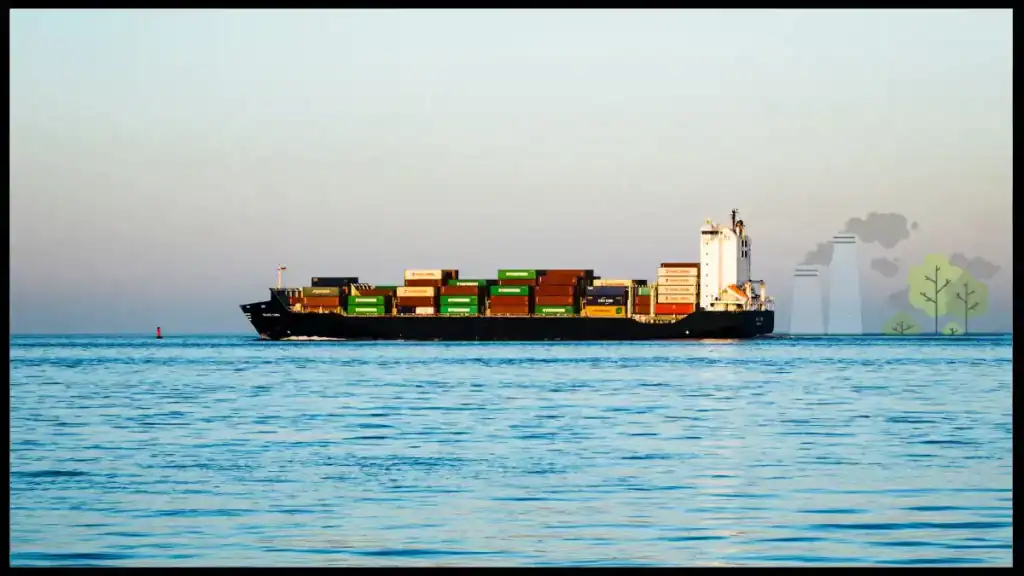
The U.S. has told multiple governments it will consider tariffs, visa restrictions, and even port levies against countries that back a U.N./IMO plan to curb shipping’s fuel emissions. Diplomats say the draft “Net-Zero Framework” has support from ~63 nations headed into an extraordinary IMO session in October, but Washington’s pressure campaign, after withdrawing from the talks in April, injects real risk of a split regime and higher compliance uncertainty for shipowners.
U.S. Threats vs IMO Carbon Plan
Item
What Happened & Who’s Affected
Business Mechanics
Bottom-Line Effect
U.S. Retaliation Threat
Washington warned nations it could use tariffs, visa restrictions, and port levies if the IMO’s emissions-cutting framework proceeds. Affects flag states, exporters to the U.S., and port states hosting U.S.-bound trade.
Trade tools can be targeted bilaterally; exposure varies by your cargo mix and port rotation into U.S. terminals.
📉 Planning risk for owners trading to/from the U.S.; potential rerouting and legal/administrative cost if measures land.
October IMO Vote
Draft “Net-Zero Framework” heads to an extraordinary session in October after securing broad (but not universal) support.
Outcome determines whether a **global** pricing/fee element advances—or whether regions go their own way.
↔ Near-term uncertainty window; prepare dual budgets for “global fee” vs “patchwork” scenarios.
If Framework Passes
The IMO package includes **fees tied to emissions performance** (details finalized in agency texts) aimed at cutting shipping’s ~3% share of global CO₂.
Expect compliance admin, potential bunker/levy surcharges, and charter-party clauses to evolve.
📉 Voyage costs rise but with **single global rulebook** → lower compliance fragmentation risk.
If Framework Fails
Higher odds of a **fragmented regime** (regional levies/schemes, unilateral port rules) plus potential U.S. trade actions.
Owners face multiple MRV/reporting tracks and uneven fuel/levy treatments by route.
📉 Compliance complexity and legal cost increase; 📈 some owners may pass through costs on constrained trades.
Confirmed Diplomatic Pressure
European officials (e.g., the Netherlands) confirm receiving U.S. warnings tied to the IMO plan.
Signals the threat isn’t theoretical; some allies could recalibrate votes or seek carve-outs.
↔ Policy volatility; build in lead-time for contract/route changes around the October session.
Charterparty & Insurance
Potential for new **levy/fee clauses**, emissions warranties, and sanctions-style compliance language.
Brokers and P&I likely expand rider language; financiers may ask for clearer carbon-cost covenants.
📉 Legal overhead up; 📈 cost pass-through improves if clauses are standardized early.
Operational Playbook
Owners evaluate **routing, fuel strategy, and tech retrofits** under both outcomes (global fee vs patchwork).
Use scenario TCO: levy pass-through vs capex (coatings, speed, voyage optimization, alternative fuels).
📈 Best-prepared fleets protect margins by shifting compliance from “ad-hoc” to “designed-in.”
Note: Information compiled from public statements by U.S. officials, IMO session documents, and reputable maritime and policy news coverage as of September 2025.
📈 Winners
📉 Losers
Owners of older / less-efficient tonnage: potential deferral of global carbon fees slows cost escalation and retrofit pressure.
Short-term spot operators: fewer near-term levy pass-through disputes can keep fixtures simple and admin light.
Non-Western financiers & local EPC ecosystems: if global deal stalls, regional pathways/openings may channel project finance and port investments locally.
Price-sensitive cargo interests: postponement of uniform fees can temper all-in freight and landed cost, especially on long routes.
Compliance consultancies & legal desks (patchwork scenario): demand rises for clause drafting, MRV mapping, and route-specific policy guidance.
Early movers on green capex (fleet & fuel): advantage narrows if a single global levy is delayed, weakening ROI signals for clean tech.
Shipowners trading across multiple regimes: fractured rules increase paperwork, legal exposure, and cost uncertainty.
Uniform-rule stakeholders (P&I, brokers, charterers): lack of one rulebook complicates pricing, claims, and contract standardization.
Alternative fuel & retrofit suppliers: softer near-term demand if policy momentum slows, stretching order books and payback timelines.
Ports planning around global standards: investment cases (berth upgrades, bunkering, shore power tied to global pricing) face delay or redesign.
Note: Directional assessment reflects potential outcomes of U.S. opposition to an IMO carbon-pricing framework (global levy vs. fragmented regional rules). Based on public statements, IMO session materials, and reputable maritime policy reporting as of September 2025.
Reading Between the Lines
When we step back, what strikes us is not only the regulatory fight, but the power play behind it. The U.S. isn’t just rejecting a levy; it’s trying to reshape who sets the rules of global shipping. That has knock-on effects for competitiveness, capital, and credibility.
Fragmentation risk is real: A global levy would bring predictability, but U.S. pushback raises the odds of multiple overlapping regimes.
Delay buys time, not certainty: Older tonnage operators get breathing room, but compliance costs aren’t vanishing—they’re just deferred.
Trade lanes in play: Cargoes bound for U.S. ports may face different carbon cost treatment than those moving into EU or Asia, complicating contracts.
Finance and insurance ripple: Banks, brokers, and P&I clubs thrive on clarity—without it, cost of capital and cover premiums can creep upward.
Strategy shifts: We’ve got to plan scenarios for both outcomes: a global levy or a patchwork of regional charges.
Banks and ECAs hesitate on retrofit/alt-fuel loans until rules stabilize.
Ship finance desks, retrofit suppliers, OEMs.
📉 Slower loan approvals; 📈 stronger demand for advisory services to bridge uncertainty.
Voyage Planning
Operators must run dual TCO scenarios (global levy vs. patchwork) when bidding contracts.
Commercial operators, chartering teams.
📉 Complexity in rate-setting; 📈 advantage for owners with strong digital optimization tools.
Port Investments
Harbors aligned with global rules may press ahead with green infrastructure; U.S. ports may pause.
Port authorities, terminal operators, bunkering firms.
📉 Uneven port readiness; 📈 opportunities for agile service providers to fill gaps.
Insurance & Risk
Insurers adjust premiums to reflect policy fragmentation and compliance uncertainty.
P&I clubs, underwriters, owners with global rotations.
📉 Higher premiums for cross-regional fleets; 📈 premium stability for operators on regional-only routes.
Note: Table highlights secondary commercial ripples of U.S. resistance to IMO carbon pricing, focusing on contracts, finance, ports, and risk management—not incident summaries.