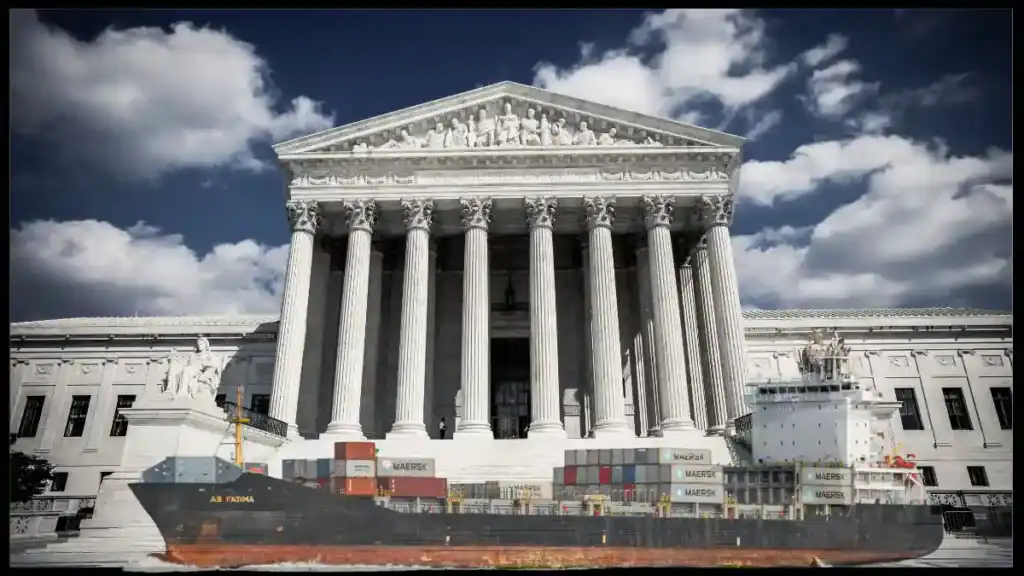
The U.S. appeals court’s 7–4 decision finding that most of President Trump’s global tariffs are unlawful has thrown contract pricing, routing, and cost planning into flux. The court kept its ruling on hold so the administration can seek Supreme Court review, which means current tariffs remain in effect for now, but legal uncertainty is now embedded in every Q4 negotiation. Several categories of duties appear unaffected (for example, specific steel and related measures), underscoring a patchwork outlook that stakeholders must navigate with care.
Here’s how we’ve structured the coverage of the U.S. tariff ruling so stakeholders can see the issue from multiple angles. The first table breaks down the ruling itself and its operational mechanics. The second highlights the clear winners and losers emerging from the uncertainty. The third looks at ripple effects across different parts of the maritime value chain, showing where strategies are shifting and why the financial stakes are so high.
What the U.S. Tariff Ruling Means for Maritime P&L
Theme
What Happened & Who’s Affected
Business Mechanics
Bottom-Line Effect
Legal Posture
Appeals court ruled most tariffs unlawful (7–4) but stayed the decision pending a likely Supreme Court appeal. Importers, carriers, ports, brokers, and retailers face headline risk and timing uncertainty.
Status quo duties remain in place for now; contracting and tenders must include legal-contingency language.
📉 Planning uncertainty depresses confidence and slows decisions; 📈 optionality in contracts becomes valuable.
Scope & Carve-Outs
Some levies, such as certain steel and aluminum measures, appear unaffected by the ruling, creating a mixed tariff landscape.
Commodity exposure varies by HS code; finance and compliance teams must map SKU-level tariff risk.
BCOs, NVOs, and carriers are revisiting tariff passthroughs, bunker/GRI surcharges, and force-majeure clauses as legal outcomes could reset landed costs mid-contract.
Index-linked clauses and reopeners gain favor; tariff riders added to service contracts; bid windows shorten.
📉 Margin volatility for shippers if duties swing; 📈 carriers and 3PLs with flexible terms protect earnings.
Routing Choices
If duties ease, some Asia–U.S. routings regain price appeal; if duties persist, diversion to Mexico/Canada gateways and nearshoring strategies stay in play.
Service strings, transshipment choices, and port gateway mix get rebalanced to minimize duty exposure.
📈 Ports and carriers aligned with favored lanes gain share; 📉 others face volume leakage.
Cash & Working Capital
Potential refunds or rebates if tariffs are ultimately struck could alter cash cycles; conversely, continued duties keep inventory carrying costs high.
Customs reconciliation and drawback programs reviewed; treasury models stress-test DSO/DPO under tariff-on vs tariff-off scenarios.
📈 Cash upside possible for importers under refund scenarios; 📉 cost drag persists if appeal succeeds.
Insurance & Finance
Banks and trade credit insurers price in policy risk; some lending covenants and inventory financing lines incorporate tariff triggers.
Higher spreads for tariff-sensitive sectors; LC terms and borrowing bases tied to duty status and inventory values.
📉 Higher cost of capital for vulnerable importers; 📈 advisory and compliance services see demand.
Ports & Inland
Gateway volumes and dwell times can swing with duty status; chassis and rail planning require multiple scenarios.
Terminals adjust staffing and storage policies; railroads and drayage pre-position capacity based on outlook.
↔ Throughput spreads widen between favored vs. avoided gateways; cost to serve can rise on short notice.
Playbook
Scenario A: Tariffs struck after Supreme Court review. Scenario B: Status quo maintained. Scenario C: Partial rollback with carve-outs.
Lock in reopeners; hedge with multi-gateway routings; maintain tariff-on / tariff-off pricing files and SKU duty maps.
📈 Prepared stakeholders protect margin regardless of outcome; 📉 unhedged positions face sudden P&L shocks.
Note: Information derived from reputable legal reporting, industry media, and trade advisories. Tariffs remain in effect pending Supreme Court review, creating uncertainty for all stakeholders.
📈 Winners
📉 Losers
Importers & Retailers: potential cost relief if tariffs are struck down, easing landed costs.
Flexible Carriers/NVOs: benefit from adding tariff riders and adaptable service terms.
Canadian & Mexican Ports: gain transshipment and diversion traffic if U.S. duties persist.
Compliance & Advisory Firms: rising demand for legal and trade guidance under policy uncertainty.
Cash-hedged Shippers: those with multi-lane strategies preserve margins despite volatility.
Carriers Locked in Long-Term Contracts: exposed if tariffs shift and rates can’t be repriced.
Import-Heavy Manufacturers: face inventory and forecasting pain while duties remain in limbo.
Financiers of Vulnerable Importers: higher credit and default risk in tariff-dependent sectors.
Unhedged Shippers: at risk of sudden P&L shocks without flexible contracts or sourcing options.
Note: Information derived from legal filings, trade advisories, and industry reports. Highlights directional winners and losers as the U.S. tariff ruling proceeds to Supreme Court review.
📈 Consistent revenue growth from trade uncertainty.
Note: This table highlights secondary ripple effects from the tariff ruling, focusing on how different stakeholders adjust strategy and the resulting bottom-line outcomes.